

76
R. Kumar and P. Saikia
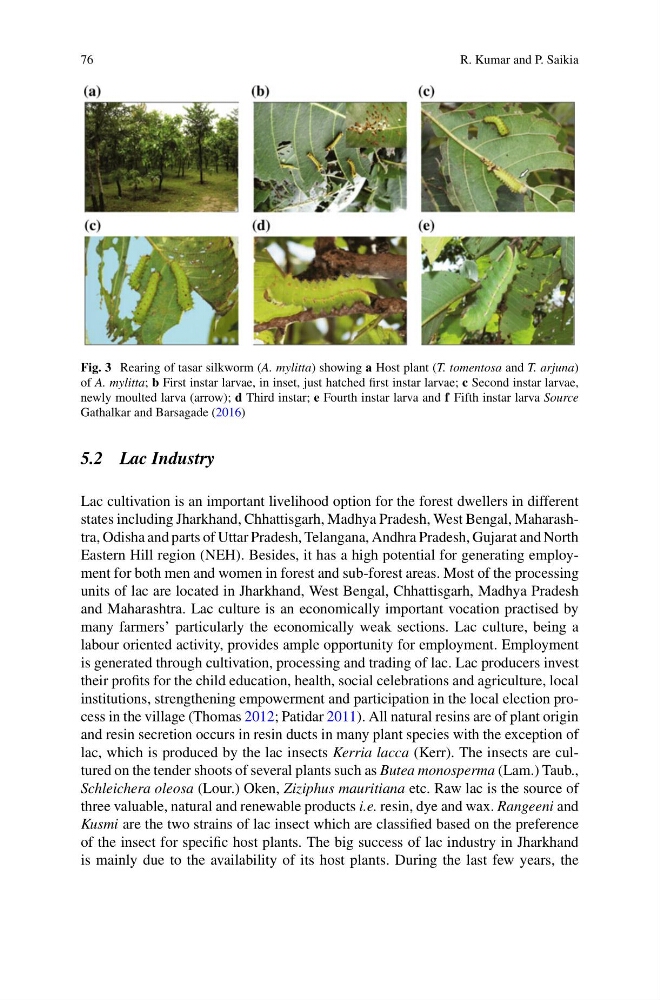
Fig. 3 Rearing of tasar silkworm (A. mylitta) showing a Host plant (T. tomentosa and T. arjuna)
of A. mylitta; b First instar larvae, in inset, just hatched first instar larvae; c Second instar larvae,
newly moulted larva (arrow); d Third instar; e Fourth instar larva and f Fifth instar larva Source
Gathalkar and Barsagade (2016)
5.2 Lac Industry
Lac cultivation is an important livelihood option for the forest dwellers in different
states including Jharkhand, Chhattisgarh, Madhya Pradesh, West Bengal, Maharashtra, Odisha and parts of Uttar Pradesh, Telangana, Andhra Pradesh, Gujarat and North
Eastern Hill region (NEH). Besides, it has a high potential for generating employment for both men and women in forest and sub-forest areas. Most of the processing
units of lac are located in Jharkhand, West Bengal, Chhattisgarh, Madhya Pradesh
and Maharashtra. Lac culture is an economically important vocation practised by
many farmers’ particularly the economically weak sections. Lac culture, being a
labour oriented activity, provides ample opportunity for employment. Employment
is generated through cultivation, processing and trading of lac. Lac producers invest
their profits for the child education, health, social celebrations and agriculture, local
institutions, strengthening empowerment and participation in the local election process in the village (Thomas 2012; Patidar 2011). All natural resins are of plant origin
and resin secretion occurs in resin ducts in many plant species with the exception of
lac, which is produced by the lac insects Kerria lacca (Kerr). The insects are cultured on the tender shoots of several plants such as Butea monosperma (Lam.) Taub.,
Schleichera oleosa (Lour.) Oken, Ziziphus mauritiana etc. Raw lac is the source of
three valuable, natural and renewable products i.e. resin, dye and wax. Rangeeni and
Kusmi are the two strains of lac insect which are classified based on the preference
of the insect for specific host plants. The big success of lac industry in Jharkhand
is mainly due to the availability of its host plants. During the last few years, the
R. Kumar and P. Saikia
Fig. 3 Rearing of tasar silkworm (A. mylitta) showing a Host plant (T. tomentosa and T. arjuna)
of A. mylitta; b First instar larvae, in inset, just hatched first instar larvae; c Second instar larvae,
newly moulted larva (arrow); d Third instar; e Fourth instar larva and f Fifth instar larva Source
Gathalkar and Barsagade (2016)
5.2 Lac Industry
Lac cultivation is an important livelihood option for the forest dwellers in different
states including Jharkhand, Chhattisgarh, Madhya Pradesh, West Bengal, Maharashtra, Odisha and parts of Uttar Pradesh, Telangana, Andhra Pradesh, Gujarat and North
Eastern Hill region (NEH). Besides, it has a high potential for generating employment for both men and women in forest and sub-forest areas. Most of the processing
units of lac are located in Jharkhand, West Bengal, Chhattisgarh, Madhya Pradesh
and Maharashtra. Lac culture is an economically important vocation practised by
many farmers’ particularly the economically weak sections. Lac culture, being a
labour oriented activity, provides ample opportunity for employment. Employment
is generated through cultivation, processing and trading of lac. Lac producers invest
their profits for the child education, health, social celebrations and agriculture, local
institutions, strengthening empowerment and participation in the local election process in the village (Thomas 2012; Patidar 2011). All natural resins are of plant origin
and resin secretion occurs in resin ducts in many plant species with the exception of
lac, which is produced by the lac insects Kerria lacca (Kerr). The insects are cultured on the tender shoots of several plants such as Butea monosperma (Lam.) Taub.,
Schleichera oleosa (Lour.) Oken, Ziziphus mauritiana etc. Raw lac is the source of
three valuable, natural and renewable products i.e. resin, dye and wax. Rangeeni and
Kusmi are the two strains of lac insect which are classified based on the preference
of the insect for specific host plants. The big success of lac industry in Jharkhand
is mainly due to the availability of its host plants. During the last few years, the