

472
S. K. Agarwal
Need
Assessment +
Innovation
(product/tech/
process)
Incubation
(Filed trials & fine –
tuning as
Technology led
Social Enterprise
package)
Dissemination
& Scale-up
• Enterprises
• Better quality of Li fe
• Community
empowerment
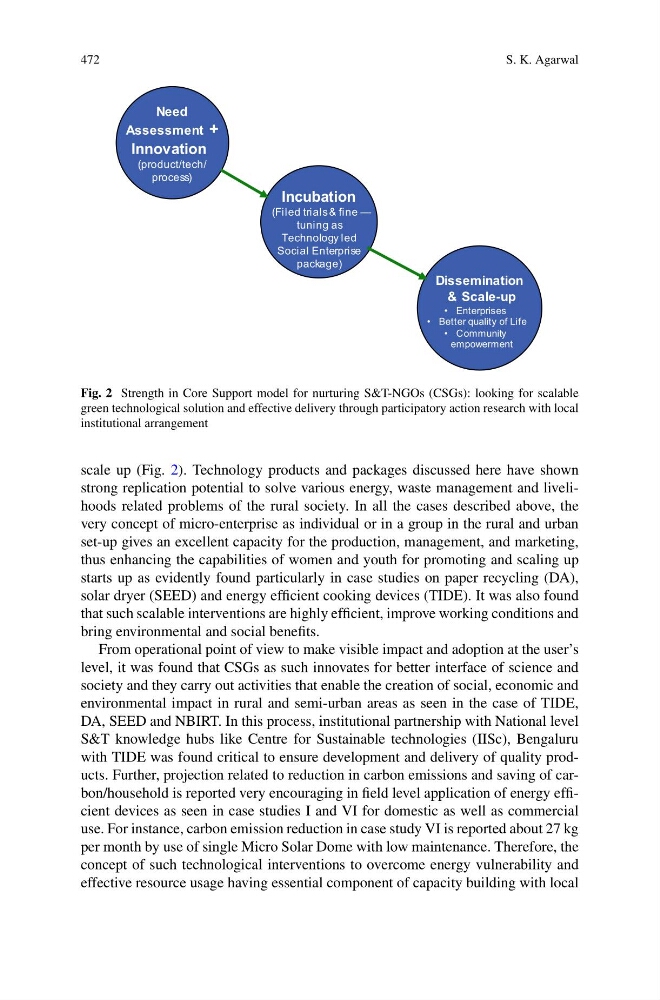
Fig. 2 Strength in Core Support model for nurturing S&T-NGOs (CSGs): looking for scalable
green technological solution and effective delivery through participatory action research with local
institutional arrangement
scale up (Fig. 2). Technology products and packages discussed here have shown
strong replication potential to solve various energy, waste management and livelihoods related problems of the rural society. In all the cases described above, the
very concept of micro-enterprise as individual or in a group in the rural and urban
set-up gives an excellent capacity for the production, management, and marketing,
thus enhancing the capabilities of women and youth for promoting and scaling up
starts up as evidently found particularly in case studies on paper recycling (DA),
solar dryer (SEED) and energy efficient cooking devices (TIDE). It was also found
that such scalable interventions are highly efficient, improve working conditions and
bring environmental and social benefits.
From operational point of view to make visible impact and adoption at the user’s
level, it was found that CSGs as such innovates for better interface of science and
society and they carry out activities that enable the creation of social, economic and
environmental impact in rural and semi-urban areas as seen in the case of TIDE,
DA, SEED and NBIRT. In this process, institutional partnership with National level
S&T knowledge hubs like Centre for Sustainable technologies (IISc), Bengaluru
with TIDE was found critical to ensure development and delivery of quality products. Further, projection related to reduction in carbon emissions and saving of carbon/household is reported very encouraging in field level application of energy efficient devices as seen in case studies I and VI for domestic as well as commercial
use. For instance, carbon emission reduction in case study VI is reported about 27 kg
per month by use of single Micro Solar Dome with low maintenance. Therefore, the
concept of such technological interventions to overcome energy vulnerability and
effective resource usage having essential component of capacity building with local
S. K. Agarwal
Need
Assessment +
Innovation
(product/tech/
process)
Incubation
(Filed trials & fine –
tuning as
Technology led
Social Enterprise
package)
Dissemination
& Scale-up
• Enterprises
• Better quality of Li fe
• Community
empowerment
Fig. 2 Strength in Core Support model for nurturing S&T-NGOs (CSGs): looking for scalable
green technological solution and effective delivery through participatory action research with local
institutional arrangement
scale up (Fig. 2). Technology products and packages discussed here have shown
strong replication potential to solve various energy, waste management and livelihoods related problems of the rural society. In all the cases described above, the
very concept of micro-enterprise as individual or in a group in the rural and urban
set-up gives an excellent capacity for the production, management, and marketing,
thus enhancing the capabilities of women and youth for promoting and scaling up
starts up as evidently found particularly in case studies on paper recycling (DA),
solar dryer (SEED) and energy efficient cooking devices (TIDE). It was also found
that such scalable interventions are highly efficient, improve working conditions and
bring environmental and social benefits.
From operational point of view to make visible impact and adoption at the user’s
level, it was found that CSGs as such innovates for better interface of science and
society and they carry out activities that enable the creation of social, economic and
environmental impact in rural and semi-urban areas as seen in the case of TIDE,
DA, SEED and NBIRT. In this process, institutional partnership with National level
S&T knowledge hubs like Centre for Sustainable technologies (IISc), Bengaluru
with TIDE was found critical to ensure development and delivery of quality products. Further, projection related to reduction in carbon emissions and saving of carbon/household is reported very encouraging in field level application of energy efficient devices as seen in case studies I and VI for domestic as well as commercial
use. For instance, carbon emission reduction in case study VI is reported about 27 kg
per month by use of single Micro Solar Dome with low maintenance. Therefore, the
concept of such technological interventions to overcome energy vulnerability and
effective resource usage having essential component of capacity building with local