

450
M. Goswami and S. Nautiyal
0
0.5
1
1.5
2
2.5
0
10
20
30
40
50
60
70
80
90
100
1990s
2000s
2010s
1990s
2000s
2010s
1990s
2000s
2010s
High Urban
Medium Urban
Low Urban
fuelwood(tonnes/HH/year
% of households using different fuels
%of HH using LPG and LPG+fuelwood
Fuelwood
Fuelwood collected I tonnes per HH per year
LDI
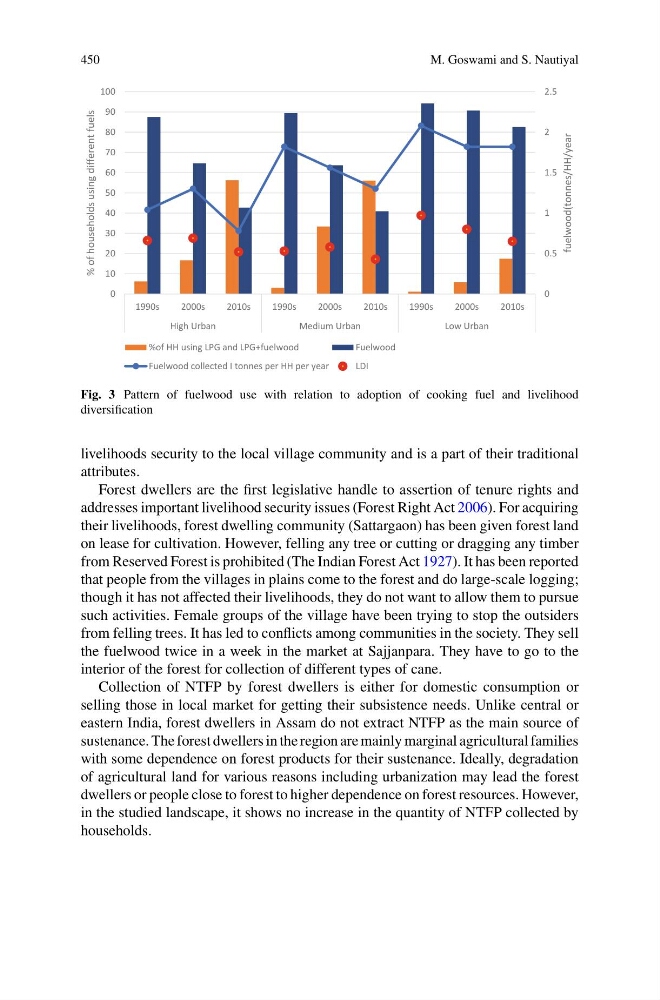
Fig. 3 Pattern of fuelwood use with relation to adoption of cooking fuel and livelihood
diversification
livelihoods security to the local village community and is a part of their traditional
attributes.
Forest dwellers are the first legislative handle to assertion of tenure rights and
addresses important livelihood security issues (Forest Right Act 2006). For acquiring
their livelihoods, forest dwelling community (Sattargaon) has been given forest land
on lease for cultivation. However, felling any tree or cutting or dragging any timber
from Reserved Forest is prohibited (The Indian Forest Act 1927). It has been reported
that people from the villages in plains come to the forest and do large-scale logging;
though it has not affected their livelihoods, they do not want to allow them to pursue
such activities. Female groups of the village have been trying to stop the outsiders
from felling trees. It has led to conflicts among communities in the society. They sell
the fuelwood twice in a week in the market at Sajjanpara. They have to go to the
interior of the forest for collection of different types of cane.
Collection of NTFP by forest dwellers is either for domestic consumption or
selling those in local market for getting their subsistence needs. Unlike central or
eastern India, forest dwellers in Assam do not extract NTFP as the main source of
sustenance. The forest dwellers in the region are mainly marginal agricultural families
with some dependence on forest products for their sustenance. Ideally, degradation
of agricultural land for various reasons including urbanization may lead the forest
dwellers or people close to forest to higher dependence on forest resources. However,
in the studied landscape, it shows no increase in the quantity of NTFP collected by
households.
M. Goswami and S. Nautiyal
0
0.5
1
1.5
2
2.5
0
10
20
30
40
50
60
70
80
90
100
1990s
2000s
2010s
1990s
2000s
2010s
1990s
2000s
2010s
High Urban
Medium Urban
Low Urban
fuelwood(tonnes/HH/year
% of households using different fuels
%of HH using LPG and LPG+fuelwood
Fuelwood
Fuelwood collected I tonnes per HH per year
LDI
Fig. 3 Pattern of fuelwood use with relation to adoption of cooking fuel and livelihood
diversification
livelihoods security to the local village community and is a part of their traditional
attributes.
Forest dwellers are the first legislative handle to assertion of tenure rights and
addresses important livelihood security issues (Forest Right Act 2006). For acquiring
their livelihoods, forest dwelling community (Sattargaon) has been given forest land
on lease for cultivation. However, felling any tree or cutting or dragging any timber
from Reserved Forest is prohibited (The Indian Forest Act 1927). It has been reported
that people from the villages in plains come to the forest and do large-scale logging;
though it has not affected their livelihoods, they do not want to allow them to pursue
such activities. Female groups of the village have been trying to stop the outsiders
from felling trees. It has led to conflicts among communities in the society. They sell
the fuelwood twice in a week in the market at Sajjanpara. They have to go to the
interior of the forest for collection of different types of cane.
Collection of NTFP by forest dwellers is either for domestic consumption or
selling those in local market for getting their subsistence needs. Unlike central or
eastern India, forest dwellers in Assam do not extract NTFP as the main source of
sustenance. The forest dwellers in the region are mainly marginal agricultural families
with some dependence on forest products for their sustenance. Ideally, degradation
of agricultural land for various reasons including urbanization may lead the forest
dwellers or people close to forest to higher dependence on forest resources. However,
in the studied landscape, it shows no increase in the quantity of NTFP collected by
households.