

Climate Change and Adaptation Strategies in the Gir Kesar …
391
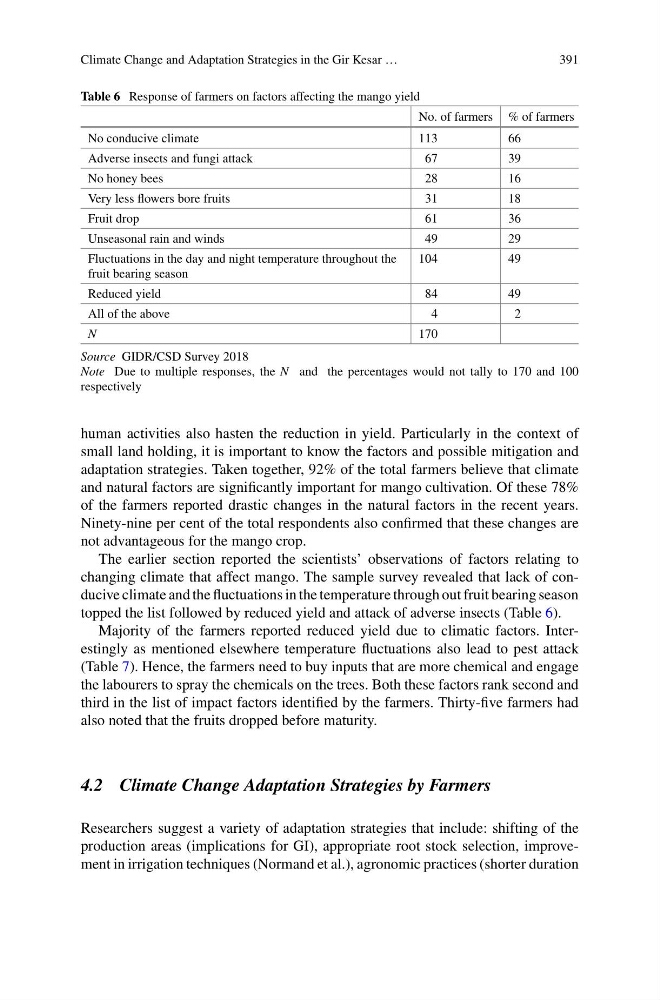
Table 6 Response of farmers on factors affecting the mango yield
No. of farmers % of farmers
No conducive climate
113
66
Adverse insects and fungi attack
67
39
No honey bees
28
16
Very less flowers bore fruits
31
18
Fruit drop
61
36
Unseasonal rain and winds
49
29
Fluctuations in the day and night temperature throughout the
fruit bearing season
104
49
Reduced yield
84
49
All of the above
4
2
N
170
Source GIDR/CSD Survey 2018
Note Due to multiple responses, the N and the percentages would not tally to 170 and 100
respectively
human activities also hasten the reduction in yield. Particularly in the context of
small land holding, it is important to know the factors and possible mitigation and
adaptation strategies. Taken together, 92% of the total farmers believe that climate
and natural factors are significantly important for mango cultivation. Of these 78%
of the farmers reported drastic changes in the natural factors in the recent years.
Ninety-nine per cent of the total respondents also confirmed that these changes are
not advantageous for the mango crop.
The earlier section reported the scientists’ observations of factors relating to
changing climate that affect mango. The sample survey revealed that lack of conducive climate and the fluctuations in the temperature through out fruit bearing season
topped the list followed by reduced yield and attack of adverse insects (Table 6).
Majority of the farmers reported reduced yield due to climatic factors. Interestingly as mentioned elsewhere temperature fluctuations also lead to pest attack
(Table 7). Hence, the farmers need to buy inputs that are more chemical and engage
the labourers to spray the chemicals on the trees. Both these factors rank second and
third in the list of impact factors identified by the farmers. Thirty-five farmers had
also noted that the fruits dropped before maturity.
4.2 Climate Change Adaptation Strategies by Farmers
Researchers suggest a variety of adaptation strategies that include: shifting of the
production areas (implications for GI), appropriate root stock selection, improvement in irrigation techniques (Normand et al.), agronomic practices (shorter duration
391
Table 6 Response of farmers on factors affecting the mango yield
No. of farmers % of farmers
No conducive climate
113
66
Adverse insects and fungi attack
67
39
No honey bees
28
16
Very less flowers bore fruits
31
18
Fruit drop
61
36
Unseasonal rain and winds
49
29
Fluctuations in the day and night temperature throughout the
fruit bearing season
104
49
Reduced yield
84
49
All of the above
4
2
N
170
Source GIDR/CSD Survey 2018
Note Due to multiple responses, the N and the percentages would not tally to 170 and 100
respectively
human activities also hasten the reduction in yield. Particularly in the context of
small land holding, it is important to know the factors and possible mitigation and
adaptation strategies. Taken together, 92% of the total farmers believe that climate
and natural factors are significantly important for mango cultivation. Of these 78%
of the farmers reported drastic changes in the natural factors in the recent years.
Ninety-nine per cent of the total respondents also confirmed that these changes are
not advantageous for the mango crop.
The earlier section reported the scientists’ observations of factors relating to
changing climate that affect mango. The sample survey revealed that lack of conducive climate and the fluctuations in the temperature through out fruit bearing season
topped the list followed by reduced yield and attack of adverse insects (Table 6).
Majority of the farmers reported reduced yield due to climatic factors. Interestingly as mentioned elsewhere temperature fluctuations also lead to pest attack
(Table 7). Hence, the farmers need to buy inputs that are more chemical and engage
the labourers to spray the chemicals on the trees. Both these factors rank second and
third in the list of impact factors identified by the farmers. Thirty-five farmers had
also noted that the fruits dropped before maturity.
4.2 Climate Change Adaptation Strategies by Farmers
Researchers suggest a variety of adaptation strategies that include: shifting of the
production areas (implications for GI), appropriate root stock selection, improvement in irrigation techniques (Normand et al.), agronomic practices (shorter duration