

Climate Change and Adaptation Strategies in the Gir Kesar …
387
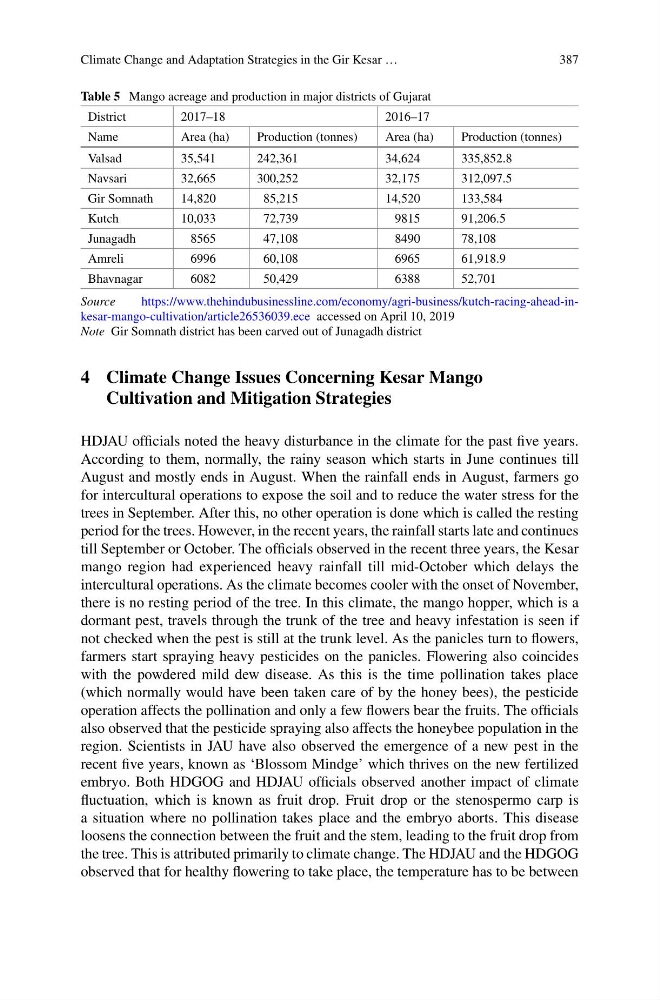
Table 5 Mango acreage and production in major districts of Gujarat
District
2017–18
2016–17
Name
Area (ha)
Production (tonnes)
Area (ha)
Production (tonnes)
Valsad
35,541
242,361
34,624
335,852.8
Navsari
32,665
300,252
32,175
312,097.5
Gir Somnath
14,820
85,215
14,520
133,584
Kutch
10,033
72,739
9815
91,206.5
Junagadh
8565
47,108
8490
78,108
Amreli
6996
60,108
6965
61,918.9
Bhavnagar
6082
50,429
6388
52,701
Source
https://www.thehindubusinessline.com/economy/agri-business/kutch-racing-ahead-inkesar-mango-cultivation/article26536039.ece accessed on April 10, 2019
Note Gir Somnath district has been carved out of Junagadh district
4 Climate Change Issues Concerning Kesar Mango
Cultivation and Mitigation Strategies
HDJAU officials noted the heavy disturbance in the climate for the past five years.
According to them, normally, the rainy season which starts in June continues till
August and mostly ends in August. When the rainfall ends in August, farmers go
for intercultural operations to expose the soil and to reduce the water stress for the
trees in September. After this, no other operation is done which is called the resting
period for the trees. However, in the recent years, the rainfall starts late and continues
till September or October. The officials observed in the recent three years, the Kesar
mango region had experienced heavy rainfall till mid-October which delays the
intercultural operations. As the climate becomes cooler with the onset of November,
there is no resting period of the tree. In this climate, the mango hopper, which is a
dormant pest, travels through the trunk of the tree and heavy infestation is seen if
not checked when the pest is still at the trunk level. As the panicles turn to flowers,
farmers start spraying heavy pesticides on the panicles. Flowering also coincides
with the powdered mild dew disease. As this is the time pollination takes place
(which normally would have been taken care of by the honey bees), the pesticide
operation affects the pollination and only a few flowers bear the fruits. The officials
also observed that the pesticide spraying also affects the honeybee population in the
region. Scientists in JAU have also observed the emergence of a new pest in the
recent five years, known as ‘Blossom Mindge’ which thrives on the new fertilized
embryo. Both HDGOG and HDJAU officials observed another impact of climate
fluctuation, which is known as fruit drop. Fruit drop or the stenospermo carp is
a situation where no pollination takes place and the embryo aborts. This disease
loosens the connection between the fruit and the stem, leading to the fruit drop from
the tree. This is attributed primarily to climate change. The HDJAU and the HDGOG
observed that for healthy flowering to take place, the temperature has to be between
387
Table 5 Mango acreage and production in major districts of Gujarat
District
2017–18
2016–17
Name
Area (ha)
Production (tonnes)
Area (ha)
Production (tonnes)
Valsad
35,541
242,361
34,624
335,852.8
Navsari
32,665
300,252
32,175
312,097.5
Gir Somnath
14,820
85,215
14,520
133,584
Kutch
10,033
72,739
9815
91,206.5
Junagadh
8565
47,108
8490
78,108
Amreli
6996
60,108
6965
61,918.9
Bhavnagar
6082
50,429
6388
52,701
Source
https://www.thehindubusinessline.com/economy/agri-business/kutch-racing-ahead-inkesar-mango-cultivation/article26536039.ece accessed on April 10, 2019
Note Gir Somnath district has been carved out of Junagadh district
4 Climate Change Issues Concerning Kesar Mango
Cultivation and Mitigation Strategies
HDJAU officials noted the heavy disturbance in the climate for the past five years.
According to them, normally, the rainy season which starts in June continues till
August and mostly ends in August. When the rainfall ends in August, farmers go
for intercultural operations to expose the soil and to reduce the water stress for the
trees in September. After this, no other operation is done which is called the resting
period for the trees. However, in the recent years, the rainfall starts late and continues
till September or October. The officials observed in the recent three years, the Kesar
mango region had experienced heavy rainfall till mid-October which delays the
intercultural operations. As the climate becomes cooler with the onset of November,
there is no resting period of the tree. In this climate, the mango hopper, which is a
dormant pest, travels through the trunk of the tree and heavy infestation is seen if
not checked when the pest is still at the trunk level. As the panicles turn to flowers,
farmers start spraying heavy pesticides on the panicles. Flowering also coincides
with the powdered mild dew disease. As this is the time pollination takes place
(which normally would have been taken care of by the honey bees), the pesticide
operation affects the pollination and only a few flowers bear the fruits. The officials
also observed that the pesticide spraying also affects the honeybee population in the
region. Scientists in JAU have also observed the emergence of a new pest in the
recent five years, known as ‘Blossom Mindge’ which thrives on the new fertilized
embryo. Both HDGOG and HDJAU officials observed another impact of climate
fluctuation, which is known as fruit drop. Fruit drop or the stenospermo carp is
a situation where no pollination takes place and the embryo aborts. This disease
loosens the connection between the fruit and the stem, leading to the fruit drop from
the tree. This is attributed primarily to climate change. The HDJAU and the HDGOG
observed that for healthy flowering to take place, the temperature has to be between