

258
H. Dutta and A. Hazarika
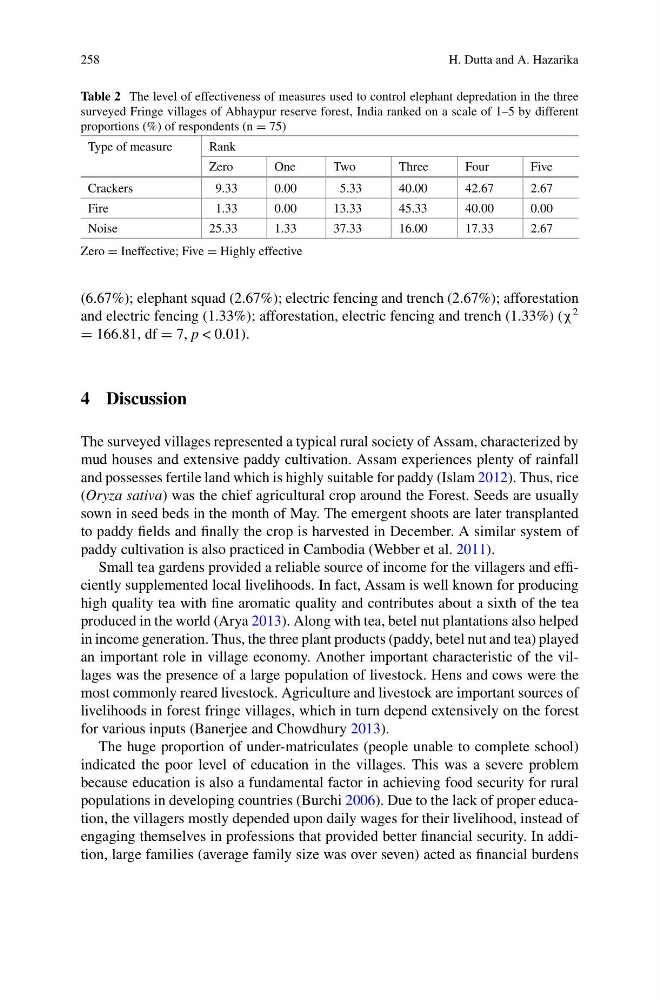
Table 2 The level of effectiveness of measures used to control elephant depredation in the three
surveyed Fringe villages of Abhaypur reserve forest, India ranked on a scale of 1–5 by different
proportions (%) of respondents (n = 75)
Type of measure
Rank
Zero
One
Two
Three
Four
Five
Crackers
9.33
0.00
5.33
40.00
42.67
2.67
Fire
1.33
0.00
13.33
45.33
40.00
0.00
Noise
25.33
1.33
37.33
16.00
17.33
2.67
Zero = Ineffective; Five = Highly effective
(6.67%); elephant squad (2.67%); electric fencing and trench (2.67%); afforestation
and electric fencing (1.33%); afforestation, electric fencing and trench (1.33%) (χ
2
= 166.81, df = 7, p < 0.01).
4 Discussion
The surveyed villages represented a typical rural society of Assam, characterized by
mud houses and extensive paddy cultivation. Assam experiences plenty of rainfall
and possesses fertile land which is highly suitable for paddy (Islam 2012). Thus, rice
(Oryza sativa) was the chief agricultural crop around the Forest. Seeds are usually
sown in seed beds in the month of May. The emergent shoots are later transplanted
to paddy fields and finally the crop is harvested in December. A similar system of
paddy cultivation is also practiced in Cambodia (Webber et al. 2011).
Small tea gardens provided a reliable source of income for the villagers and efficiently supplemented local livelihoods. In fact, Assam is well known for producing
high quality tea with fine aromatic quality and contributes about a sixth of the tea
produced in the world (Arya 2013). Along with tea, betel nut plantations also helped
in income generation. Thus, the three plant products (paddy, betel nut and tea) played
an important role in village economy. Another important characteristic of the villages was the presence of a large population of livestock. Hens and cows were the
most commonly reared livestock. Agriculture and livestock are important sources of
livelihoods in forest fringe villages, which in turn depend extensively on the forest
for various inputs (Banerjee and Chowdhury 2013).
The huge proportion of under-matriculates (people unable to complete school)
indicated the poor level of education in the villages. This was a severe problem
because education is also a fundamental factor in achieving food security for rural
populations in developing countries (Burchi 2006). Due to the lack of proper education, the villagers mostly depended upon daily wages for their livelihood, instead of
engaging themselves in professions that provided better financial security. In addition, large families (average family size was over seven) acted as financial burdens
H. Dutta and A. Hazarika
Table 2 The level of effectiveness of measures used to control elephant depredation in the three
surveyed Fringe villages of Abhaypur reserve forest, India ranked on a scale of 1–5 by different
proportions (%) of respondents (n = 75)
Type of measure
Rank
Zero
One
Two
Three
Four
Five
Crackers
9.33
0.00
5.33
40.00
42.67
2.67
Fire
1.33
0.00
13.33
45.33
40.00
0.00
Noise
25.33
1.33
37.33
16.00
17.33
2.67
Zero = Ineffective; Five = Highly effective
(6.67%); elephant squad (2.67%); electric fencing and trench (2.67%); afforestation
and electric fencing (1.33%); afforestation, electric fencing and trench (1.33%) (χ
2
= 166.81, df = 7, p < 0.01).
4 Discussion
The surveyed villages represented a typical rural society of Assam, characterized by
mud houses and extensive paddy cultivation. Assam experiences plenty of rainfall
and possesses fertile land which is highly suitable for paddy (Islam 2012). Thus, rice
(Oryza sativa) was the chief agricultural crop around the Forest. Seeds are usually
sown in seed beds in the month of May. The emergent shoots are later transplanted
to paddy fields and finally the crop is harvested in December. A similar system of
paddy cultivation is also practiced in Cambodia (Webber et al. 2011).
Small tea gardens provided a reliable source of income for the villagers and efficiently supplemented local livelihoods. In fact, Assam is well known for producing
high quality tea with fine aromatic quality and contributes about a sixth of the tea
produced in the world (Arya 2013). Along with tea, betel nut plantations also helped
in income generation. Thus, the three plant products (paddy, betel nut and tea) played
an important role in village economy. Another important characteristic of the villages was the presence of a large population of livestock. Hens and cows were the
most commonly reared livestock. Agriculture and livestock are important sources of
livelihoods in forest fringe villages, which in turn depend extensively on the forest
for various inputs (Banerjee and Chowdhury 2013).
The huge proportion of under-matriculates (people unable to complete school)
indicated the poor level of education in the villages. This was a severe problem
because education is also a fundamental factor in achieving food security for rural
populations in developing countries (Burchi 2006). Due to the lack of proper education, the villagers mostly depended upon daily wages for their livelihood, instead of
engaging themselves in professions that provided better financial security. In addition, large families (average family size was over seven) acted as financial burdens