

Assessment of Different Aspects of Elephant Depredation …
251
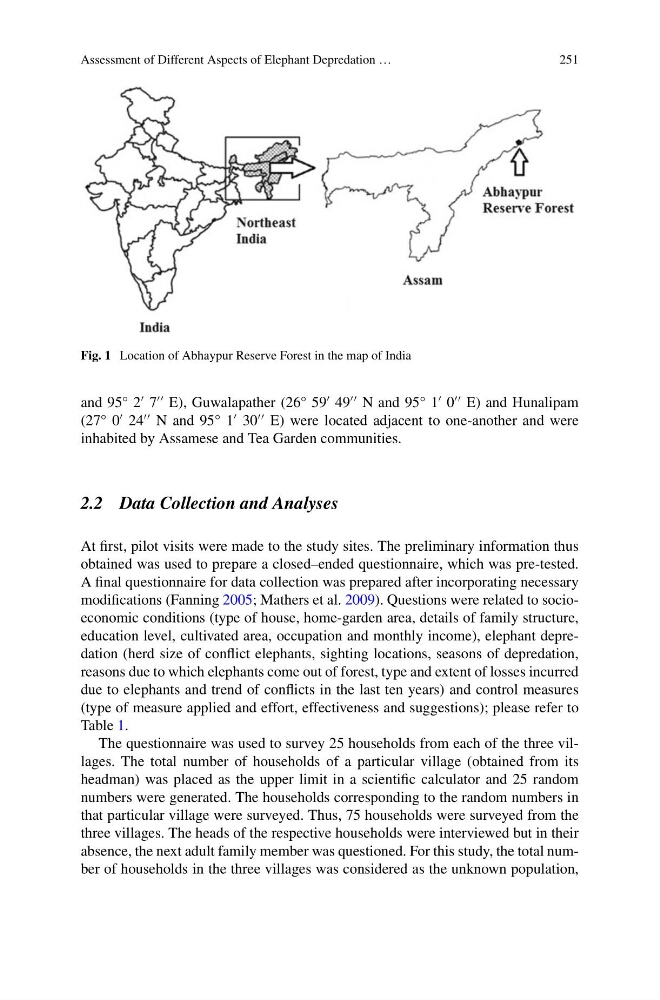
Fig. 1 Location of Abhaypur Reserve Forest in the map of India
and 95° 2
7
E), Guwalapather (26° 59
49
N and 95° 1
0
E) and Hunalipam
(27° 0
24
N and 95° 1
30
E) were located adjacent to one-another and were
inhabited by Assamese and Tea Garden communities.
2.2 Data Collection and Analyses
At first, pilot visits were made to the study sites. The preliminary information thus
obtained was used to prepare a closed–ended questionnaire, which was pre-tested.
A final questionnaire for data collection was prepared after incorporating necessary
modifications (Fanning 2005; Mathers et al. 2009). Questions were related to socioeconomic conditions (type of house, home-garden area, details of family structure,
education level, cultivated area, occupation and monthly income), elephant depredation (herd size of conflict elephants, sighting locations, seasons of depredation,
reasons due to which elephants come out of forest, type and extent of losses incurred
due to elephants and trend of conflicts in the last ten years) and control measures
(type of measure applied and effort, effectiveness and suggestions); please refer to
Table 1.
The questionnaire was used to survey 25 households from each of the three villages. The total number of households of a particular village (obtained from its
headman) was placed as the upper limit in a scientific calculator and 25 random
numbers were generated. The households corresponding to the random numbers in
that particular village were surveyed. Thus, 75 households were surveyed from the
three villages. The heads of the respective households were interviewed but in their
absence, the next adult family member was questioned. For this study, the total number of households in the three villages was considered as the unknown population,
251
Fig. 1 Location of Abhaypur Reserve Forest in the map of India
and 95° 2
7
E), Guwalapather (26° 59
49
N and 95° 1
0
E) and Hunalipam
(27° 0
24
N and 95° 1
30
E) were located adjacent to one-another and were
inhabited by Assamese and Tea Garden communities.
2.2 Data Collection and Analyses
At first, pilot visits were made to the study sites. The preliminary information thus
obtained was used to prepare a closed–ended questionnaire, which was pre-tested.
A final questionnaire for data collection was prepared after incorporating necessary
modifications (Fanning 2005; Mathers et al. 2009). Questions were related to socioeconomic conditions (type of house, home-garden area, details of family structure,
education level, cultivated area, occupation and monthly income), elephant depredation (herd size of conflict elephants, sighting locations, seasons of depredation,
reasons due to which elephants come out of forest, type and extent of losses incurred
due to elephants and trend of conflicts in the last ten years) and control measures
(type of measure applied and effort, effectiveness and suggestions); please refer to
Table 1.
The questionnaire was used to survey 25 households from each of the three villages. The total number of households of a particular village (obtained from its
headman) was placed as the upper limit in a scientific calculator and 25 random
numbers were generated. The households corresponding to the random numbers in
that particular village were surveyed. Thus, 75 households were surveyed from the
three villages. The heads of the respective households were interviewed but in their
absence, the next adult family member was questioned. For this study, the total number of households in the three villages was considered as the unknown population,