

218
J. Purkayastha et al.
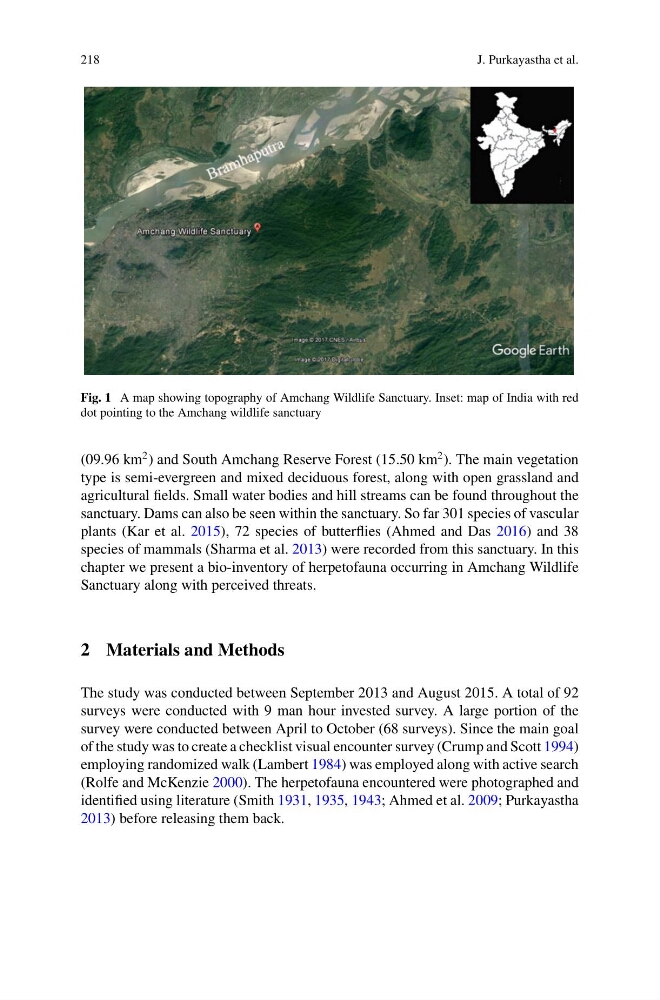
Fig. 1 A map showing topography of Amchang Wildlife Sanctuary. Inset: map of India with red
dot pointing to the Amchang wildlife sanctuary
(09.96 km
2 ) and South Amchang Reserve Forest (15.50 km
2 ). The main vegetation
type is semi-evergreen and mixed deciduous forest, along with open grassland and
agricultural fields. Small water bodies and hill streams can be found throughout the
sanctuary. Dams can also be seen within the sanctuary. So far 301 species of vascular
plants (Kar et al. 2015), 72 species of butterflies (Ahmed and Das 2016) and 38
species of mammals (Sharma et al. 2013) were recorded from this sanctuary. In this
chapter we present a bio-inventory of herpetofauna occurring in Amchang Wildlife
Sanctuary along with perceived threats.
2 Materials and Methods
The study was conducted between September 2013 and August 2015. A total of 92
surveys were conducted with 9 man hour invested survey. A large portion of the
survey were conducted between April to October (68 surveys). Since the main goal
of the study was to create a checklist visual encounter survey (Crump and Scott 1994)
employing randomized walk (Lambert 1984) was employed along with active search
(Rolfe and McKenzie 2000). The herpetofauna encountered were photographed and
identified using literature (Smith 1931, 1935, 1943; Ahmed et al. 2009; Purkayastha
2013) before releasing them back.
J. Purkayastha et al.
Fig. 1 A map showing topography of Amchang Wildlife Sanctuary. Inset: map of India with red
dot pointing to the Amchang wildlife sanctuary
(09.96 km
2 ) and South Amchang Reserve Forest (15.50 km
2 ). The main vegetation
type is semi-evergreen and mixed deciduous forest, along with open grassland and
agricultural fields. Small water bodies and hill streams can be found throughout the
sanctuary. Dams can also be seen within the sanctuary. So far 301 species of vascular
plants (Kar et al. 2015), 72 species of butterflies (Ahmed and Das 2016) and 38
species of mammals (Sharma et al. 2013) were recorded from this sanctuary. In this
chapter we present a bio-inventory of herpetofauna occurring in Amchang Wildlife
Sanctuary along with perceived threats.
2 Materials and Methods
The study was conducted between September 2013 and August 2015. A total of 92
surveys were conducted with 9 man hour invested survey. A large portion of the
survey were conducted between April to October (68 surveys). Since the main goal
of the study was to create a checklist visual encounter survey (Crump and Scott 1994)
employing randomized walk (Lambert 1984) was employed along with active search
(Rolfe and McKenzie 2000). The herpetofauna encountered were photographed and
identified using literature (Smith 1931, 1935, 1943; Ahmed et al. 2009; Purkayastha
2013) before releasing them back.