

Medicinal Plant Biodiversity in India: Harnessing Opportunities …
161
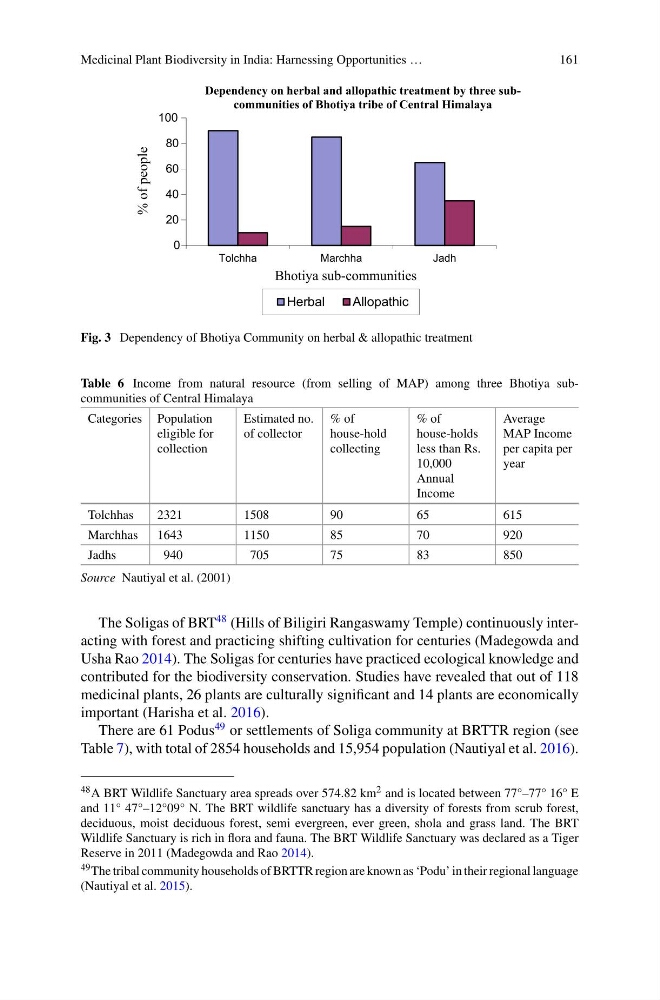
Fig. 3 Dependency of Bhotiya Community on herbal & allopathic treatment
Table 6 Income from natural resource (from selling of MAP) among three Bhotiya subcommunities of Central Himalaya
Categories Population
eligible for
collection
Estimated no.
of collector
% of
house-hold
collecting
% of
house-holds
less than Rs.
10,000
Annual
Income
Average
MAP Income
per capita per
year
Tolchhas
2321
1508
90
65
615
Marchhas
1643
1150
85
70
920
Jadhs
940
705
75
83
850
Source Nautiyal et al. (2001)
The Soligas of BRT
48 (Hills of Biligiri Rangaswamy Temple) continuously interacting with forest and practicing shifting cultivation for centuries (Madegowda and
Usha Rao 2014). The Soligas for centuries have practiced ecological knowledge and
contributed for the biodiversity conservation. Studies have revealed that out of 118
medicinal plants, 26 plants are culturally significant and 14 plants are economically
important (Harisha et al. 2016).
There are 61 Podus
49 or settlements of Soliga community at BRTTR region (see
Table 7), with total of 2854 households and 15,954 population (Nautiyal et al. 2016).
48 A BRT Wildlife Sanctuary area spreads over 574.82 km 2 and is located between 77°–77° 16° E
and 11° 47°–12°09° N. The BRT wildlife sanctuary has a diversity of forests from scrub forest,
deciduous, moist deciduous forest, semi evergreen, ever green, shola and grass land. The BRT
Wildlife Sanctuary is rich in flora and fauna. The BRT Wildlife Sanctuary was declared as a Tiger
Reserve in 2011 (Madegowda and Rao 2014).
49 The tribal community households of BRTTR region are known as ‘Podu’ in their regional language
(Nautiyal et al. 2015).
161
Fig. 3 Dependency of Bhotiya Community on herbal & allopathic treatment
Table 6 Income from natural resource (from selling of MAP) among three Bhotiya subcommunities of Central Himalaya
Categories Population
eligible for
collection
Estimated no.
of collector
% of
house-hold
collecting
% of
house-holds
less than Rs.
10,000
Annual
Income
Average
MAP Income
per capita per
year
Tolchhas
2321
1508
90
65
615
Marchhas
1643
1150
85
70
920
Jadhs
940
705
75
83
850
Source Nautiyal et al. (2001)
The Soligas of BRT
48 (Hills of Biligiri Rangaswamy Temple) continuously interacting with forest and practicing shifting cultivation for centuries (Madegowda and
Usha Rao 2014). The Soligas for centuries have practiced ecological knowledge and
contributed for the biodiversity conservation. Studies have revealed that out of 118
medicinal plants, 26 plants are culturally significant and 14 plants are economically
important (Harisha et al. 2016).
There are 61 Podus
49 or settlements of Soliga community at BRTTR region (see
Table 7), with total of 2854 households and 15,954 population (Nautiyal et al. 2016).
48 A BRT Wildlife Sanctuary area spreads over 574.82 km 2 and is located between 77°–77° 16° E
and 11° 47°–12°09° N. The BRT wildlife sanctuary has a diversity of forests from scrub forest,
deciduous, moist deciduous forest, semi evergreen, ever green, shola and grass land. The BRT
Wildlife Sanctuary is rich in flora and fauna. The BRT Wildlife Sanctuary was declared as a Tiger
Reserve in 2011 (Madegowda and Rao 2014).
49 The tribal community households of BRTTR region are known as ‘Podu’ in their regional language
(Nautiyal et al. 2015).