

124
T. Das and A. K. Das
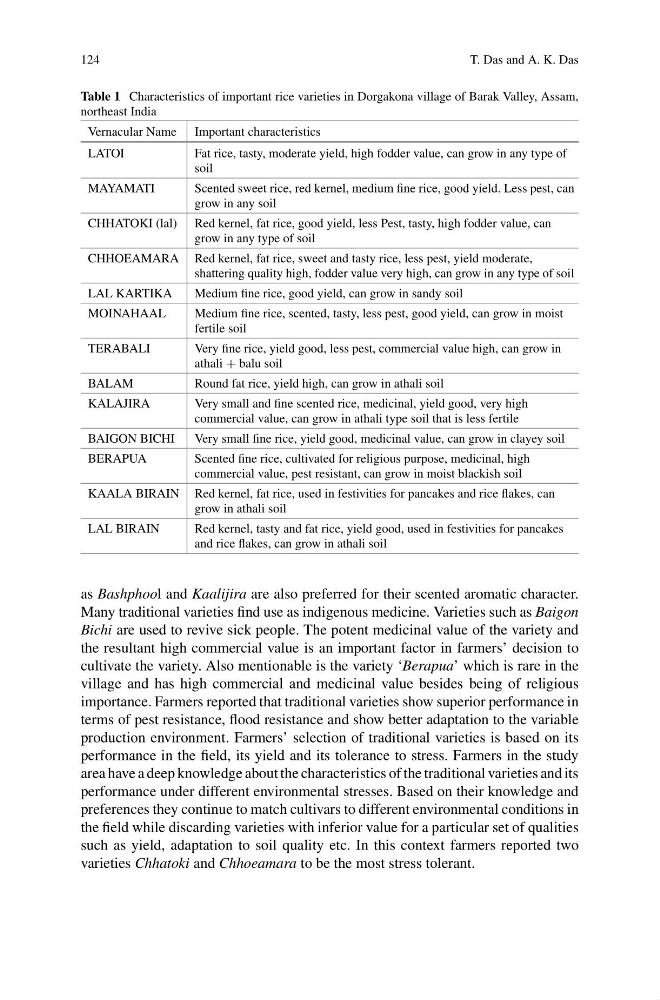
Table 1 Characteristics of important rice varieties in Dorgakona village of Barak Valley, Assam,
northeast India
Vernacular Name Important characteristics
LATOI
Fat rice, tasty, moderate yield, high fodder value, can grow in any type of
soil
MAYAMATI
Scented sweet rice, red kernel, medium fine rice, good yield. Less pest, can
grow in any soil
CHHATOKI (lal) Red kernel, fat rice, good yield, less Pest, tasty, high fodder value, can
grow in any type of soil
CHHOEAMARA Red kernel, fat rice, sweet and tasty rice, less pest, yield moderate,
shattering quality high, fodder value very high, can grow in any type of soil
LAL KARTIKA
Medium fine rice, good yield, can grow in sandy soil
MOINAHAAL
Medium fine rice, scented, tasty, less pest, good yield, can grow in moist
fertile soil
TERABALI
Very fine rice, yield good, less pest, commercial value high, can grow in
athali + balu soil
BALAM
Round fat rice, yield high, can grow in athali soil
KALAJIRA
Very small and fine scented rice, medicinal, yield good, very high
commercial value, can grow in athali type soil that is less fertile
BAIGON BICHI
Very small fine rice, yield good, medicinal value, can grow in clayey soil
BERAPUA
Scented fine rice, cultivated for religious purpose, medicinal, high
commercial value, pest resistant, can grow in moist blackish soil
KAALA BIRAIN Red kernel, fat rice, used in festivities for pancakes and rice flakes, can
grow in athali soil
LAL BIRAIN
Red kernel, tasty and fat rice, yield good, used in festivities for pancakes
and rice flakes, can grow in athali soil
as Bashphool and Kaalijira are also preferred for their scented aromatic character.
Many traditional varieties find use as indigenous medicine. Varieties such as Baigon
Bichi are used to revive sick people. The potent medicinal value of the variety and
the resultant high commercial value is an important factor in farmers’ decision to
cultivate the variety. Also mentionable is the variety ‘Berapua’ which is rare in the
village and has high commercial and medicinal value besides being of religious
importance. Farmers reported that traditional varieties show superior performance in
terms of pest resistance, flood resistance and show better adaptation to the variable
production environment. Farmers’ selection of traditional varieties is based on its
performance in the field, its yield and its tolerance to stress. Farmers in the study
area have a deep knowledge about the characteristics of the traditional varieties and its
performance under different environmental stresses. Based on their knowledge and
preferences they continue to match cultivars to different environmental conditions in
the field while discarding varieties with inferior value for a particular set of qualities
such as yield, adaptation to soil quality etc. In this context farmers reported two
varieties Chhatoki and Chhoeamara to be the most stress tolerant.
T. Das and A. K. Das
Table 1 Characteristics of important rice varieties in Dorgakona village of Barak Valley, Assam,
northeast India
Vernacular Name Important characteristics
LATOI
Fat rice, tasty, moderate yield, high fodder value, can grow in any type of
soil
MAYAMATI
Scented sweet rice, red kernel, medium fine rice, good yield. Less pest, can
grow in any soil
CHHATOKI (lal) Red kernel, fat rice, good yield, less Pest, tasty, high fodder value, can
grow in any type of soil
CHHOEAMARA Red kernel, fat rice, sweet and tasty rice, less pest, yield moderate,
shattering quality high, fodder value very high, can grow in any type of soil
LAL KARTIKA
Medium fine rice, good yield, can grow in sandy soil
MOINAHAAL
Medium fine rice, scented, tasty, less pest, good yield, can grow in moist
fertile soil
TERABALI
Very fine rice, yield good, less pest, commercial value high, can grow in
athali + balu soil
BALAM
Round fat rice, yield high, can grow in athali soil
KALAJIRA
Very small and fine scented rice, medicinal, yield good, very high
commercial value, can grow in athali type soil that is less fertile
BAIGON BICHI
Very small fine rice, yield good, medicinal value, can grow in clayey soil
BERAPUA
Scented fine rice, cultivated for religious purpose, medicinal, high
commercial value, pest resistant, can grow in moist blackish soil
KAALA BIRAIN Red kernel, fat rice, used in festivities for pancakes and rice flakes, can
grow in athali soil
LAL BIRAIN
Red kernel, tasty and fat rice, yield good, used in festivities for pancakes
and rice flakes, can grow in athali soil
as Bashphool and Kaalijira are also preferred for their scented aromatic character.
Many traditional varieties find use as indigenous medicine. Varieties such as Baigon
Bichi are used to revive sick people. The potent medicinal value of the variety and
the resultant high commercial value is an important factor in farmers’ decision to
cultivate the variety. Also mentionable is the variety ‘Berapua’ which is rare in the
village and has high commercial and medicinal value besides being of religious
importance. Farmers reported that traditional varieties show superior performance in
terms of pest resistance, flood resistance and show better adaptation to the variable
production environment. Farmers’ selection of traditional varieties is based on its
performance in the field, its yield and its tolerance to stress. Farmers in the study
area have a deep knowledge about the characteristics of the traditional varieties and its
performance under different environmental stresses. Based on their knowledge and
preferences they continue to match cultivars to different environmental conditions in
the field while discarding varieties with inferior value for a particular set of qualities
such as yield, adaptation to soil quality etc. In this context farmers reported two
varieties Chhatoki and Chhoeamara to be the most stress tolerant.