

122
T. Das and A. K. Das
0
10
20
30
40
50
60
Rice varieties
% Farmers
1 2 3 4 5 6 7 8 9 10 11 12 13 14 15 16 17 18 19 20 21 22 23 24 25 26 27 28 29 30 31 32
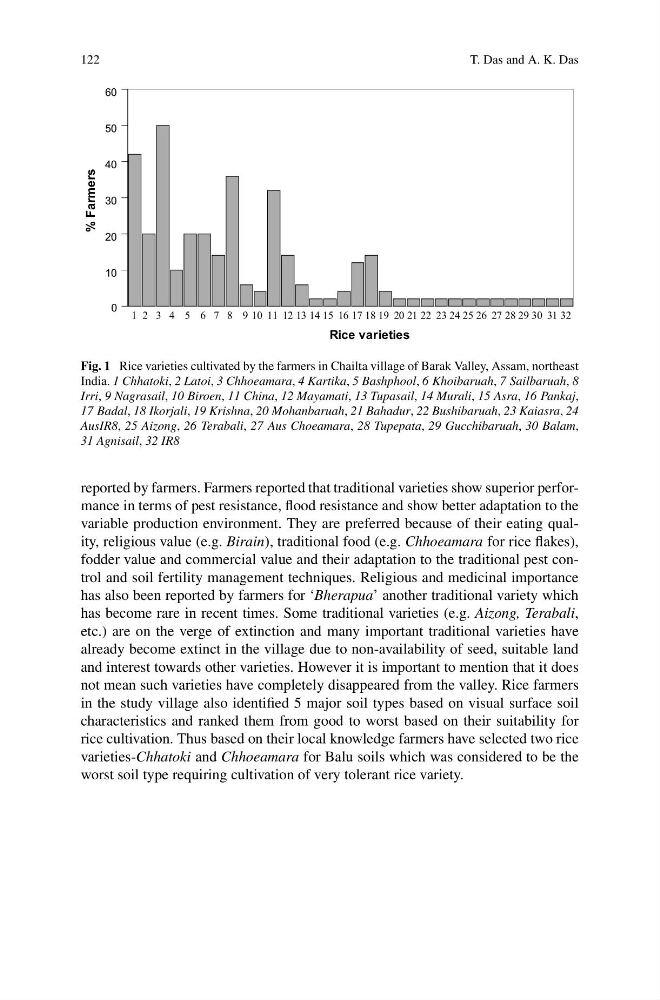
Fig. 1 Rice varieties cultivated by the farmers in Chailta village of Barak Valley, Assam, northeast
India. 1 Chhatoki, 2 Latoi, 3 Chhoeamara, 4 Kartika, 5 Bashphool, 6 Khoibaruah, 7 Sailbaruah, 8
Irri, 9 Nagrasail, 10 Biroen, 11 China, 12 Mayamati, 13 Tupasail, 14 Murali, 15 Asra, 16 Pankaj,
17 Badal, 18 Ikorjali, 19 Krishna, 20 Mohanbaruah, 21 Bahadur, 22 Bushibaruah, 23 Kaiasra, 24
AusIR8, 25 Aizong, 26 Terabali, 27 Aus Choeamara, 28 Tupepata, 29 Gucchibaruah, 30 Balam,
31 Agnisail, 32 IR8
reported by farmers. Farmers reported that traditional varieties show superior performance in terms of pest resistance, flood resistance and show better adaptation to the
variable production environment. They are preferred because of their eating quality, religious value (e.g. Birain), traditional food (e.g. Chhoeamara for rice flakes),
fodder value and commercial value and their adaptation to the traditional pest control and soil fertility management techniques. Religious and medicinal importance
has also been reported by farmers for ‘Bherapua’ another traditional variety which
has become rare in recent times. Some traditional varieties (e.g. Aizong, Terabali,
etc.) are on the verge of extinction and many important traditional varieties have
already become extinct in the village due to non-availability of seed, suitable land
and interest towards other varieties. However it is important to mention that it does
not mean such varieties have completely disappeared from the valley. Rice farmers
in the study village also identified 5 major soil types based on visual surface soil
characteristics and ranked them from good to worst based on their suitability for
rice cultivation. Thus based on their local knowledge farmers have selected two rice
varieties-Chhatoki and Chhoeamara for Balu soils which was considered to be the
worst soil type requiring cultivation of very tolerant rice variety.
T. Das and A. K. Das
0
10
20
30
40
50
60
Rice varieties
% Farmers
1 2 3 4 5 6 7 8 9 10 11 12 13 14 15 16 17 18 19 20 21 22 23 24 25 26 27 28 29 30 31 32
Fig. 1 Rice varieties cultivated by the farmers in Chailta village of Barak Valley, Assam, northeast
India. 1 Chhatoki, 2 Latoi, 3 Chhoeamara, 4 Kartika, 5 Bashphool, 6 Khoibaruah, 7 Sailbaruah, 8
Irri, 9 Nagrasail, 10 Biroen, 11 China, 12 Mayamati, 13 Tupasail, 14 Murali, 15 Asra, 16 Pankaj,
17 Badal, 18 Ikorjali, 19 Krishna, 20 Mohanbaruah, 21 Bahadur, 22 Bushibaruah, 23 Kaiasra, 24
AusIR8, 25 Aizong, 26 Terabali, 27 Aus Choeamara, 28 Tupepata, 29 Gucchibaruah, 30 Balam,
31 Agnisail, 32 IR8
reported by farmers. Farmers reported that traditional varieties show superior performance in terms of pest resistance, flood resistance and show better adaptation to the
variable production environment. They are preferred because of their eating quality, religious value (e.g. Birain), traditional food (e.g. Chhoeamara for rice flakes),
fodder value and commercial value and their adaptation to the traditional pest control and soil fertility management techniques. Religious and medicinal importance
has also been reported by farmers for ‘Bherapua’ another traditional variety which
has become rare in recent times. Some traditional varieties (e.g. Aizong, Terabali,
etc.) are on the verge of extinction and many important traditional varieties have
already become extinct in the village due to non-availability of seed, suitable land
and interest towards other varieties. However it is important to mention that it does
not mean such varieties have completely disappeared from the valley. Rice farmers
in the study village also identified 5 major soil types based on visual surface soil
characteristics and ranked them from good to worst based on their suitability for
rice cultivation. Thus based on their local knowledge farmers have selected two rice
varieties-Chhatoki and Chhoeamara for Balu soils which was considered to be the
worst soil type requiring cultivation of very tolerant rice variety.