

80
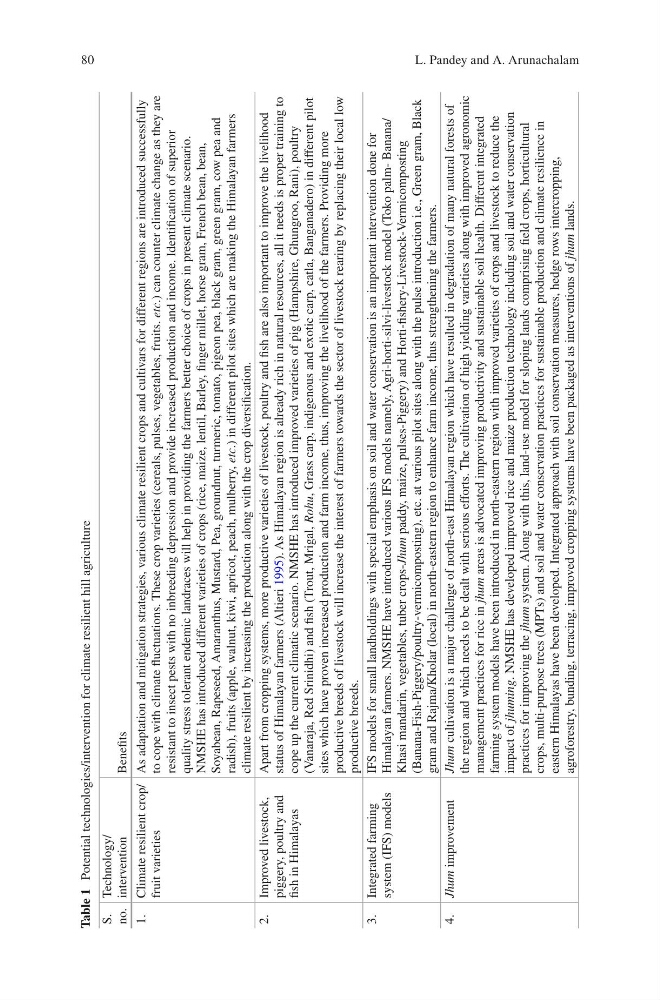
Table 1 Potential technologies/intervention for climate resilient hill agriculture
S.
no.
Technology/
intervention
Benefits
1. Climate resilient crop/
fruit varieties
As adaptation and mitigation strategies, various climate resilient crops and cultivars for different regions are introduced successfully
to cope with climate fluctuations. These crop varieties (cereals, pulses, vegetables, fruits. etc.)
can counter climate change as they are
resistant to insect pests with no inbreeding depression and provide increased production and income. Identification of superior
quality stress tolerant endemic landraces will help in providing the farmers better choice of crops in present climate scenario.
NMSHE has introduced different varieties of crops (rice, maize, lentil, Barley, finger millet, horse gram, French bean, bean,
Soyabean, Rapeseed, Amaranthus, Mustard, Pea, groundnut, turmeric, tomato, pigeon pea, black gram, green gram, cow pea and
radish), fruits (apple, walnut, kiwi, apricot, peach, mulberry, etc.)
in different pilot sites which are making the Himalayan farmers
climate resilient by increasing the production along with the crop diversification.
2. Improved livestock,
piggery, poultry and
fish in Himalayas
Apart from cropping systems, more productive varieties of livestock, poultry and fish are also important to improve the livelihood
status of Himalayan farmers (Altieri 1995). As Himalayan region is already rich in natural resources, all it needs is proper training to
cope up the current climatic scenario. NMSHE has introduced improved varieties of pig (Hampshire, Ghungroo, Rani), poultry
(Vanaraja, Red Srinidhi) and fish (Trout, Mrigal, Rohu,
Grass carp, indigenous and exotic carp, catla, Banganadero) in different pilot
sites which have proven increased production and farm income, thus, improving the livelihood of the farmers. Providing more
productive breeds of livestock will increase the interest of farmers towards the sector of livestock rearing by replacing their local low
productive breeds.
3. Integrated farming
system (IFS) models
IFS models for small landholdings with special emphasis on soil and water conservation is an important intervention done for
Himalayan farmers. NMSHE have introduced various IFS models namely, Agri-horti-silvi-livestock model (Toko palm- Banana/
Khasi mandarin, vegetables, tuber crops-Jhum paddy, maize, pulses-Piggery) and Horti-fishery-Livestock-Vermicomposting
(Banana-Fish- Piggery/poultry-vermicomposting), etc. at various pilot sites along with the pulse introduction i.e., Green gram, Black
gram and Rajma/Kholar (local) in north- eastern region to enhance farm income, thus strengthening the farmers.
4. Jhum
improvement
Jhum
cultivation is a major challenge of north-east Himalayan region which have resulted in degradation of many natural forests of
the region and which needs to be dealt with serious efforts. The cultivation of high yielding varieties along with improved agronomic
management practices for rice in jhum
areas is advocated improving productivity and sustainable soil health. Different integrated
farming system models have been introduced in north-eastern region with improved varieties of crops and livestock to reduce the
impact of jhuming.
NMSHE has developed improved rice and maize production technology including soil and water conservation
practices for improving the jhum
system. Along with this, land-use model for sloping lands comprising field crops, horticultural
crops, multi-purpose trees (MPTs) and soil and water conservation practices for sustainable production and climate resilience in
eastern Himalayas have been developed. Integrated approach with soil conservation measures, hedge rows intercropping,
agroforestry, bunding, terracing, improved cropping systems have been packaged as interventions of jhum
lands.
L. Pandey and A. Arunachalam
Table 1 Potential technologies/intervention for climate resilient hill agriculture
S.
no.
Technology/
intervention
Benefits
1. Climate resilient crop/
fruit varieties
As adaptation and mitigation strategies, various climate resilient crops and cultivars for different regions are introduced successfully
to cope with climate fluctuations. These crop varieties (cereals, pulses, vegetables, fruits. etc.)
can counter climate change as they are
resistant to insect pests with no inbreeding depression and provide increased production and income. Identification of superior
quality stress tolerant endemic landraces will help in providing the farmers better choice of crops in present climate scenario.
NMSHE has introduced different varieties of crops (rice, maize, lentil, Barley, finger millet, horse gram, French bean, bean,
Soyabean, Rapeseed, Amaranthus, Mustard, Pea, groundnut, turmeric, tomato, pigeon pea, black gram, green gram, cow pea and
radish), fruits (apple, walnut, kiwi, apricot, peach, mulberry, etc.)
in different pilot sites which are making the Himalayan farmers
climate resilient by increasing the production along with the crop diversification.
2. Improved livestock,
piggery, poultry and
fish in Himalayas
Apart from cropping systems, more productive varieties of livestock, poultry and fish are also important to improve the livelihood
status of Himalayan farmers (Altieri 1995). As Himalayan region is already rich in natural resources, all it needs is proper training to
cope up the current climatic scenario. NMSHE has introduced improved varieties of pig (Hampshire, Ghungroo, Rani), poultry
(Vanaraja, Red Srinidhi) and fish (Trout, Mrigal, Rohu,
Grass carp, indigenous and exotic carp, catla, Banganadero) in different pilot
sites which have proven increased production and farm income, thus, improving the livelihood of the farmers. Providing more
productive breeds of livestock will increase the interest of farmers towards the sector of livestock rearing by replacing their local low
productive breeds.
3. Integrated farming
system (IFS) models
IFS models for small landholdings with special emphasis on soil and water conservation is an important intervention done for
Himalayan farmers. NMSHE have introduced various IFS models namely, Agri-horti-silvi-livestock model (Toko palm- Banana/
Khasi mandarin, vegetables, tuber crops-Jhum paddy, maize, pulses-Piggery) and Horti-fishery-Livestock-Vermicomposting
(Banana-Fish- Piggery/poultry-vermicomposting), etc. at various pilot sites along with the pulse introduction i.e., Green gram, Black
gram and Rajma/Kholar (local) in north- eastern region to enhance farm income, thus strengthening the farmers.
4. Jhum
improvement
Jhum
cultivation is a major challenge of north-east Himalayan region which have resulted in degradation of many natural forests of
the region and which needs to be dealt with serious efforts. The cultivation of high yielding varieties along with improved agronomic
management practices for rice in jhum
areas is advocated improving productivity and sustainable soil health. Different integrated
farming system models have been introduced in north-eastern region with improved varieties of crops and livestock to reduce the
impact of jhuming.
NMSHE has developed improved rice and maize production technology including soil and water conservation
practices for improving the jhum
system. Along with this, land-use model for sloping lands comprising field crops, horticultural
crops, multi-purpose trees (MPTs) and soil and water conservation practices for sustainable production and climate resilience in
eastern Himalayas have been developed. Integrated approach with soil conservation measures, hedge rows intercropping,
agroforestry, bunding, terracing, improved cropping systems have been packaged as interventions of jhum
lands.
L. Pandey and A. Arunachalam