

6.3 Results and Discussion
6.3.1 Microstructure and Mapping Analyses of the Compositions Produced by “Sintering
and Sinter + Forging Process
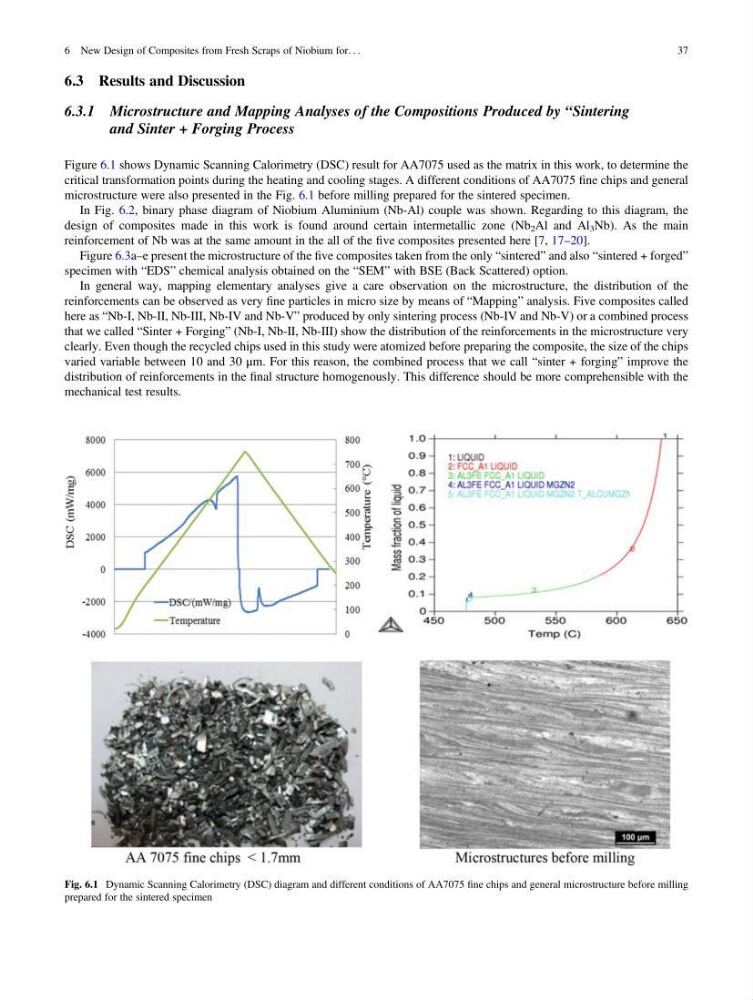
Figure 6.1 shows Dynamic Scanning Calorimetry (DSC) result for AA7075 used as the matrix in this work, to determine the
critical transformation points during the heating and cooling stages. A different conditions of AA7075 fine chips and general
microstructure were also presented in the Fig. 6.1 before milling prepared for the sintered specimen.
In Fig. 6.2, binary phase diagram of Niobium Aluminium (Nb-Al) couple was shown. Regarding to this diagram, the
design of composites made in this work is found around certain intermetallic zone (Nb 2 Al and Al 3 Nb). As the main
reinforcement of Nb was at the same amount in the all of the five composites presented here [7, 17–20].
Figure 6.3a–e present the microstructure of the five composites taken from the only “sintered” and also “sintered + forged”
specimen with “EDS” chemical analysis obtained on the “SEM” with BSE (Back Scattered) option.
In general way, mapping elementary analyses give a care observation on the microstructure, the distribution of the
reinforcements can be observed as very fine particles in micro size by means of “Mapping” analysis. Five composites called
here as “Nb-I, Nb-II, Nb-III, Nb-IV and Nb-V” produced by only sintering process (Nb-IV and Nb-V) or a combined process
that we called “Sinter + Forging” (Nb-I, Nb-II, Nb-III) show the distribution of the reinforcements in the microstructure very
clearly. Even though the recycled chips used in this study were atomized before preparing the composite, the size of the chips
varied variable between 10 and 30 μm. For this reason, the combined process that we call “sinter + forging” improve the
distribution of reinforcements in the final structure homogenously. This difference should be more comprehensible with the
mechanical test results.
Fig. 6.1 Dynamic Scanning Calorimetry (DSC) diagram and different conditions of AA7075 fine chips and general microstructure before milling
prepared for the sintered specimen
6 New Design of Composites from Fresh Scraps of Niobium for. . .
37
6.3.1 Microstructure and Mapping Analyses of the Compositions Produced by “Sintering
and Sinter + Forging Process
Figure 6.1 shows Dynamic Scanning Calorimetry (DSC) result for AA7075 used as the matrix in this work, to determine the
critical transformation points during the heating and cooling stages. A different conditions of AA7075 fine chips and general
microstructure were also presented in the Fig. 6.1 before milling prepared for the sintered specimen.
In Fig. 6.2, binary phase diagram of Niobium Aluminium (Nb-Al) couple was shown. Regarding to this diagram, the
design of composites made in this work is found around certain intermetallic zone (Nb 2 Al and Al 3 Nb). As the main
reinforcement of Nb was at the same amount in the all of the five composites presented here [7, 17–20].
Figure 6.3a–e present the microstructure of the five composites taken from the only “sintered” and also “sintered + forged”
specimen with “EDS” chemical analysis obtained on the “SEM” with BSE (Back Scattered) option.
In general way, mapping elementary analyses give a care observation on the microstructure, the distribution of the
reinforcements can be observed as very fine particles in micro size by means of “Mapping” analysis. Five composites called
here as “Nb-I, Nb-II, Nb-III, Nb-IV and Nb-V” produced by only sintering process (Nb-IV and Nb-V) or a combined process
that we called “Sinter + Forging” (Nb-I, Nb-II, Nb-III) show the distribution of the reinforcements in the microstructure very
clearly. Even though the recycled chips used in this study were atomized before preparing the composite, the size of the chips
varied variable between 10 and 30 μm. For this reason, the combined process that we call “sinter + forging” improve the
distribution of reinforcements in the final structure homogenously. This difference should be more comprehensible with the
mechanical test results.
Fig. 6.1 Dynamic Scanning Calorimetry (DSC) diagram and different conditions of AA7075 fine chips and general microstructure before milling
prepared for the sintered specimen
6 New Design of Composites from Fresh Scraps of Niobium for. . .
37