

88
S. Kumari et al.
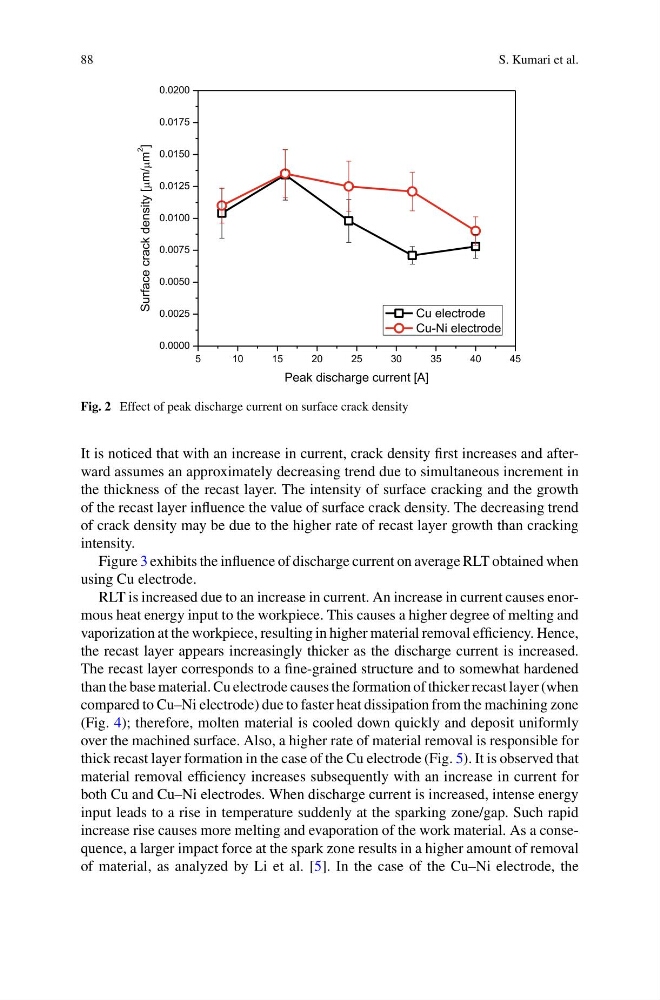
Fig. 2 Effect of peak discharge current on surface crack density
It is noticed that with an increase in current, crack density first increases and afterward assumes an approximately decreasing trend due to simultaneous increment in
the thickness of the recast layer. The intensity of surface cracking and the growth
of the recast layer influence the value of surface crack density. The decreasing trend
of crack density may be due to the higher rate of recast layer growth than cracking
intensity.
Figure 3 exhibits the influence of discharge current on average RLT obtained when
using Cu electrode.
RLT is increased due to an increase in current. An increase in current causes enormous heat energy input to the workpiece. This causes a higher degree of melting and
vaporization at the workpiece, resulting in higher material removal efficiency. Hence,
the recast layer appears increasingly thicker as the discharge current is increased.
The recast layer corresponds to a fine-grained structure and to somewhat hardened
than the base material. Cu electrode causes the formation of thicker recast layer (when
compared to Cu–Ni electrode) due to faster heat dissipation from the machining zone
(Fig. 4); therefore, molten material is cooled down quickly and deposit uniformly
over the machined surface. Also, a higher rate of material removal is responsible for
thick recast layer formation in the case of the Cu electrode (Fig. 5). It is observed that
material removal efficiency increases subsequently with an increase in current for
both Cu and Cu–Ni electrodes. When discharge current is increased, intense energy
input leads to a rise in temperature suddenly at the sparking zone/gap. Such rapid
increase rise causes more melting and evaporation of the work material. As a consequence, a larger impact force at the spark zone results in a higher amount of removal
of material, as analyzed by Li et al. [5]. In the case of the Cu–Ni electrode, the
S. Kumari et al.
Fig. 2 Effect of peak discharge current on surface crack density
It is noticed that with an increase in current, crack density first increases and afterward assumes an approximately decreasing trend due to simultaneous increment in
the thickness of the recast layer. The intensity of surface cracking and the growth
of the recast layer influence the value of surface crack density. The decreasing trend
of crack density may be due to the higher rate of recast layer growth than cracking
intensity.
Figure 3 exhibits the influence of discharge current on average RLT obtained when
using Cu electrode.
RLT is increased due to an increase in current. An increase in current causes enormous heat energy input to the workpiece. This causes a higher degree of melting and
vaporization at the workpiece, resulting in higher material removal efficiency. Hence,
the recast layer appears increasingly thicker as the discharge current is increased.
The recast layer corresponds to a fine-grained structure and to somewhat hardened
than the base material. Cu electrode causes the formation of thicker recast layer (when
compared to Cu–Ni electrode) due to faster heat dissipation from the machining zone
(Fig. 4); therefore, molten material is cooled down quickly and deposit uniformly
over the machined surface. Also, a higher rate of material removal is responsible for
thick recast layer formation in the case of the Cu electrode (Fig. 5). It is observed that
material removal efficiency increases subsequently with an increase in current for
both Cu and Cu–Ni electrodes. When discharge current is increased, intense energy
input leads to a rise in temperature suddenly at the sparking zone/gap. Such rapid
increase rise causes more melting and evaporation of the work material. As a consequence, a larger impact force at the spark zone results in a higher amount of removal
of material, as analyzed by Li et al. [5]. In the case of the Cu–Ni electrode, the