

76
P. K. Nanavati et al.
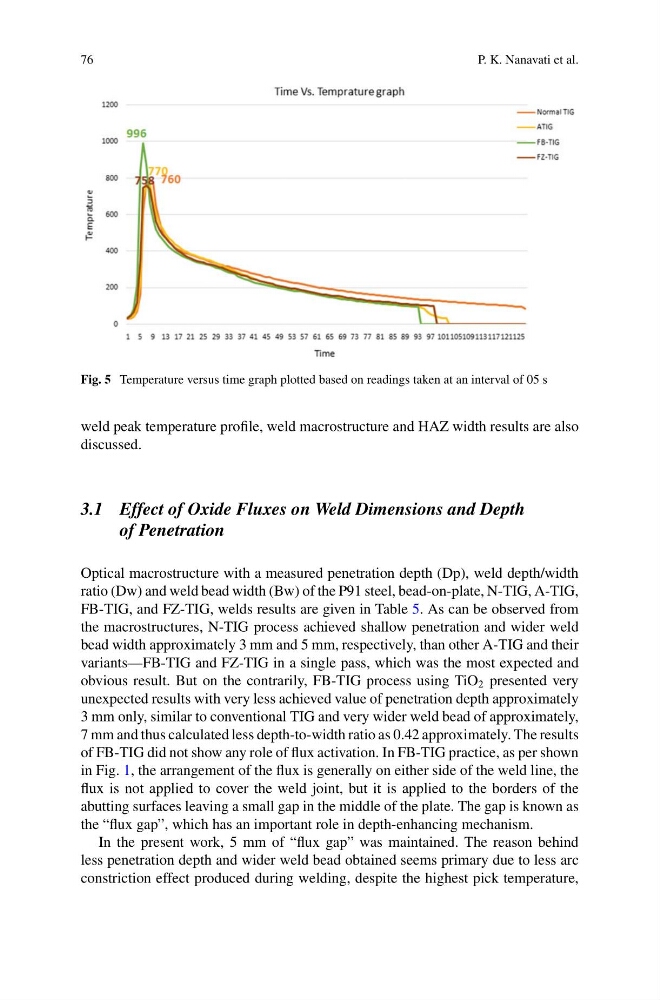
Fig. 5 Temperature versus time graph plotted based on readings taken at an interval of 05 s
weld peak temperature profile, weld macrostructure and HAZ width results are also
discussed.
3.1 Effect of Oxide Fluxes on Weld Dimensions and Depth
of Penetration
Optical macrostructure with a measured penetration depth (Dp), weld depth/width
ratio (Dw) and weld bead width (Bw) of the P91 steel, bead-on-plate, N-TIG, A-TIG,
FB-TIG, and FZ-TIG, welds results are given in Table 5. As can be observed from
the macrostructures, N-TIG process achieved shallow penetration and wider weld
bead width approximately 3 mm and 5 mm, respectively, than other A-TIG and their
variants—FB-TIG and FZ-TIG in a single pass, which was the most expected and
obvious result. But on the contrarily, FB-TIG process using TiO 2 presented very
unexpected results with very less achieved value of penetration depth approximately
3 mm only, similar to conventional TIG and very wider weld bead of approximately,
7 mm and thus calculated less depth-to-width ratio as 0.42 approximately. The results
of FB-TIG did not show any role of flux activation. In FB-TIG practice, as per shown
in Fig. 1, the arrangement of the flux is generally on either side of the weld line, the
flux is not applied to cover the weld joint, but it is applied to the borders of the
abutting surfaces leaving a small gap in the middle of the plate. The gap is known as
the “flux gap”, which has an important role in depth-enhancing mechanism.
In the present work, 5 mm of “flux gap” was maintained. The reason behind
less penetration depth and wider weld bead obtained seems primary due to less arc
constriction effect produced during welding, despite the highest pick temperature,
P. K. Nanavati et al.
Fig. 5 Temperature versus time graph plotted based on readings taken at an interval of 05 s
weld peak temperature profile, weld macrostructure and HAZ width results are also
discussed.
3.1 Effect of Oxide Fluxes on Weld Dimensions and Depth
of Penetration
Optical macrostructure with a measured penetration depth (Dp), weld depth/width
ratio (Dw) and weld bead width (Bw) of the P91 steel, bead-on-plate, N-TIG, A-TIG,
FB-TIG, and FZ-TIG, welds results are given in Table 5. As can be observed from
the macrostructures, N-TIG process achieved shallow penetration and wider weld
bead width approximately 3 mm and 5 mm, respectively, than other A-TIG and their
variants—FB-TIG and FZ-TIG in a single pass, which was the most expected and
obvious result. But on the contrarily, FB-TIG process using TiO 2 presented very
unexpected results with very less achieved value of penetration depth approximately
3 mm only, similar to conventional TIG and very wider weld bead of approximately,
7 mm and thus calculated less depth-to-width ratio as 0.42 approximately. The results
of FB-TIG did not show any role of flux activation. In FB-TIG practice, as per shown
in Fig. 1, the arrangement of the flux is generally on either side of the weld line, the
flux is not applied to cover the weld joint, but it is applied to the borders of the
abutting surfaces leaving a small gap in the middle of the plate. The gap is known as
the “flux gap”, which has an important role in depth-enhancing mechanism.
In the present work, 5 mm of “flux gap” was maintained. The reason behind
less penetration depth and wider weld bead obtained seems primary due to less arc
constriction effect produced during welding, despite the highest pick temperature,