

Effect of Optimized Slip and Texture Zone …
435
performed on the use of non-wettable surfaces. Wu et al. [8] experimentally showed
that the use of slip/no-slip surface effective in producing load carrying capacity during
parallel surface condition. There are number of researchers [9–11] who experimentally verify the improvement in bearing performance by use of non-wettable surfaces.
Another effective way to improve load carrying capacity and friction in MEMS is use
of surface texturing. Recently, many researchers [12–15] use numerical approach to
investigate the effect of different types of surface texture on journal bearing performance parameters under steady condition. Their findings show increase in load
carrying capacity and decrease in friction force by the use of heterogeneous smooth
and texture surface. The previous numerical simulations performed by the number
of researchers [12–15] to predict the effect of texture geometrical parameters on the
tribological performance of hydrodynamic bearings and provide an excellent set of
instructions to optimize texture geometry for the particular application. However,
in all the investigations for finite texture journal bearing, the effect of conventional
no-slippage surface boundary condition was used. Very few researchers appear to
have considered the interplay of surface texturing and slippage effect on short journal
bearings [16–18]. The aim of this work is to examine the load carrying capacity and
friction force using cylindrical surface texture and non-wettable surface. The role of
cavitation on the texture/non-wettable surface also examined. The cavitation models
suggested by Elrod [19] and further modified by Khonsari [20] studied for texture
and slip/no-slip situation.
2 Mathematical Formulation
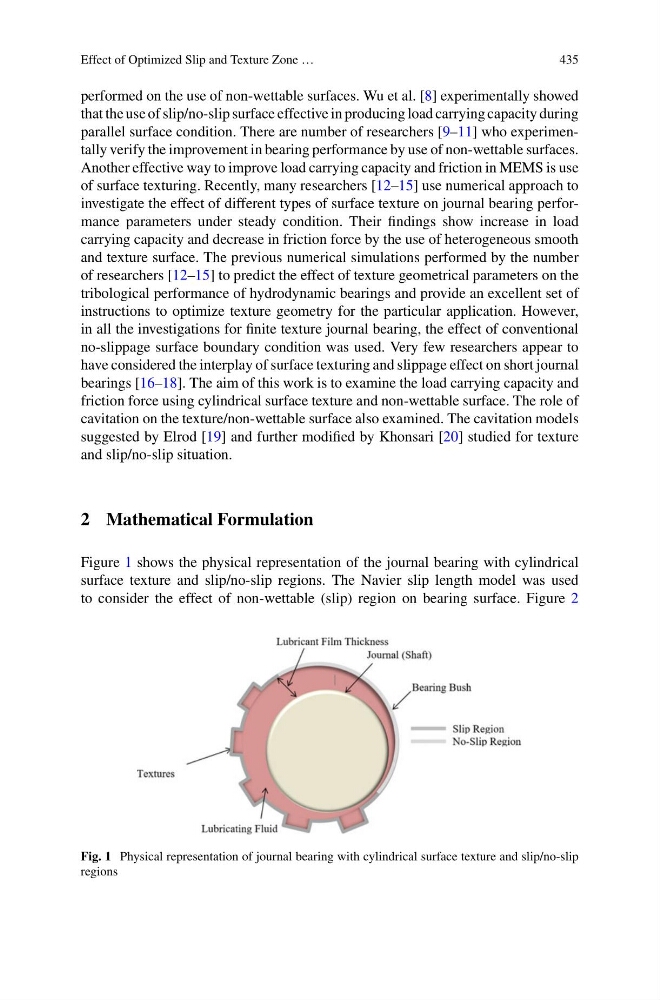
Figure 1 shows the physical representation of the journal bearing with cylindrical
surface texture and slip/no-slip regions. The Navier slip length model was used
to consider the effect of non-wettable (slip) region on bearing surface. Figure 2
Fig. 1 Physical representation of journal bearing with cylindrical surface texture and slip/no-slip
regions
435
performed on the use of non-wettable surfaces. Wu et al. [8] experimentally showed
that the use of slip/no-slip surface effective in producing load carrying capacity during
parallel surface condition. There are number of researchers [9–11] who experimentally verify the improvement in bearing performance by use of non-wettable surfaces.
Another effective way to improve load carrying capacity and friction in MEMS is use
of surface texturing. Recently, many researchers [12–15] use numerical approach to
investigate the effect of different types of surface texture on journal bearing performance parameters under steady condition. Their findings show increase in load
carrying capacity and decrease in friction force by the use of heterogeneous smooth
and texture surface. The previous numerical simulations performed by the number
of researchers [12–15] to predict the effect of texture geometrical parameters on the
tribological performance of hydrodynamic bearings and provide an excellent set of
instructions to optimize texture geometry for the particular application. However,
in all the investigations for finite texture journal bearing, the effect of conventional
no-slippage surface boundary condition was used. Very few researchers appear to
have considered the interplay of surface texturing and slippage effect on short journal
bearings [16–18]. The aim of this work is to examine the load carrying capacity and
friction force using cylindrical surface texture and non-wettable surface. The role of
cavitation on the texture/non-wettable surface also examined. The cavitation models
suggested by Elrod [19] and further modified by Khonsari [20] studied for texture
and slip/no-slip situation.
2 Mathematical Formulation
Figure 1 shows the physical representation of the journal bearing with cylindrical
surface texture and slip/no-slip regions. The Navier slip length model was used
to consider the effect of non-wettable (slip) region on bearing surface. Figure 2
Fig. 1 Physical representation of journal bearing with cylindrical surface texture and slip/no-slip
regions