

302
A. A. Kadam et al.
(a)
(b)
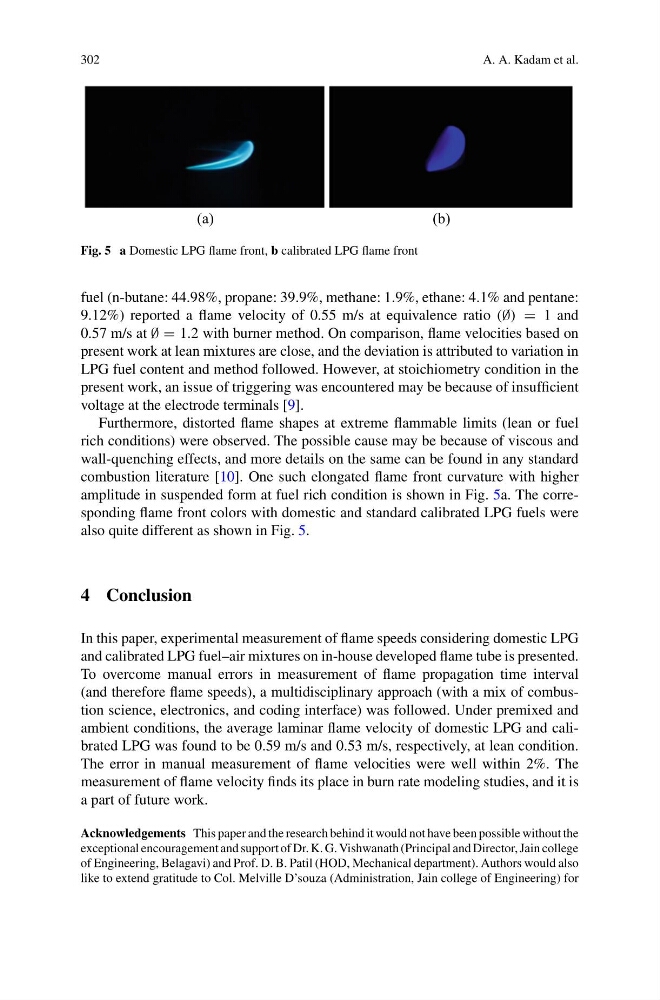
Fig. 5 a Domestic LPG flame front, b calibrated LPG flame front
fuel (n-butane: 44.98%, propane: 39.9%, methane: 1.9%, ethane: 4.1% and pentane:
9.12%) reported a flame velocity of 0.55 m/s at equivalence ratio (∅) = 1 and
0.57 m/s at ∅ = 1.2 with burner method. On comparison, flame velocities based on
present work at lean mixtures are close, and the deviation is attributed to variation in
LPG fuel content and method followed. However, at stoichiometry condition in the
present work, an issue of triggering was encountered may be because of insufficient
voltage at the electrode terminals [9].
Furthermore, distorted flame shapes at extreme flammable limits (lean or fuel
rich conditions) were observed. The possible cause may be because of viscous and
wall-quenching effects, and more details on the same can be found in any standard
combustion literature [10]. One such elongated flame front curvature with higher
amplitude in suspended form at fuel rich condition is shown in Fig. 5a. The corresponding flame front colors with domestic and standard calibrated LPG fuels were
also quite different as shown in Fig. 5.
4 Conclusion
In this paper, experimental measurement of flame speeds considering domestic LPG
and calibrated LPG fuel–air mixtures on in-house developed flame tube is presented.
To overcome manual errors in measurement of flame propagation time interval
(and therefore flame speeds), a multidisciplinary approach (with a mix of combustion science, electronics, and coding interface) was followed. Under premixed and
ambient conditions, the average laminar flame velocity of domestic LPG and calibrated LPG was found to be 0.59 m/s and 0.53 m/s, respectively, at lean condition.
The error in manual measurement of flame velocities were well within 2%. The
measurement of flame velocity finds its place in burn rate modeling studies, and it is
a part of future work.
Acknowledgements This paper and the research behind it would not have been possible without the
exceptional encouragement and support of Dr. K. G. Vishwanath (Principal and Director, Jain college
of Engineering, Belagavi) and Prof. D. B. Patil (HOD, Mechanical department). Authors would also
like to extend gratitude to Col. Melville D’souza (Administration, Jain college of Engineering) for
A. A. Kadam et al.
(a)
(b)
Fig. 5 a Domestic LPG flame front, b calibrated LPG flame front
fuel (n-butane: 44.98%, propane: 39.9%, methane: 1.9%, ethane: 4.1% and pentane:
9.12%) reported a flame velocity of 0.55 m/s at equivalence ratio (∅) = 1 and
0.57 m/s at ∅ = 1.2 with burner method. On comparison, flame velocities based on
present work at lean mixtures are close, and the deviation is attributed to variation in
LPG fuel content and method followed. However, at stoichiometry condition in the
present work, an issue of triggering was encountered may be because of insufficient
voltage at the electrode terminals [9].
Furthermore, distorted flame shapes at extreme flammable limits (lean or fuel
rich conditions) were observed. The possible cause may be because of viscous and
wall-quenching effects, and more details on the same can be found in any standard
combustion literature [10]. One such elongated flame front curvature with higher
amplitude in suspended form at fuel rich condition is shown in Fig. 5a. The corresponding flame front colors with domestic and standard calibrated LPG fuels were
also quite different as shown in Fig. 5.
4 Conclusion
In this paper, experimental measurement of flame speeds considering domestic LPG
and calibrated LPG fuel–air mixtures on in-house developed flame tube is presented.
To overcome manual errors in measurement of flame propagation time interval
(and therefore flame speeds), a multidisciplinary approach (with a mix of combustion science, electronics, and coding interface) was followed. Under premixed and
ambient conditions, the average laminar flame velocity of domestic LPG and calibrated LPG was found to be 0.59 m/s and 0.53 m/s, respectively, at lean condition.
The error in manual measurement of flame velocities were well within 2%. The
measurement of flame velocity finds its place in burn rate modeling studies, and it is
a part of future work.
Acknowledgements This paper and the research behind it would not have been possible without the
exceptional encouragement and support of Dr. K. G. Vishwanath (Principal and Director, Jain college
of Engineering, Belagavi) and Prof. D. B. Patil (HOD, Mechanical department). Authors would also
like to extend gratitude to Col. Melville D’souza (Administration, Jain college of Engineering) for