

218
N. Patel et al.
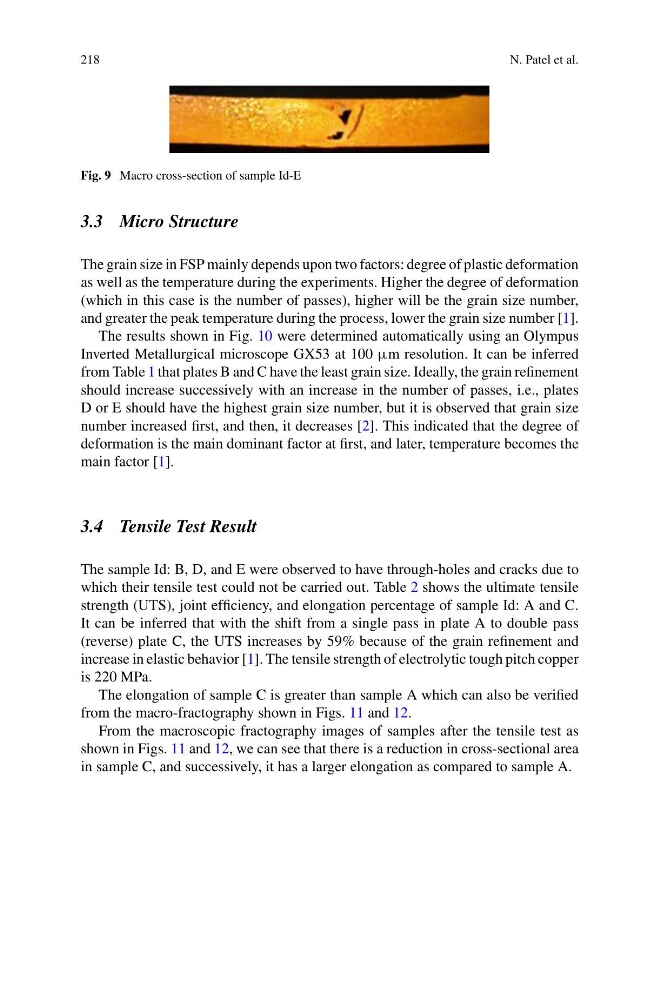
Fig. 9 Macro cross-section of sample Id-E
3.3 Micro Structure
The grain size in FSP mainly depends upon two factors: degree of plastic deformation
as well as the temperature during the experiments. Higher the degree of deformation
(which in this case is the number of passes), higher will be the grain size number,
and greater the peak temperature during the process, lower the grain size number [1].
The results shown in Fig. 10 were determined automatically using an Olympus
Inverted Metallurgical microscope GX53 at 100 µm resolution. It can be inferred
from Table 1 that plates B and C have the least grain size. Ideally, the grain refinement
should increase successively with an increase in the number of passes, i.e., plates
D or E should have the highest grain size number, but it is observed that grain size
number increased first, and then, it decreases [2]. This indicated that the degree of
deformation is the main dominant factor at first, and later, temperature becomes the
main factor [1].
3.4 Tensile Test Result
The sample Id: B, D, and E were observed to have through-holes and cracks due to
which their tensile test could not be carried out. Table 2 shows the ultimate tensile
strength (UTS), joint efficiency, and elongation percentage of sample Id: A and C.
It can be inferred that with the shift from a single pass in plate A to double pass
(reverse) plate C, the UTS increases by 59% because of the grain refinement and
increase in elastic behavior [1]. The tensile strength of electrolytic tough pitch copper
is 220 MPa.
The elongation of sample C is greater than sample A which can also be verified
from the macro-fractography shown in Figs. 11 and 12.
From the macroscopic fractography images of samples after the tensile test as
shown in Figs. 11 and 12, we can see that there is a reduction in cross-sectional area
in sample C, and successively, it has a larger elongation as compared to sample A.
N. Patel et al.
Fig. 9 Macro cross-section of sample Id-E
3.3 Micro Structure
The grain size in FSP mainly depends upon two factors: degree of plastic deformation
as well as the temperature during the experiments. Higher the degree of deformation
(which in this case is the number of passes), higher will be the grain size number,
and greater the peak temperature during the process, lower the grain size number [1].
The results shown in Fig. 10 were determined automatically using an Olympus
Inverted Metallurgical microscope GX53 at 100 µm resolution. It can be inferred
from Table 1 that plates B and C have the least grain size. Ideally, the grain refinement
should increase successively with an increase in the number of passes, i.e., plates
D or E should have the highest grain size number, but it is observed that grain size
number increased first, and then, it decreases [2]. This indicated that the degree of
deformation is the main dominant factor at first, and later, temperature becomes the
main factor [1].
3.4 Tensile Test Result
The sample Id: B, D, and E were observed to have through-holes and cracks due to
which their tensile test could not be carried out. Table 2 shows the ultimate tensile
strength (UTS), joint efficiency, and elongation percentage of sample Id: A and C.
It can be inferred that with the shift from a single pass in plate A to double pass
(reverse) plate C, the UTS increases by 59% because of the grain refinement and
increase in elastic behavior [1]. The tensile strength of electrolytic tough pitch copper
is 220 MPa.
The elongation of sample C is greater than sample A which can also be verified
from the macro-fractography shown in Figs. 11 and 12.
From the macroscopic fractography images of samples after the tensile test as
shown in Figs. 11 and 12, we can see that there is a reduction in cross-sectional area
in sample C, and successively, it has a larger elongation as compared to sample A.