

10
A. Kumar et al.
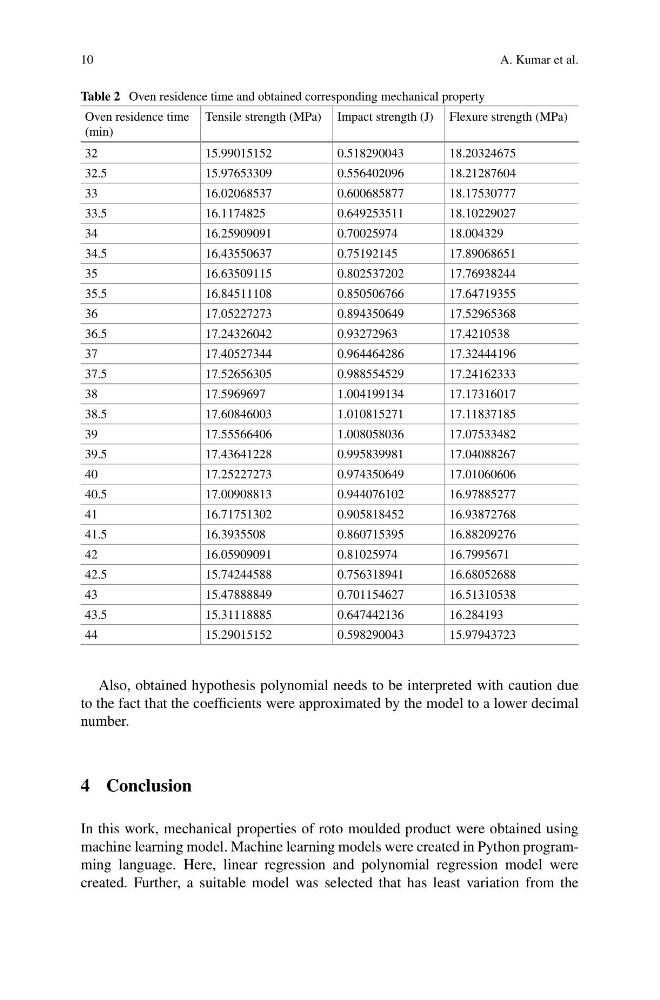
Table 2 Oven residence time and obtained corresponding mechanical property
Oven residence time
(min)
Tensile strength (MPa) Impact strength (J) Flexure strength (MPa)
32
15.99015152
0.518290043
18.20324675
32.5
15.97653309
0.556402096
18.21287604
33
16.02068537
0.600685877
18.17530777
33.5
16.1174825
0.649253511
18.10229027
34
16.25909091
0.70025974
18.004329
34.5
16.43550637
0.75192145
17.89068651
35
16.63509115
0.802537202
17.76938244
35.5
16.84511108
0.850506766
17.64719355
36
17.05227273
0.894350649
17.52965368
36.5
17.24326042
0.93272963
17.4210538
37
17.40527344
0.964464286
17.32444196
37.5
17.52656305
0.988554529
17.24162333
38
17.5969697
1.004199134
17.17316017
38.5
17.60846003
1.010815271
17.11837185
39
17.55566406
1.008058036
17.07533482
39.5
17.43641228
0.995839981
17.04088267
40
17.25227273
0.974350649
17.01060606
40.5
17.00908813
0.944076102
16.97885277
41
16.71751302
0.905818452
16.93872768
41.5
16.3935508
0.860715395
16.88209276
42
16.05909091
0.81025974
16.7995671
42.5
15.74244588
0.756318941
16.68052688
43
15.47888849
0.701154627
16.51310538
43.5
15.31118885
0.647442136
16.284193
44
15.29015152
0.598290043
15.97943723
Also, obtained hypothesis polynomial needs to be interpreted with caution due
to the fact that the coefficients were approximated by the model to a lower decimal
number.
4 Conclusion
In this work, mechanical properties of roto moulded product were obtained using
machine learning model. Machine learning models were created in Python programming language. Here, linear regression and polynomial regression model were
created. Further, a suitable model was selected that has least variation from the
A. Kumar et al.
Table 2 Oven residence time and obtained corresponding mechanical property
Oven residence time
(min)
Tensile strength (MPa) Impact strength (J) Flexure strength (MPa)
32
15.99015152
0.518290043
18.20324675
32.5
15.97653309
0.556402096
18.21287604
33
16.02068537
0.600685877
18.17530777
33.5
16.1174825
0.649253511
18.10229027
34
16.25909091
0.70025974
18.004329
34.5
16.43550637
0.75192145
17.89068651
35
16.63509115
0.802537202
17.76938244
35.5
16.84511108
0.850506766
17.64719355
36
17.05227273
0.894350649
17.52965368
36.5
17.24326042
0.93272963
17.4210538
37
17.40527344
0.964464286
17.32444196
37.5
17.52656305
0.988554529
17.24162333
38
17.5969697
1.004199134
17.17316017
38.5
17.60846003
1.010815271
17.11837185
39
17.55566406
1.008058036
17.07533482
39.5
17.43641228
0.995839981
17.04088267
40
17.25227273
0.974350649
17.01060606
40.5
17.00908813
0.944076102
16.97885277
41
16.71751302
0.905818452
16.93872768
41.5
16.3935508
0.860715395
16.88209276
42
16.05909091
0.81025974
16.7995671
42.5
15.74244588
0.756318941
16.68052688
43
15.47888849
0.701154627
16.51310538
43.5
15.31118885
0.647442136
16.284193
44
15.29015152
0.598290043
15.97943723
Also, obtained hypothesis polynomial needs to be interpreted with caution due
to the fact that the coefficients were approximated by the model to a lower decimal
number.
4 Conclusion
In this work, mechanical properties of roto moulded product were obtained using
machine learning model. Machine learning models were created in Python programming language. Here, linear regression and polynomial regression model were
created. Further, a suitable model was selected that has least variation from the