

138
D. K. Sharma et al.
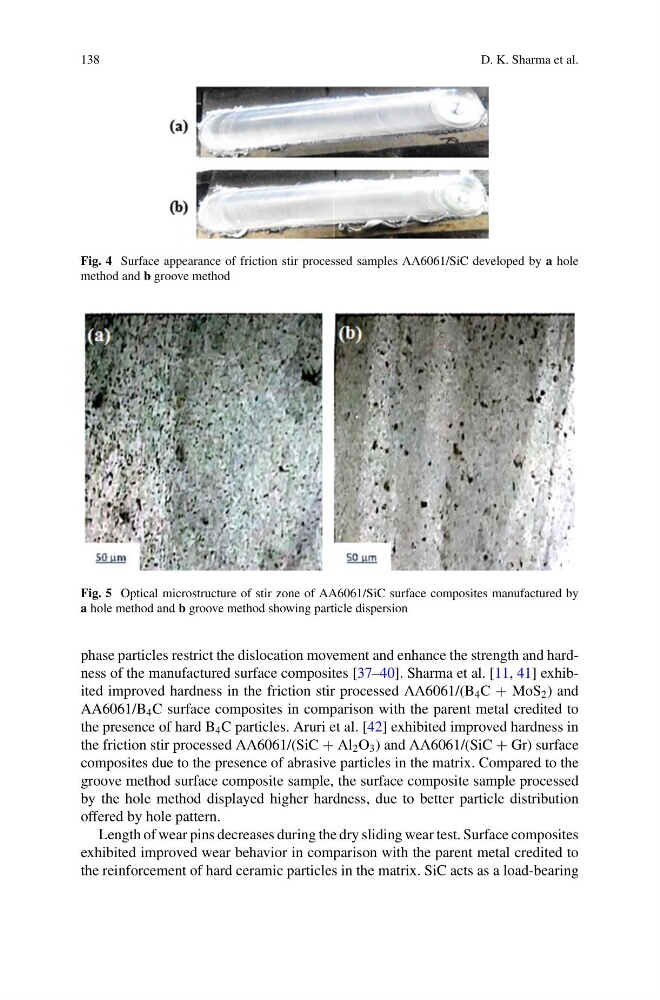
Fig. 4 Surface appearance of friction stir processed samples AA6061/SiC developed by a hole
method and b groove method
Fig. 5 Optical microstructure of stir zone of AA6061/SiC surface composites manufactured by
a hole method and b groove method showing particle dispersion
phase particles restrict the dislocation movement and enhance the strength and hardness of the manufactured surface composites [37–40]. Sharma et al. [11, 41] exhibited improved hardness in the friction stir processed AA6061/(B 4 C + MoS 2 ) and
AA6061/B 4 C surface composites in comparison with the parent metal credited to
the presence of hard B 4 C particles. Aruri et al. [42] exhibited improved hardness in
the friction stir processed AA6061/(SiC + Al 2 O 3 ) and AA6061/(SiC + Gr) surface
composites due to the presence of abrasive particles in the matrix. Compared to the
groove method surface composite sample, the surface composite sample processed
by the hole method displayed higher hardness, due to better particle distribution
offered by hole pattern.
Length of wear pins decreases during the dry sliding wear test. Surface composites
exhibited improved wear behavior in comparison with the parent metal credited to
the reinforcement of hard ceramic particles in the matrix. SiC acts as a load-bearing
D. K. Sharma et al.
Fig. 4 Surface appearance of friction stir processed samples AA6061/SiC developed by a hole
method and b groove method
Fig. 5 Optical microstructure of stir zone of AA6061/SiC surface composites manufactured by
a hole method and b groove method showing particle dispersion
phase particles restrict the dislocation movement and enhance the strength and hardness of the manufactured surface composites [37–40]. Sharma et al. [11, 41] exhibited improved hardness in the friction stir processed AA6061/(B 4 C + MoS 2 ) and
AA6061/B 4 C surface composites in comparison with the parent metal credited to
the presence of hard B 4 C particles. Aruri et al. [42] exhibited improved hardness in
the friction stir processed AA6061/(SiC + Al 2 O 3 ) and AA6061/(SiC + Gr) surface
composites due to the presence of abrasive particles in the matrix. Compared to the
groove method surface composite sample, the surface composite sample processed
by the hole method displayed higher hardness, due to better particle distribution
offered by hole pattern.
Length of wear pins decreases during the dry sliding wear test. Surface composites
exhibited improved wear behavior in comparison with the parent metal credited to
the reinforcement of hard ceramic particles in the matrix. SiC acts as a load-bearing