

32
2 State of the art
mechanical effects, conclusions regarding the actual structural performance of the investigated joints are difficult to draw, due to the preliminary analysis character of the
applied models. As a result of this, there is only one study known that applied a computational model for the development of a new joint design [Lim11]. Beyond that, there
are few additional novel joint designs described in the literature, all of which depended
on real-world testing for evaluating the mechanical performance. Furthermore, the
available novel joint designs are mostly based on co-fabrication, which requires bonding
during panel fabrication. For cabin interior applications this is less favorable since small
lot sizes require flexible manufacturing processes, such as post fabrication bonding.
Need for further research
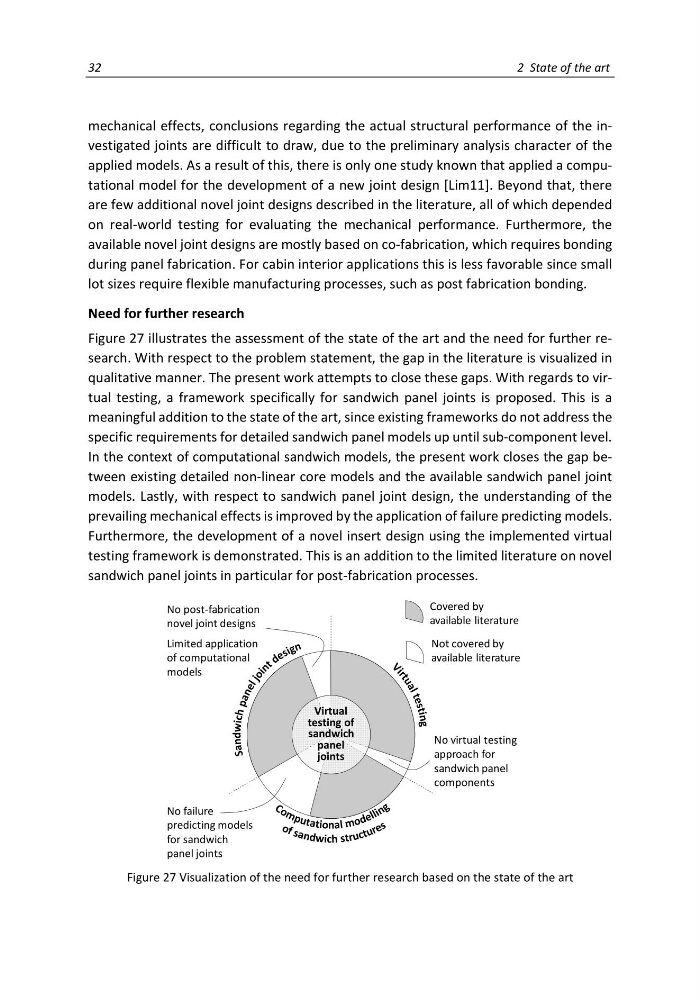
Figure 27 illustrates the assessment of the state of the art and the need for further research. With respect to the problem statement, the gap in the literature is visualized in
qualitative manner. The present work attempts to close these gaps. With regards to virtual testing, a framework specifically for sandwich panel joints is proposed. This is a
meaningful addition to the state of the art, since existing frameworks do not address the
specific requirements for detailed sandwich panel models up until sub-component level.
In the context of computational sandwich models, the present work closes the gap between existing detailed non-linear core models and the available sandwich panel joint
models. Lastly, with respect to sandwich panel joint design, the understanding of the
prevailing mechanical effects is improved by the application of failure predicting models.
Furthermore, the development of a novel insert design using the implemented virtual
testing framework is demonstrated. This is an addition to the limited literature on novel
sandwich panel joints in particular for post-fabrication processes.
Figure 27 Visualization of the need for further research based on the state of the art
Virtual
testing of
sandwich
panel
joints
Covered by
available literature
Not covered by
available literature
No virtual testing
approach for
sandwich panel
components
No failure
predicting models
for sandwich
panel joints
No post-fabrication
novel joint designs
Limited application
of computational
models
2 State of the art
mechanical effects, conclusions regarding the actual structural performance of the investigated joints are difficult to draw, due to the preliminary analysis character of the
applied models. As a result of this, there is only one study known that applied a computational model for the development of a new joint design [Lim11]. Beyond that, there
are few additional novel joint designs described in the literature, all of which depended
on real-world testing for evaluating the mechanical performance. Furthermore, the
available novel joint designs are mostly based on co-fabrication, which requires bonding
during panel fabrication. For cabin interior applications this is less favorable since small
lot sizes require flexible manufacturing processes, such as post fabrication bonding.
Need for further research
Figure 27 illustrates the assessment of the state of the art and the need for further research. With respect to the problem statement, the gap in the literature is visualized in
qualitative manner. The present work attempts to close these gaps. With regards to virtual testing, a framework specifically for sandwich panel joints is proposed. This is a
meaningful addition to the state of the art, since existing frameworks do not address the
specific requirements for detailed sandwich panel models up until sub-component level.
In the context of computational sandwich models, the present work closes the gap between existing detailed non-linear core models and the available sandwich panel joint
models. Lastly, with respect to sandwich panel joint design, the understanding of the
prevailing mechanical effects is improved by the application of failure predicting models.
Furthermore, the development of a novel insert design using the implemented virtual
testing framework is demonstrated. This is an addition to the limited literature on novel
sandwich panel joints in particular for post-fabrication processes.
Figure 27 Visualization of the need for further research based on the state of the art
Virtual
testing of
sandwich
panel
joints
Covered by
available literature
Not covered by
available literature
No virtual testing
approach for
sandwich panel
components
No failure
predicting models
for sandwich
panel joints
No post-fabrication
novel joint designs
Limited application
of computational
models