

1 Foundation of Fluid Mechanics
49
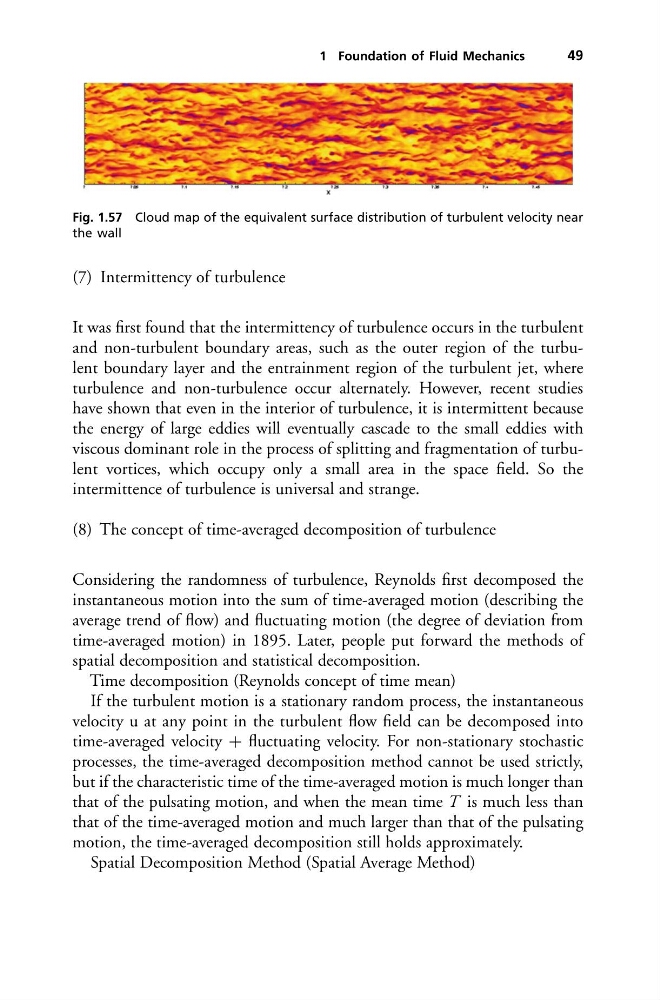
Fig. 1.57 Cloud map of the equivalent surface distribution of turbulent velocity near
the wall
(7) Intermittency of turbulence
It was first found that the intermittency of turbulence occurs in the turbulent
and non-turbulent boundary areas, such as the outer region of the turbulent boundary layer and the entrainment region of the turbulent jet, where
turbulence and non-turbulence occur alternately. However, recent studies
have shown that even in the interior of turbulence, it is intermittent because
the energy of large eddies will eventually cascade to the small eddies with
viscous dominant role in the process of splitting and fragmentation of turbulent vortices, which occupy only a small area in the space field. So the
intermittence of turbulence is universal and strange.
(8) The concept of time-averaged decomposition of turbulence
Considering the randomness of turbulence, Reynolds first decomposed the
instantaneous motion into the sum of time-averaged motion (describing the
average trend of flow) and fluctuating motion (the degree of deviation from
time-averaged motion) in 1895. Later, people put forward the methods of
spatial decomposition and statistical decomposition.
Time decomposition (Reynolds concept of time mean)
If the turbulent motion is a stationary random process, the instantaneous
velocity u at any point in the turbulent flow field can be decomposed into
time-averaged velocity + fluctuating velocity. For non-stationary stochastic
processes, the time-averaged decomposition method cannot be used strictly,
but if the characteristic time of the time-averaged motion is much longer than
that of the pulsating motion, and when the mean time T is much less than
that of the time-averaged motion and much larger than that of the pulsating
motion, the time-averaged decomposition still holds approximately.
Spatial Decomposition Method (Spatial Average Method)
49
Fig. 1.57 Cloud map of the equivalent surface distribution of turbulent velocity near
the wall
(7) Intermittency of turbulence
It was first found that the intermittency of turbulence occurs in the turbulent
and non-turbulent boundary areas, such as the outer region of the turbulent boundary layer and the entrainment region of the turbulent jet, where
turbulence and non-turbulence occur alternately. However, recent studies
have shown that even in the interior of turbulence, it is intermittent because
the energy of large eddies will eventually cascade to the small eddies with
viscous dominant role in the process of splitting and fragmentation of turbulent vortices, which occupy only a small area in the space field. So the
intermittence of turbulence is universal and strange.
(8) The concept of time-averaged decomposition of turbulence
Considering the randomness of turbulence, Reynolds first decomposed the
instantaneous motion into the sum of time-averaged motion (describing the
average trend of flow) and fluctuating motion (the degree of deviation from
time-averaged motion) in 1895. Later, people put forward the methods of
spatial decomposition and statistical decomposition.
Time decomposition (Reynolds concept of time mean)
If the turbulent motion is a stationary random process, the instantaneous
velocity u at any point in the turbulent flow field can be decomposed into
time-averaged velocity + fluctuating velocity. For non-stationary stochastic
processes, the time-averaged decomposition method cannot be used strictly,
but if the characteristic time of the time-averaged motion is much longer than
that of the pulsating motion, and when the mean time T is much less than
that of the time-averaged motion and much larger than that of the pulsating
motion, the time-averaged decomposition still holds approximately.
Spatial Decomposition Method (Spatial Average Method)