

1 Foundation of Fluid Mechanics
47
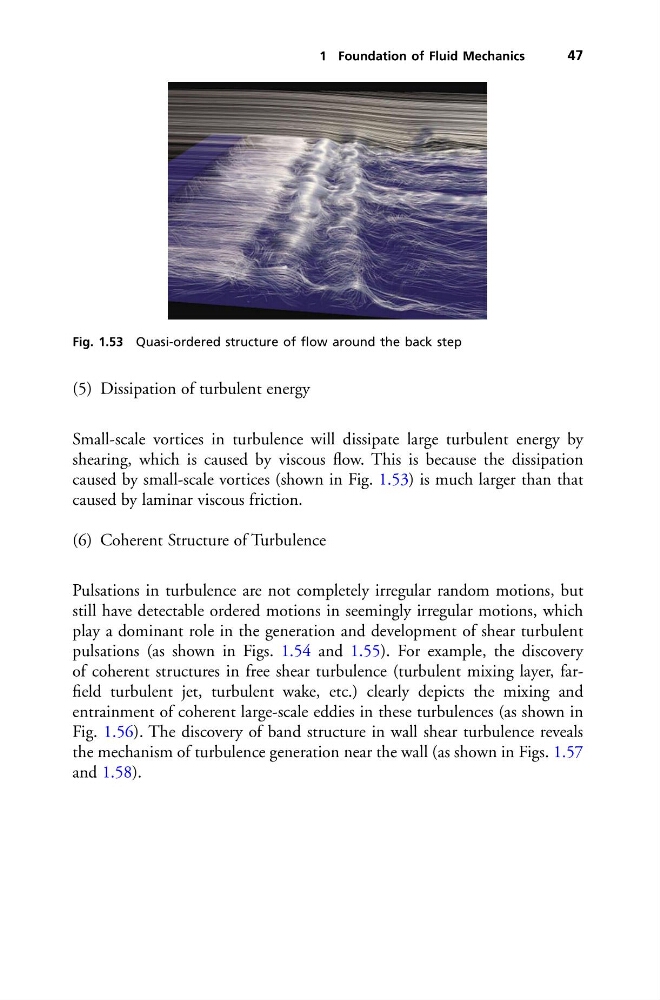
Fig. 1.53 Quasi-ordered structure of flow around the back step
(5) Dissipation of turbulent energy
Small-scale vortices in turbulence will dissipate large turbulent energy by
shearing, which is caused by viscous flow. This is because the dissipation
caused by small-scale vortices (shown in Fig. 1.53) is much larger than that
caused by laminar viscous friction.
(6) Coherent Structure of Turbulence
Pulsations in turbulence are not completely irregular random motions, but
still have detectable ordered motions in seemingly irregular motions, which
play a dominant role in the generation and development of shear turbulent
pulsations (as shown in Figs. 1.54 and 1.55). For example, the discovery
of coherent structures in free shear turbulence (turbulent mixing layer, farfield turbulent jet, turbulent wake, etc.) clearly depicts the mixing and
entrainment of coherent large-scale eddies in these turbulences (as shown in
Fig. 1.56). The discovery of band structure in wall shear turbulence reveals
the mechanism of turbulence generation near the wall (as shown in Figs. 1.57
and 1.58).
47
Fig. 1.53 Quasi-ordered structure of flow around the back step
(5) Dissipation of turbulent energy
Small-scale vortices in turbulence will dissipate large turbulent energy by
shearing, which is caused by viscous flow. This is because the dissipation
caused by small-scale vortices (shown in Fig. 1.53) is much larger than that
caused by laminar viscous friction.
(6) Coherent Structure of Turbulence
Pulsations in turbulence are not completely irregular random motions, but
still have detectable ordered motions in seemingly irregular motions, which
play a dominant role in the generation and development of shear turbulent
pulsations (as shown in Figs. 1.54 and 1.55). For example, the discovery
of coherent structures in free shear turbulence (turbulent mixing layer, farfield turbulent jet, turbulent wake, etc.) clearly depicts the mixing and
entrainment of coherent large-scale eddies in these turbulences (as shown in
Fig. 1.56). The discovery of band structure in wall shear turbulence reveals
the mechanism of turbulence generation near the wall (as shown in Figs. 1.57
and 1.58).