

548
P. Liu
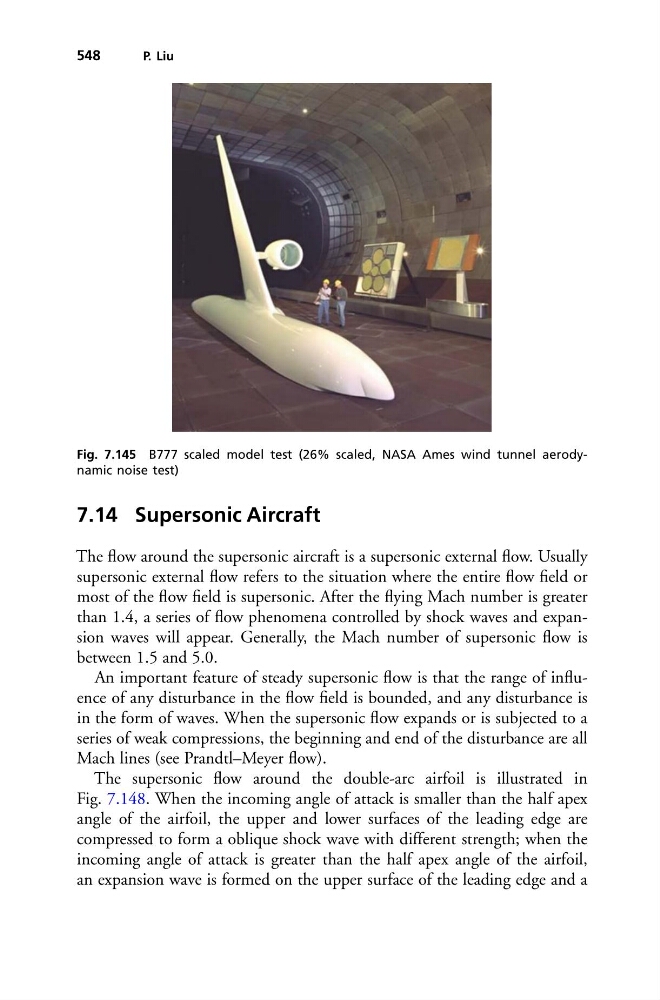
Fig. 7.145 B777 scaled model test (26% scaled, NASA Ames wind tunnel aerodynamic noise test)
7.14 Supersonic Aircraft
The flow around the supersonic aircraft is a supersonic external flow. Usually
supersonic external flow refers to the situation where the entire flow field or
most of the flow field is supersonic. After the flying Mach number is greater
than 1.4, a series of flow phenomena controlled by shock waves and expansion waves will appear. Generally, the Mach number of supersonic flow is
between 1.5 and 5.0.
An important feature of steady supersonic flow is that the range of influence of any disturbance in the flow field is bounded, and any disturbance is
in the form of waves. When the supersonic flow expands or is subjected to a
series of weak compressions, the beginning and end of the disturbance are all
Mach lines (see Prandtl–Meyer flow).
The supersonic flow around the double-arc airfoil is illustrated in
Fig. 7.148. When the incoming angle of attack is smaller than the half apex
angle of the airfoil, the upper and lower surfaces of the leading edge are
compressed to form a oblique shock wave with different strength; when the
incoming angle of attack is greater than the half apex angle of the airfoil,
an expansion wave is formed on the upper surface of the leading edge and a
P. Liu
Fig. 7.145 B777 scaled model test (26% scaled, NASA Ames wind tunnel aerodynamic noise test)
7.14 Supersonic Aircraft
The flow around the supersonic aircraft is a supersonic external flow. Usually
supersonic external flow refers to the situation where the entire flow field or
most of the flow field is supersonic. After the flying Mach number is greater
than 1.4, a series of flow phenomena controlled by shock waves and expansion waves will appear. Generally, the Mach number of supersonic flow is
between 1.5 and 5.0.
An important feature of steady supersonic flow is that the range of influence of any disturbance in the flow field is bounded, and any disturbance is
in the form of waves. When the supersonic flow expands or is subjected to a
series of weak compressions, the beginning and end of the disturbance are all
Mach lines (see Prandtl–Meyer flow).
The supersonic flow around the double-arc airfoil is illustrated in
Fig. 7.148. When the incoming angle of attack is smaller than the half apex
angle of the airfoil, the upper and lower surfaces of the leading edge are
compressed to form a oblique shock wave with different strength; when the
incoming angle of attack is greater than the half apex angle of the airfoil,
an expansion wave is formed on the upper surface of the leading edge and a