

546
P. Liu
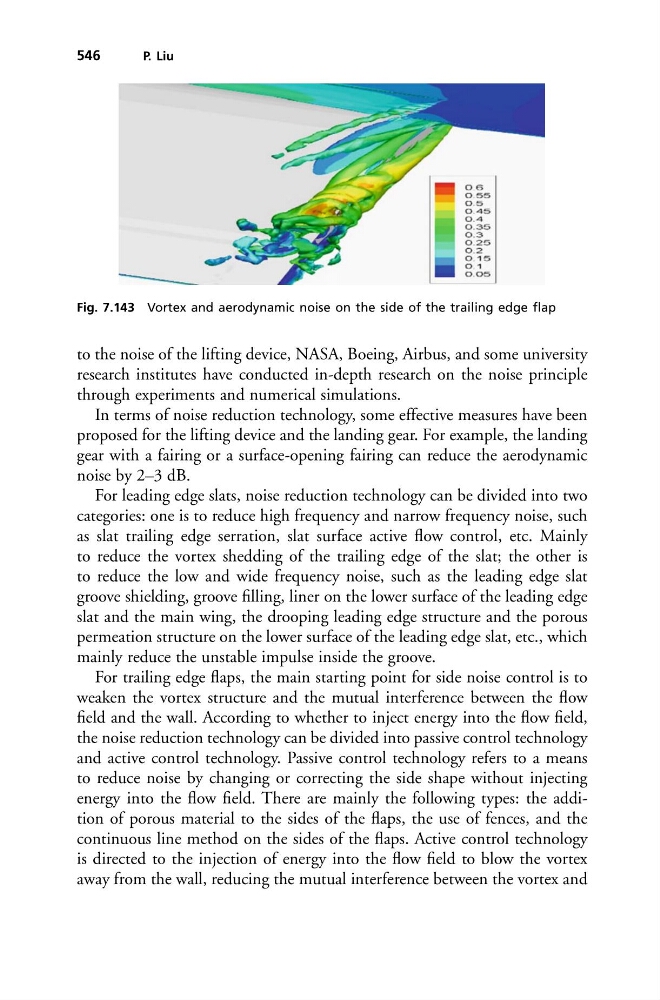
Fig. 7.143 Vortex and aerodynamic noise on the side of the trailing edge flap
to the noise of the lifting device, NASA, Boeing, Airbus, and some university
research institutes have conducted in-depth research on the noise principle
through experiments and numerical simulations.
In terms of noise reduction technology, some effective measures have been
proposed for the lifting device and the landing gear. For example, the landing
gear with a fairing or a surface-opening fairing can reduce the aerodynamic
noise by 2–3 dB.
For leading edge slats, noise reduction technology can be divided into two
categories: one is to reduce high frequency and narrow frequency noise, such
as slat trailing edge serration, slat surface active flow control, etc. Mainly
to reduce the vortex shedding of the trailing edge of the slat; the other is
to reduce the low and wide frequency noise, such as the leading edge slat
groove shielding, groove filling, liner on the lower surface of the leading edge
slat and the main wing, the drooping leading edge structure and the porous
permeation structure on the lower surface of the leading edge slat, etc., which
mainly reduce the unstable impulse inside the groove.
For trailing edge flaps, the main starting point for side noise control is to
weaken the vortex structure and the mutual interference between the flow
field and the wall. According to whether to inject energy into the flow field,
the noise reduction technology can be divided into passive control technology
and active control technology. Passive control technology refers to a means
to reduce noise by changing or correcting the side shape without injecting
energy into the flow field. There are mainly the following types: the addition of porous material to the sides of the flaps, the use of fences, and the
continuous line method on the sides of the flaps. Active control technology
is directed to the injection of energy into the flow field to blow the vortex
away from the wall, reducing the mutual interference between the vortex and
P. Liu
Fig. 7.143 Vortex and aerodynamic noise on the side of the trailing edge flap
to the noise of the lifting device, NASA, Boeing, Airbus, and some university
research institutes have conducted in-depth research on the noise principle
through experiments and numerical simulations.
In terms of noise reduction technology, some effective measures have been
proposed for the lifting device and the landing gear. For example, the landing
gear with a fairing or a surface-opening fairing can reduce the aerodynamic
noise by 2–3 dB.
For leading edge slats, noise reduction technology can be divided into two
categories: one is to reduce high frequency and narrow frequency noise, such
as slat trailing edge serration, slat surface active flow control, etc. Mainly
to reduce the vortex shedding of the trailing edge of the slat; the other is
to reduce the low and wide frequency noise, such as the leading edge slat
groove shielding, groove filling, liner on the lower surface of the leading edge
slat and the main wing, the drooping leading edge structure and the porous
permeation structure on the lower surface of the leading edge slat, etc., which
mainly reduce the unstable impulse inside the groove.
For trailing edge flaps, the main starting point for side noise control is to
weaken the vortex structure and the mutual interference between the flow
field and the wall. According to whether to inject energy into the flow field,
the noise reduction technology can be divided into passive control technology
and active control technology. Passive control technology refers to a means
to reduce noise by changing or correcting the side shape without injecting
energy into the flow field. There are mainly the following types: the addition of porous material to the sides of the flaps, the use of fences, and the
continuous line method on the sides of the flaps. Active control technology
is directed to the injection of energy into the flow field to blow the vortex
away from the wall, reducing the mutual interference between the vortex and