

7 Flight Mystery and Aerodynamic Principles
523
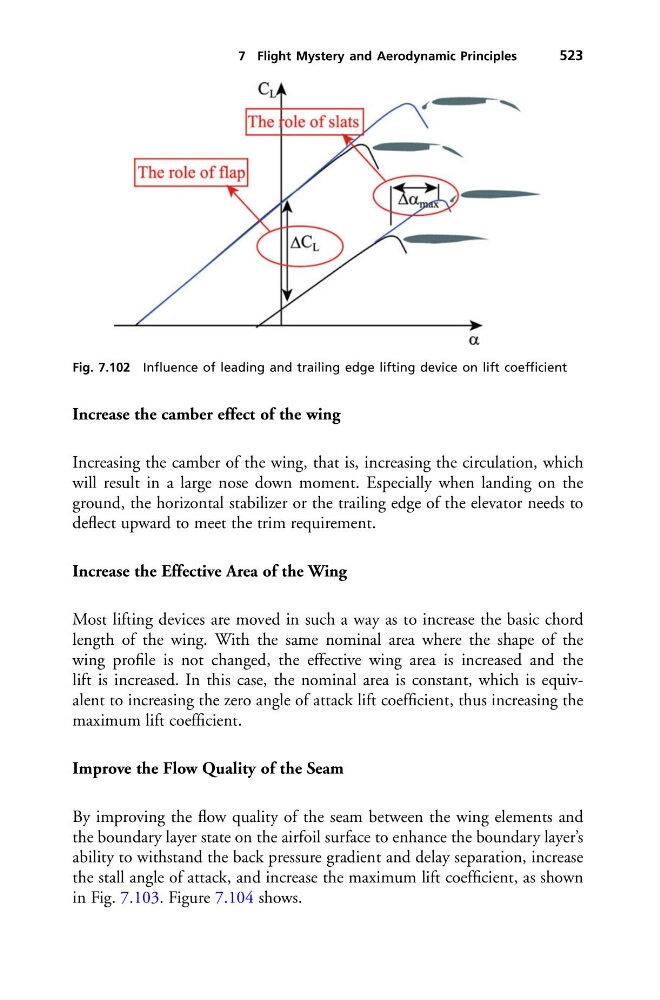
Fig. 7.102 Influence of leading and trailing edge lifting device on lift coefficient
Increase the camber effect of the wing
Increasing the camber of the wing, that is, increasing the circulation, which
will result in a large nose down moment. Especially when landing on the
ground, the horizontal stabilizer or the trailing edge of the elevator needs to
deflect upward to meet the trim requirement.
Increase the Effective Area of the Wing
Most lifting devices are moved in such a way as to increase the basic chord
length of the wing. With the same nominal area where the shape of the
wing profile is not changed, the effective wing area is increased and the
lift is increased. In this case, the nominal area is constant, which is equivalent to increasing the zero angle of attack lift coefficient, thus increasing the
maximum lift coefficient.
Improve the Flow Quality of the Seam
By improving the flow quality of the seam between the wing elements and
the boundary layer state on the airfoil surface to enhance the boundary layer’s
ability to withstand the back pressure gradient and delay separation, increase
the stall angle of attack, and increase the maximum lift coefficient, as shown
in Fig. 7.103. Figure 7.104 shows.
523
Fig. 7.102 Influence of leading and trailing edge lifting device on lift coefficient
Increase the camber effect of the wing
Increasing the camber of the wing, that is, increasing the circulation, which
will result in a large nose down moment. Especially when landing on the
ground, the horizontal stabilizer or the trailing edge of the elevator needs to
deflect upward to meet the trim requirement.
Increase the Effective Area of the Wing
Most lifting devices are moved in such a way as to increase the basic chord
length of the wing. With the same nominal area where the shape of the
wing profile is not changed, the effective wing area is increased and the
lift is increased. In this case, the nominal area is constant, which is equivalent to increasing the zero angle of attack lift coefficient, thus increasing the
maximum lift coefficient.
Improve the Flow Quality of the Seam
By improving the flow quality of the seam between the wing elements and
the boundary layer state on the airfoil surface to enhance the boundary layer’s
ability to withstand the back pressure gradient and delay separation, increase
the stall angle of attack, and increase the maximum lift coefficient, as shown
in Fig. 7.103. Figure 7.104 shows.