

7 Flight Mystery and Aerodynamic Principles
507
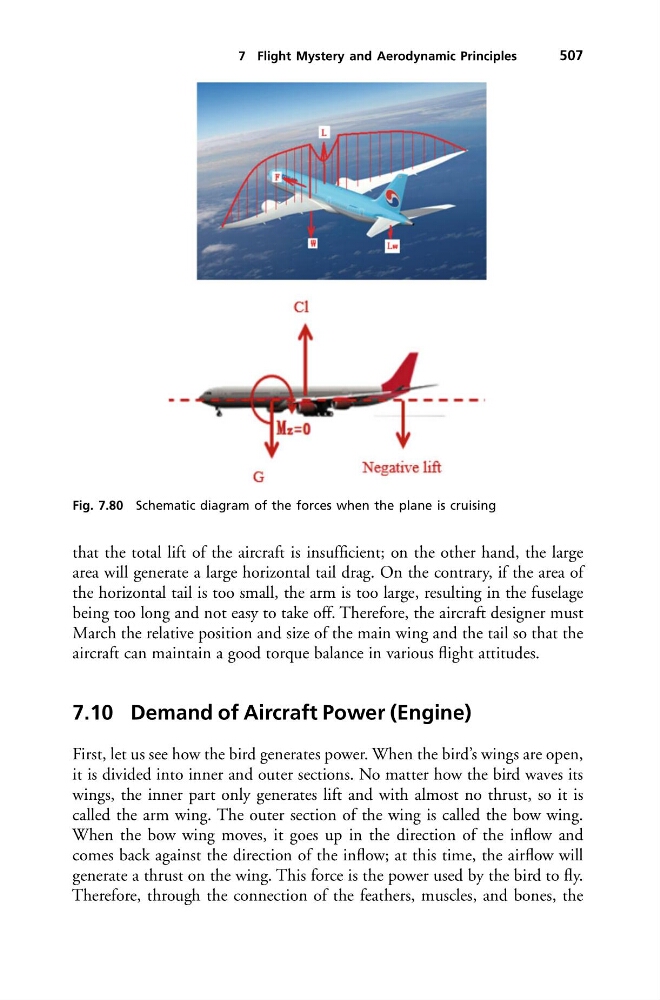
Fig. 7.80 Schematic diagram of the forces when the plane is cruising
that the total lift of the aircraft is insufficient; on the other hand, the large
area will generate a large horizontal tail drag. On the contrary, if the area of
the horizontal tail is too small, the arm is too large, resulting in the fuselage
being too long and not easy to take off. Therefore, the aircraft designer must
March the relative position and size of the main wing and the tail so that the
aircraft can maintain a good torque balance in various flight attitudes.
7.10 Demand of Aircraft Power (Engine)
First, let us see how the bird generates power. When the bird’s wings are open,
it is divided into inner and outer sections. No matter how the bird waves its
wings, the inner part only generates lift and with almost no thrust, so it is
called the arm wing. The outer section of the wing is called the bow wing.
When the bow wing moves, it goes up in the direction of the inflow and
comes back against the direction of the inflow; at this time, the airflow will
generate a thrust on the wing. This force is the power used by the bird to fly.
Therefore, through the connection of the feathers, muscles, and bones, the
507
Fig. 7.80 Schematic diagram of the forces when the plane is cruising
that the total lift of the aircraft is insufficient; on the other hand, the large
area will generate a large horizontal tail drag. On the contrary, if the area of
the horizontal tail is too small, the arm is too large, resulting in the fuselage
being too long and not easy to take off. Therefore, the aircraft designer must
March the relative position and size of the main wing and the tail so that the
aircraft can maintain a good torque balance in various flight attitudes.
7.10 Demand of Aircraft Power (Engine)
First, let us see how the bird generates power. When the bird’s wings are open,
it is divided into inner and outer sections. No matter how the bird waves its
wings, the inner part only generates lift and with almost no thrust, so it is
called the arm wing. The outer section of the wing is called the bow wing.
When the bow wing moves, it goes up in the direction of the inflow and
comes back against the direction of the inflow; at this time, the airflow will
generate a thrust on the wing. This force is the power used by the bird to fly.
Therefore, through the connection of the feathers, muscles, and bones, the