

1 Foundation of Fluid Mechanics
33
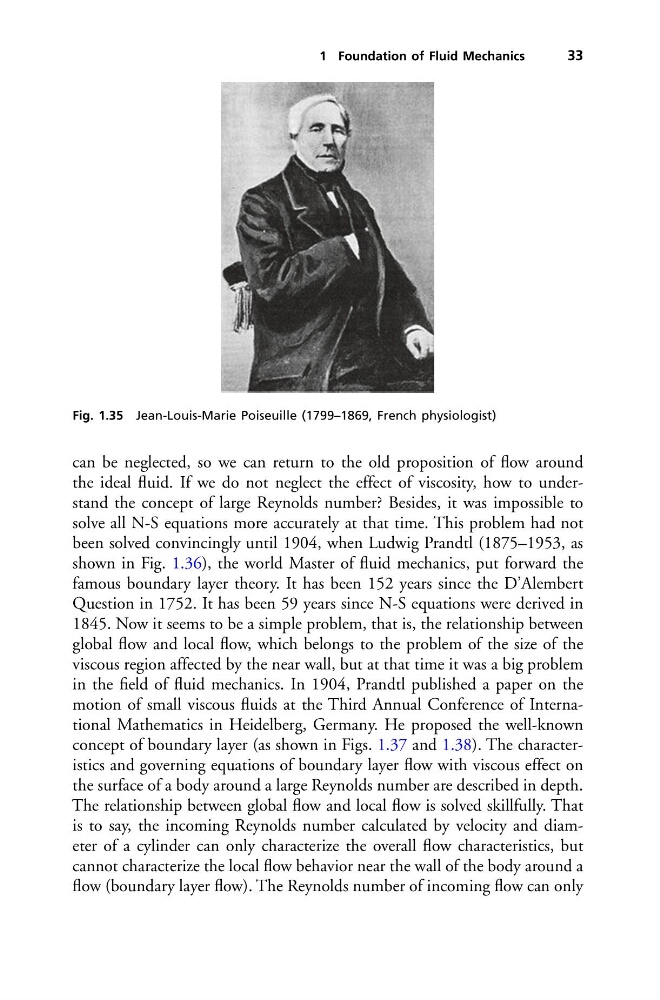
Fig. 1.35 Jean-Louis-Marie Poiseuille (1799–1869, French physiologist)
can be neglected, so we can return to the old proposition of flow around
the ideal fluid. If we do not neglect the effect of viscosity, how to understand the concept of large Reynolds number? Besides, it was impossible to
solve all N-S equations more accurately at that time. This problem had not
been solved convincingly until 1904, when Ludwig Prandtl (1875–1953, as
shown in Fig. 1.36), the world Master of fluid mechanics, put forward the
famous boundary layer theory. It has been 152 years since the D’Alembert
Question in 1752. It has been 59 years since N-S equations were derived in
1845. Now it seems to be a simple problem, that is, the relationship between
global flow and local flow, which belongs to the problem of the size of the
viscous region affected by the near wall, but at that time it was a big problem
in the field of fluid mechanics. In 1904, Prandtl published a paper on the
motion of small viscous fluids at the Third Annual Conference of International Mathematics in Heidelberg, Germany. He proposed the well-known
concept of boundary layer (as shown in Figs. 1.37 and 1.38). The characteristics and governing equations of boundary layer flow with viscous effect on
the surface of a body around a large Reynolds number are described in depth.
The relationship between global flow and local flow is solved skillfully. That
is to say, the incoming Reynolds number calculated by velocity and diameter of a cylinder can only characterize the overall flow characteristics, but
cannot characterize the local flow behavior near the wall of the body around a
flow (boundary layer flow). The Reynolds number of incoming flow can only
33
Fig. 1.35 Jean-Louis-Marie Poiseuille (1799–1869, French physiologist)
can be neglected, so we can return to the old proposition of flow around
the ideal fluid. If we do not neglect the effect of viscosity, how to understand the concept of large Reynolds number? Besides, it was impossible to
solve all N-S equations more accurately at that time. This problem had not
been solved convincingly until 1904, when Ludwig Prandtl (1875–1953, as
shown in Fig. 1.36), the world Master of fluid mechanics, put forward the
famous boundary layer theory. It has been 152 years since the D’Alembert
Question in 1752. It has been 59 years since N-S equations were derived in
1845. Now it seems to be a simple problem, that is, the relationship between
global flow and local flow, which belongs to the problem of the size of the
viscous region affected by the near wall, but at that time it was a big problem
in the field of fluid mechanics. In 1904, Prandtl published a paper on the
motion of small viscous fluids at the Third Annual Conference of International Mathematics in Heidelberg, Germany. He proposed the well-known
concept of boundary layer (as shown in Figs. 1.37 and 1.38). The characteristics and governing equations of boundary layer flow with viscous effect on
the surface of a body around a large Reynolds number are described in depth.
The relationship between global flow and local flow is solved skillfully. That
is to say, the incoming Reynolds number calculated by velocity and diameter of a cylinder can only characterize the overall flow characteristics, but
cannot characterize the local flow behavior near the wall of the body around a
flow (boundary layer flow). The Reynolds number of incoming flow can only