

300
P. Liu
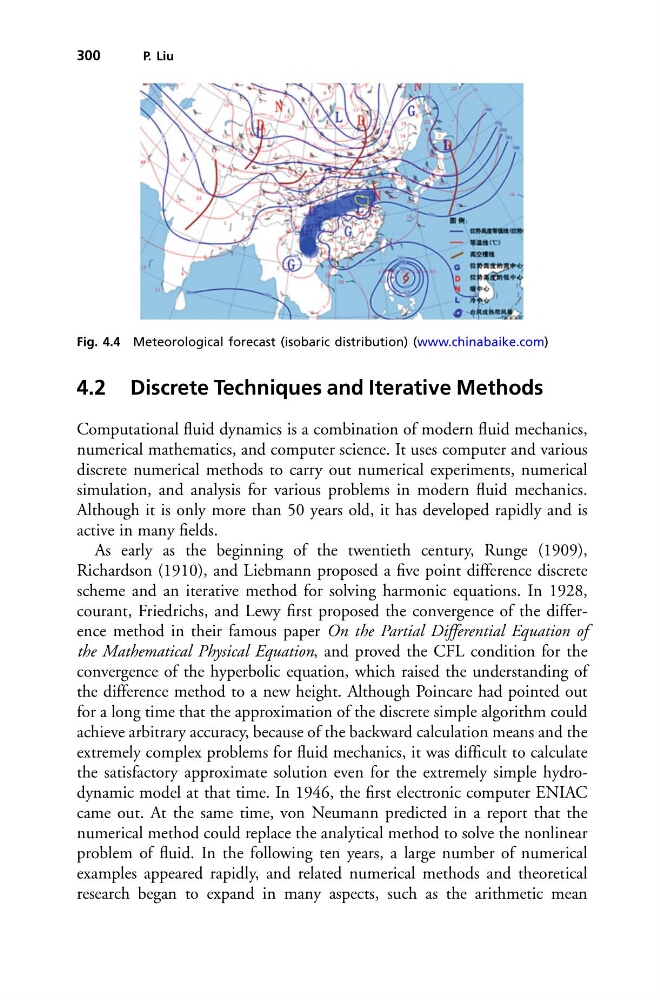
Fig. 4.4 Meteorological forecast (isobaric distribution) (www.chinabaike.com)
4.2 Discrete Techniques and Iterative Methods
Computational fluid dynamics is a combination of modern fluid mechanics,
numerical mathematics, and computer science. It uses computer and various
discrete numerical methods to carry out numerical experiments, numerical
simulation, and analysis for various problems in modern fluid mechanics.
Although it is only more than 50 years old, it has developed rapidly and is
active in many fields.
As early as the beginning of the twentieth century, Runge (1909),
Richardson (1910), and Liebmann proposed a five point difference discrete
scheme and an iterative method for solving harmonic equations. In 1928,
courant, Friedrichs, and Lewy first proposed the convergence of the difference method in their famous paper On the Partial Differential Equation of
the Mathematical Physical Equation, and proved the CFL condition for the
convergence of the hyperbolic equation, which raised the understanding of
the difference method to a new height. Although Poincare had pointed out
for a long time that the approximation of the discrete simple algorithm could
achieve arbitrary accuracy, because of the backward calculation means and the
extremely complex problems for fluid mechanics, it was difficult to calculate
the satisfactory approximate solution even for the extremely simple hydrodynamic model at that time. In 1946, the first electronic computer ENIAC
came out. At the same time, von Neumann predicted in a report that the
numerical method could replace the analytical method to solve the nonlinear
problem of fluid. In the following ten years, a large number of numerical
examples appeared rapidly, and related numerical methods and theoretical
research began to expand in many aspects, such as the arithmetic mean
P. Liu
Fig. 4.4 Meteorological forecast (isobaric distribution) (www.chinabaike.com)
4.2 Discrete Techniques and Iterative Methods
Computational fluid dynamics is a combination of modern fluid mechanics,
numerical mathematics, and computer science. It uses computer and various
discrete numerical methods to carry out numerical experiments, numerical
simulation, and analysis for various problems in modern fluid mechanics.
Although it is only more than 50 years old, it has developed rapidly and is
active in many fields.
As early as the beginning of the twentieth century, Runge (1909),
Richardson (1910), and Liebmann proposed a five point difference discrete
scheme and an iterative method for solving harmonic equations. In 1928,
courant, Friedrichs, and Lewy first proposed the convergence of the difference method in their famous paper On the Partial Differential Equation of
the Mathematical Physical Equation, and proved the CFL condition for the
convergence of the hyperbolic equation, which raised the understanding of
the difference method to a new height. Although Poincare had pointed out
for a long time that the approximation of the discrete simple algorithm could
achieve arbitrary accuracy, because of the backward calculation means and the
extremely complex problems for fluid mechanics, it was difficult to calculate
the satisfactory approximate solution even for the extremely simple hydrodynamic model at that time. In 1946, the first electronic computer ENIAC
came out. At the same time, von Neumann predicted in a report that the
numerical method could replace the analytical method to solve the nonlinear
problem of fluid. In the following ten years, a large number of numerical
examples appeared rapidly, and related numerical methods and theoretical
research began to expand in many aspects, such as the arithmetic mean