

3 Hydrodynamics
239
h
Falling
Rising
Q
Q max
h max
O
Steady
flow
Fig. 3.62 Water depth relationship curve of non-constant flow in open channel (loop
curve)
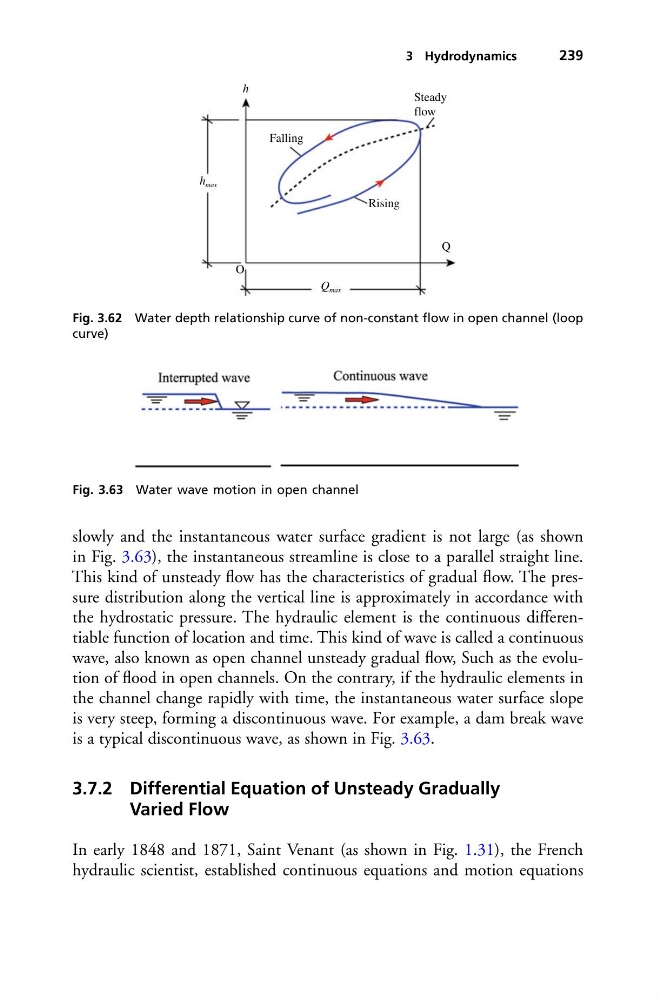
Fig. 3.63 Water wave motion in open channel
slowly and the instantaneous water surface gradient is not large (as shown
in Fig. 3.63), the instantaneous streamline is close to a parallel straight line.
This kind of unsteady flow has the characteristics of gradual flow. The pressure distribution along the vertical line is approximately in accordance with
the hydrostatic pressure. The hydraulic element is the continuous differentiable function of location and time. This kind of wave is called a continuous
wave, also known as open channel unsteady gradual flow, Such as the evolution of flood in open channels. On the contrary, if the hydraulic elements in
the channel change rapidly with time, the instantaneous water surface slope
is very steep, forming a discontinuous wave. For example, a dam break wave
is a typical discontinuous wave, as shown in Fig. 3.63.
3.7.2 Differential Equation of Unsteady Gradually
Varied Flow
In early 1848 and 1871, Saint Venant (as shown in Fig. 1.31), the French
hydraulic scientist, established continuous equations and motion equations
239
h
Falling
Rising
Q
Q max
h max
O
Steady
flow
Fig. 3.62 Water depth relationship curve of non-constant flow in open channel (loop
curve)
Fig. 3.63 Water wave motion in open channel
slowly and the instantaneous water surface gradient is not large (as shown
in Fig. 3.63), the instantaneous streamline is close to a parallel straight line.
This kind of unsteady flow has the characteristics of gradual flow. The pressure distribution along the vertical line is approximately in accordance with
the hydrostatic pressure. The hydraulic element is the continuous differentiable function of location and time. This kind of wave is called a continuous
wave, also known as open channel unsteady gradual flow, Such as the evolution of flood in open channels. On the contrary, if the hydraulic elements in
the channel change rapidly with time, the instantaneous water surface slope
is very steep, forming a discontinuous wave. For example, a dam break wave
is a typical discontinuous wave, as shown in Fig. 3.63.
3.7.2 Differential Equation of Unsteady Gradually
Varied Flow
In early 1848 and 1871, Saint Venant (as shown in Fig. 1.31), the French
hydraulic scientist, established continuous equations and motion equations