

224
P. Liu
Lj/h2
Fr 1 number of section before jump
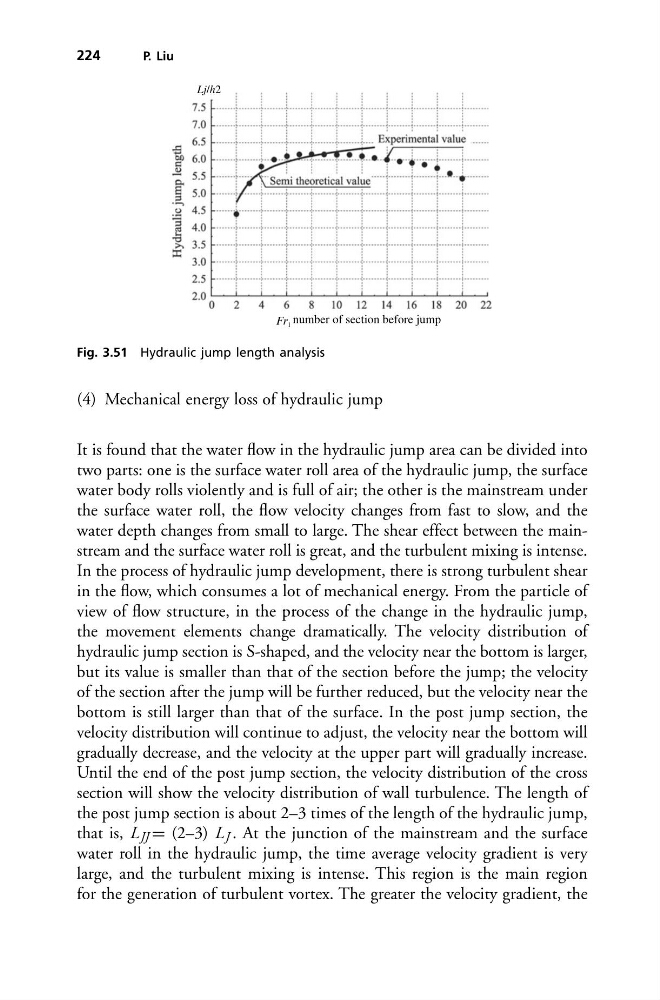
Fig. 3.51 Hydraulic jump length analysis
(4) Mechanical energy loss of hydraulic jump
It is found that the water flow in the hydraulic jump area can be divided into
two parts: one is the surface water roll area of the hydraulic jump, the surface
water body rolls violently and is full of air; the other is the mainstream under
the surface water roll, the flow velocity changes from fast to slow, and the
water depth changes from small to large. The shear effect between the mainstream and the surface water roll is great, and the turbulent mixing is intense.
In the process of hydraulic jump development, there is strong turbulent shear
in the flow, which consumes a lot of mechanical energy. From the particle of
view of flow structure, in the process of the change in the hydraulic jump,
the movement elements change dramatically. The velocity distribution of
hydraulic jump section is S-shaped, and the velocity near the bottom is larger,
but its value is smaller than that of the section before the jump; the velocity
of the section after the jump will be further reduced, but the velocity near the
bottom is still larger than that of the surface. In the post jump section, the
velocity distribution will continue to adjust, the velocity near the bottom will
gradually decrease, and the velocity at the upper part will gradually increase.
Until the end of the post jump section, the velocity distribution of the cross
section will show the velocity distribution of wall turbulence. The length of
the post jump section is about 2–3 times of the length of the hydraulic jump,
that is, L JJ = (2–3) L J . At the junction of the mainstream and the surface
water roll in the hydraulic jump, the time average velocity gradient is very
large, and the turbulent mixing is intense. This region is the main region
for the generation of turbulent vortex. The greater the velocity gradient, the
P. Liu
Lj/h2
Fr 1 number of section before jump
Fig. 3.51 Hydraulic jump length analysis
(4) Mechanical energy loss of hydraulic jump
It is found that the water flow in the hydraulic jump area can be divided into
two parts: one is the surface water roll area of the hydraulic jump, the surface
water body rolls violently and is full of air; the other is the mainstream under
the surface water roll, the flow velocity changes from fast to slow, and the
water depth changes from small to large. The shear effect between the mainstream and the surface water roll is great, and the turbulent mixing is intense.
In the process of hydraulic jump development, there is strong turbulent shear
in the flow, which consumes a lot of mechanical energy. From the particle of
view of flow structure, in the process of the change in the hydraulic jump,
the movement elements change dramatically. The velocity distribution of
hydraulic jump section is S-shaped, and the velocity near the bottom is larger,
but its value is smaller than that of the section before the jump; the velocity
of the section after the jump will be further reduced, but the velocity near the
bottom is still larger than that of the surface. In the post jump section, the
velocity distribution will continue to adjust, the velocity near the bottom will
gradually decrease, and the velocity at the upper part will gradually increase.
Until the end of the post jump section, the velocity distribution of the cross
section will show the velocity distribution of wall turbulence. The length of
the post jump section is about 2–3 times of the length of the hydraulic jump,
that is, L JJ = (2–3) L J . At the junction of the mainstream and the surface
water roll in the hydraulic jump, the time average velocity gradient is very
large, and the turbulent mixing is intense. This region is the main region
for the generation of turbulent vortex. The greater the velocity gradient, the