

2 Aerodynamics
91
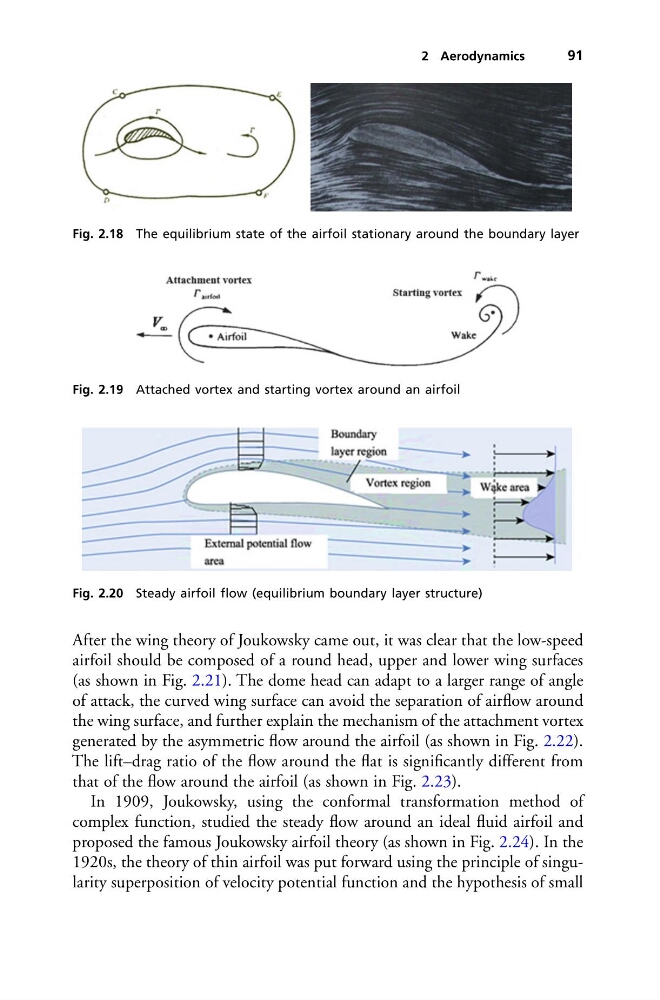
Fig. 2.18 The equilibrium state of the airfoil stationary around the boundary layer
Fig. 2.19 Attached vortex and starting vortex around an airfoil
Fig. 2.20 Steady airfoil flow (equilibrium boundary layer structure)
After the wing theory of Joukowsky came out, it was clear that the low-speed
airfoil should be composed of a round head, upper and lower wing surfaces
(as shown in Fig. 2.21). The dome head can adapt to a larger range of angle
of attack, the curved wing surface can avoid the separation of airflow around
the wing surface, and further explain the mechanism of the attachment vortex
generated by the asymmetric flow around the airfoil (as shown in Fig. 2.22).
The lift–drag ratio of the flow around the flat is significantly different from
that of the flow around the airfoil (as shown in Fig. 2.23).
In 1909, Joukowsky, using the conformal transformation method of
complex function, studied the steady flow around an ideal fluid airfoil and
proposed the famous Joukowsky airfoil theory (as shown in Fig. 2.24). In the
1920s, the theory of thin airfoil was put forward using the principle of singularity superposition of velocity potential function and the hypothesis of small
91
Fig. 2.18 The equilibrium state of the airfoil stationary around the boundary layer
Fig. 2.19 Attached vortex and starting vortex around an airfoil
Fig. 2.20 Steady airfoil flow (equilibrium boundary layer structure)
After the wing theory of Joukowsky came out, it was clear that the low-speed
airfoil should be composed of a round head, upper and lower wing surfaces
(as shown in Fig. 2.21). The dome head can adapt to a larger range of angle
of attack, the curved wing surface can avoid the separation of airflow around
the wing surface, and further explain the mechanism of the attachment vortex
generated by the asymmetric flow around the airfoil (as shown in Fig. 2.22).
The lift–drag ratio of the flow around the flat is significantly different from
that of the flow around the airfoil (as shown in Fig. 2.23).
In 1909, Joukowsky, using the conformal transformation method of
complex function, studied the steady flow around an ideal fluid airfoil and
proposed the famous Joukowsky airfoil theory (as shown in Fig. 2.24). In the
1920s, the theory of thin airfoil was put forward using the principle of singularity superposition of velocity potential function and the hypothesis of small