

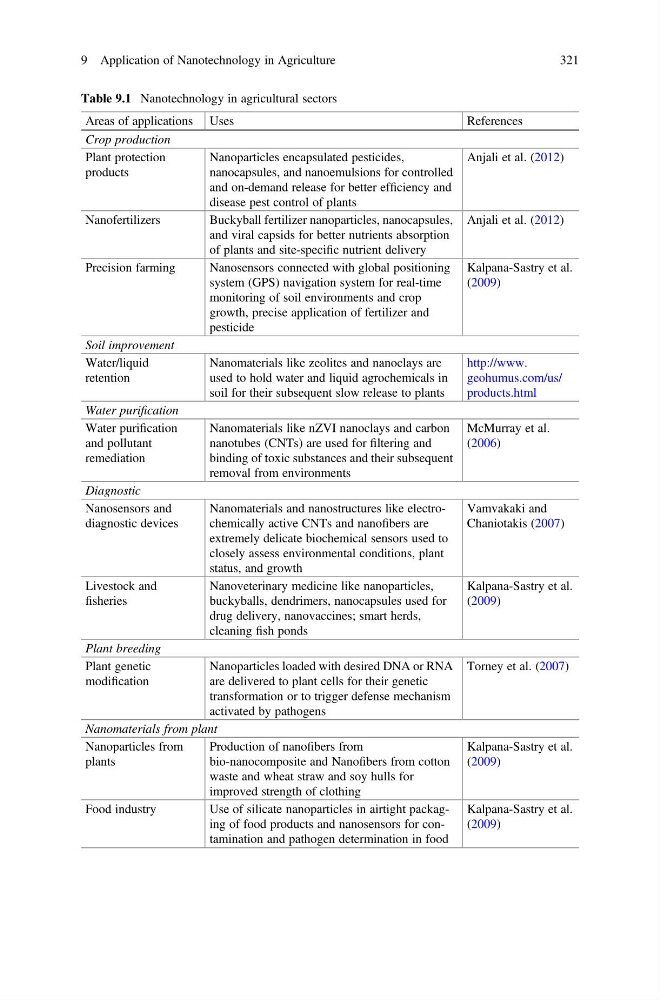
Table 9.1 Nanotechnology in agricultural sectors
Areas of applications Uses
References
Crop production
Plant protection
products
Nanoparticles encapsulated pesticides,
nanocapsules, and nanoemulsions for controlled
and on-demand release for better efficiency and
disease pest control of plants
Anjali et al. (2012)
Nanofertilizers
Buckyball fertilizer nanoparticles, nanocapsules,
and viral capsids for better nutrients absorption
of plants and site-specific nutrient delivery
Anjali et al. (2012)
Precision farming
Nanosensors connected with global positioning
system (GPS) navigation system for real-time
monitoring of soil environments and crop
growth, precise application of fertilizer and
pesticide
Kalpana-Sastry et al.
(2009)
Soil improvement
Water/liquid
retention
Nanomaterials like zeolites and nanoclays are
used to hold water and liquid agrochemicals in
soil for their subsequent slow release to plants
http://www.
geohumus.com/us/
products.html
Water purification
Water purification
and pollutant
remediation
Nanomaterials like nZVI nanoclays and carbon
nanotubes (CNTs) are used for filtering and
binding of toxic substances and their subsequent
removal from environments
McMurray et al.
(2006)
Diagnostic
Nanosensors and
diagnostic devices
Nanomaterials and nanostructures like electrochemically active CNTs and nanofibers are
extremely delicate biochemical sensors used to
closely assess environmental conditions, plant
status, and growth
Vamvakaki and
Chaniotakis (2007)
Livestock and
fisheries
Nanoveterinary medicine like nanoparticles,
buckyballs, dendrimers, nanocapsules used for
drug delivery, nanovaccines; smart herds,
cleaning fish ponds
Kalpana-Sastry et al.
(2009)
Plant breeding
Plant genetic
modification
Nanoparticles loaded with desired DNA or RNA
are delivered to plant cells for their genetic
transformation or to trigger defense mechanism
activated by pathogens
Torney et al. (2007)
Nanomaterials from plant
Nanoparticles from
plants
Production of nanofibers from
bio-nanocomposite and Nanofibers from cotton
waste and wheat straw and soy hulls for
improved strength of clothing
Kalpana-Sastry et al.
(2009)
Food industry
Use of silicate nanoparticles in airtight packaging of food products and nanosensors for contamination and pathogen determination in food
Kalpana-Sastry et al.
(2009)
9 Application of Nanotechnology in Agriculture
321
Areas of applications Uses
References
Crop production
Plant protection
products
Nanoparticles encapsulated pesticides,
nanocapsules, and nanoemulsions for controlled
and on-demand release for better efficiency and
disease pest control of plants
Anjali et al. (2012)
Nanofertilizers
Buckyball fertilizer nanoparticles, nanocapsules,
and viral capsids for better nutrients absorption
of plants and site-specific nutrient delivery
Anjali et al. (2012)
Precision farming
Nanosensors connected with global positioning
system (GPS) navigation system for real-time
monitoring of soil environments and crop
growth, precise application of fertilizer and
pesticide
Kalpana-Sastry et al.
(2009)
Soil improvement
Water/liquid
retention
Nanomaterials like zeolites and nanoclays are
used to hold water and liquid agrochemicals in
soil for their subsequent slow release to plants
http://www.
geohumus.com/us/
products.html
Water purification
Water purification
and pollutant
remediation
Nanomaterials like nZVI nanoclays and carbon
nanotubes (CNTs) are used for filtering and
binding of toxic substances and their subsequent
removal from environments
McMurray et al.
(2006)
Diagnostic
Nanosensors and
diagnostic devices
Nanomaterials and nanostructures like electrochemically active CNTs and nanofibers are
extremely delicate biochemical sensors used to
closely assess environmental conditions, plant
status, and growth
Vamvakaki and
Chaniotakis (2007)
Livestock and
fisheries
Nanoveterinary medicine like nanoparticles,
buckyballs, dendrimers, nanocapsules used for
drug delivery, nanovaccines; smart herds,
cleaning fish ponds
Kalpana-Sastry et al.
(2009)
Plant breeding
Plant genetic
modification
Nanoparticles loaded with desired DNA or RNA
are delivered to plant cells for their genetic
transformation or to trigger defense mechanism
activated by pathogens
Torney et al. (2007)
Nanomaterials from plant
Nanoparticles from
plants
Production of nanofibers from
bio-nanocomposite and Nanofibers from cotton
waste and wheat straw and soy hulls for
improved strength of clothing
Kalpana-Sastry et al.
(2009)
Food industry
Use of silicate nanoparticles in airtight packaging of food products and nanosensors for contamination and pathogen determination in food
Kalpana-Sastry et al.
(2009)
9 Application of Nanotechnology in Agriculture
321