

solvent). The sol is formed because the particles are very small (1–1000 nm) and the
gravitational driving forces are very small compared with the van del Waals and
electrostatic forces between the particles that stabilize the colloidal system.
The subsequent transformation of the obtained sol to a gel is usually achieved by
a simple drying of the mixture and an additional thermic treatment after drying
(calcination), which usually leads to ceramic materials with different morphologies,
shapes, and particle sizes, or to formation of thin films of the substrate (Chen and
Mao 2007; Macwan et al. 2011).
Sugimoto and coworkers, using a sol–gel method, have carried out some intensive studies on the formation of titanium oxide nanoparticles of different sizes and
morphologies, tuning the reaction parameters (Chen and Mao 2007). In this context,
Yu and coworkers published in 2002 a very simple synthetic method for the
preparation of mesoporous titanium oxide with a control of the 3D structure
(Yu et al. 2002) and with a very high thermal stability without the use of surfactants.
In addition, some other simple methods with good control of the morphology were
used very recently for the preparation of mesoporous agglomerates of nanosized
titanium oxide, without the use of a surfactant (Sánchez-Muñoz et al. 2013; LázaroNavas et al. 2015; Rico-Oller et al. 2016).
The current trends of the most recently reported sol–gel syntheses for the preparation of porous titanium oxide materials are focused on the use of alkylketene
dimers as templates (Takahasi et al. 2017). Additionally, a recent study has compared the effect of sol–gel preparations and solvothermal methods on the final phase
and textural properties of titanium oxide (Dastan 2017).
Alternative methods have recently been explored for the preparation of titanium
oxide-based materials with enhanced properties using ionic liquids to extend the
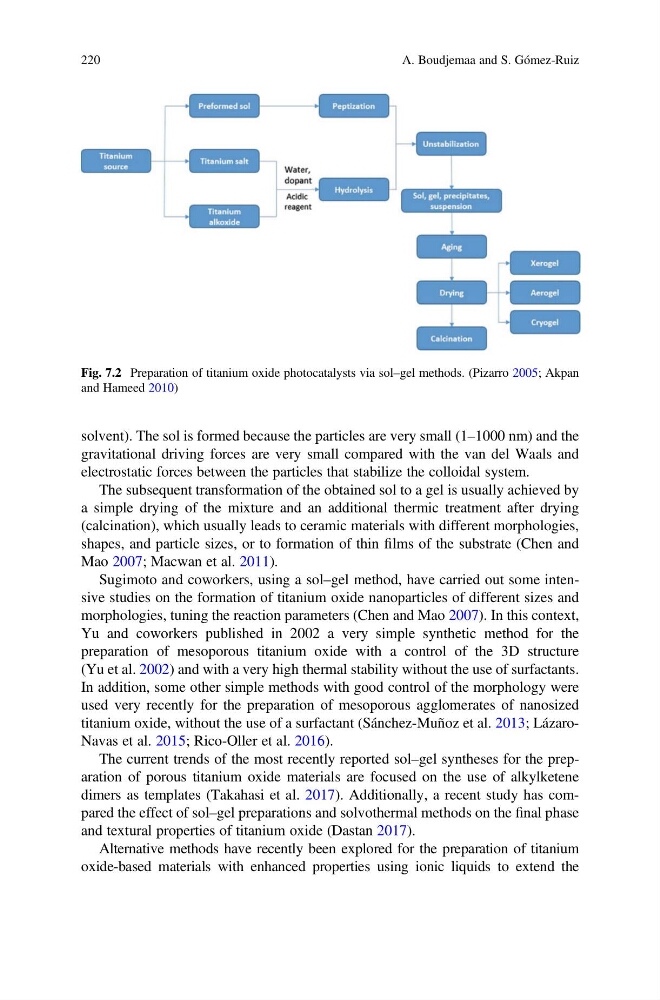
Fig. 7.2 Preparation of titanium oxide photocatalysts via sol–gel methods. (Pizarro 2005; Akpan
and Hameed 2010)
220
A. Boudjemaa and S. Gómez-Ruiz
gravitational driving forces are very small compared with the van del Waals and
electrostatic forces between the particles that stabilize the colloidal system.
The subsequent transformation of the obtained sol to a gel is usually achieved by
a simple drying of the mixture and an additional thermic treatment after drying
(calcination), which usually leads to ceramic materials with different morphologies,
shapes, and particle sizes, or to formation of thin films of the substrate (Chen and
Mao 2007; Macwan et al. 2011).
Sugimoto and coworkers, using a sol–gel method, have carried out some intensive studies on the formation of titanium oxide nanoparticles of different sizes and
morphologies, tuning the reaction parameters (Chen and Mao 2007). In this context,
Yu and coworkers published in 2002 a very simple synthetic method for the
preparation of mesoporous titanium oxide with a control of the 3D structure
(Yu et al. 2002) and with a very high thermal stability without the use of surfactants.
In addition, some other simple methods with good control of the morphology were
used very recently for the preparation of mesoporous agglomerates of nanosized
titanium oxide, without the use of a surfactant (Sánchez-Muñoz et al. 2013; LázaroNavas et al. 2015; Rico-Oller et al. 2016).
The current trends of the most recently reported sol–gel syntheses for the preparation of porous titanium oxide materials are focused on the use of alkylketene
dimers as templates (Takahasi et al. 2017). Additionally, a recent study has compared the effect of sol–gel preparations and solvothermal methods on the final phase
and textural properties of titanium oxide (Dastan 2017).
Alternative methods have recently been explored for the preparation of titanium
oxide-based materials with enhanced properties using ionic liquids to extend the
Fig. 7.2 Preparation of titanium oxide photocatalysts via sol–gel methods. (Pizarro 2005; Akpan
and Hameed 2010)
220
A. Boudjemaa and S. Gómez-Ruiz