

that can be used by Amycolatopsis tucumanensis, the connection between primary
metabolism and production of specialized metabolites that we previously discussed,
and the cupric reductase activity make this strain a promising tool to produce NPs of
Zn, Ag, or Au through the biosynthesis of new specialized metabolites. Interestingly,
genes encoding chromate reductase enzymes were found in Streptomyces sp. M7 and
Streptomyces sp. MC1 genomes.
6.9 Patents in the Emerging World of Bio-nanoparticles
In 1873, patents office of USA granted Louis Pasteur the first biotechnological
patent related to “a yeast free of disease germs as an article of manufacture.”
Generally, before 1980 living organisms were not patentable since they were
considered “as product of nature.” In the same year occurred the famous case
known as Diamond vs. Chakrabarty. The Supreme Court of the United States
gave the reason to the latter and established that the bacterium of the genus
Pseudomonas was patentable. This bacterium met the criteria of patentability: it
was a novelty (nonexistent as such in the nature and not obvious to the science of the
moment), derived from inventive activity (it had been achieved in the laboratory by
transfer of plasmids) and fulfilled the criterion of utility (the object was used in the
work of decontamination of oil spills). Then in 1985, a multicellular organism was
patented for the first time, while in 1990 occurred the first patenting of a line of cells
cultured in vitro. After these series of events arose the historical phrase: patents can
be granted “to anything under the sun made by man.”
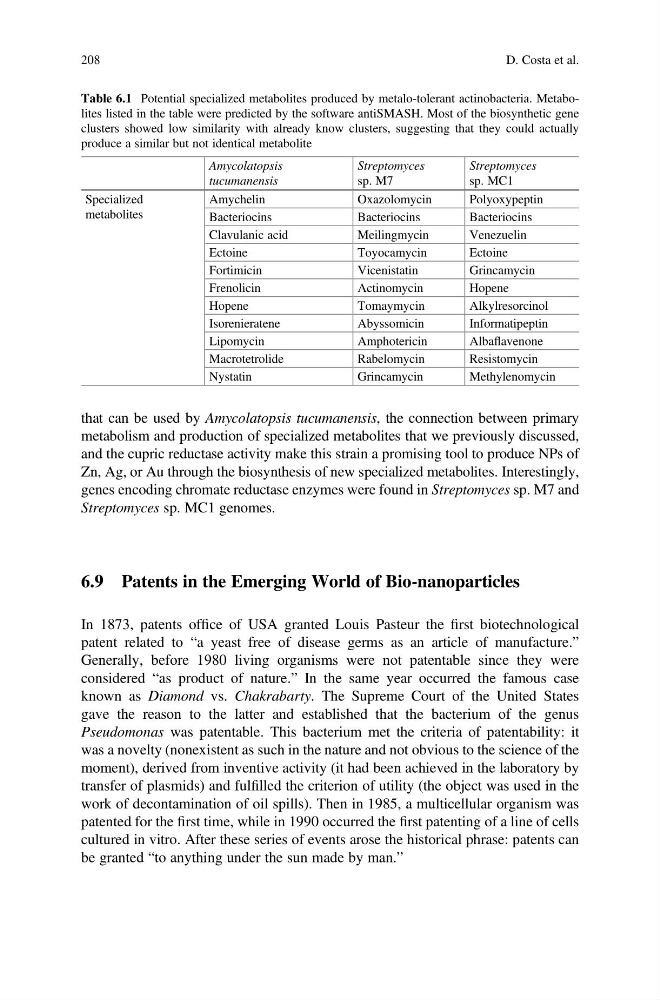
Table 6.1 Potential specialized metabolites produced by metalo-tolerant actinobacteria. Metabolites listed in the table were predicted by the software antiSMASH. Most of the biosynthetic gene
clusters showed low similarity with already know clusters, suggesting that they could actually
produce a similar but not identical metabolite
Amycolatopsis
tucumanensis
Streptomyces
sp. M7
Streptomyces
sp. MC1
Specialized
metabolites
Amychelin
Oxazolomycin
Polyoxypeptin
Bacteriocins
Bacteriocins
Bacteriocins
Clavulanic acid
Meilingmycin
Venezuelin
Ectoine
Toyocamycin
Ectoine
Fortimicin
Vicenistatin
Grincamycin
Frenolicin
Actinomycin
Hopene
Hopene
Tomaymycin
Alkylresorcinol
Isorenieratene
Abyssomicin
Informatipeptin
Lipomycin
Amphotericin
Albaflavenone
Macrotetrolide
Rabelomycin
Resistomycin
Nystatin
Grincamycin
Methylenomycin
208
D. Costa et al.
metabolism and production of specialized metabolites that we previously discussed,
and the cupric reductase activity make this strain a promising tool to produce NPs of
Zn, Ag, or Au through the biosynthesis of new specialized metabolites. Interestingly,
genes encoding chromate reductase enzymes were found in Streptomyces sp. M7 and
Streptomyces sp. MC1 genomes.
6.9 Patents in the Emerging World of Bio-nanoparticles
In 1873, patents office of USA granted Louis Pasteur the first biotechnological
patent related to “a yeast free of disease germs as an article of manufacture.”
Generally, before 1980 living organisms were not patentable since they were
considered “as product of nature.” In the same year occurred the famous case
known as Diamond vs. Chakrabarty. The Supreme Court of the United States
gave the reason to the latter and established that the bacterium of the genus
Pseudomonas was patentable. This bacterium met the criteria of patentability: it
was a novelty (nonexistent as such in the nature and not obvious to the science of the
moment), derived from inventive activity (it had been achieved in the laboratory by
transfer of plasmids) and fulfilled the criterion of utility (the object was used in the
work of decontamination of oil spills). Then in 1985, a multicellular organism was
patented for the first time, while in 1990 occurred the first patenting of a line of cells
cultured in vitro. After these series of events arose the historical phrase: patents can
be granted “to anything under the sun made by man.”
Table 6.1 Potential specialized metabolites produced by metalo-tolerant actinobacteria. Metabolites listed in the table were predicted by the software antiSMASH. Most of the biosynthetic gene
clusters showed low similarity with already know clusters, suggesting that they could actually
produce a similar but not identical metabolite
Amycolatopsis
tucumanensis
Streptomyces
sp. M7
Streptomyces
sp. MC1
Specialized
metabolites
Amychelin
Oxazolomycin
Polyoxypeptin
Bacteriocins
Bacteriocins
Bacteriocins
Clavulanic acid
Meilingmycin
Venezuelin
Ectoine
Toyocamycin
Ectoine
Fortimicin
Vicenistatin
Grincamycin
Frenolicin
Actinomycin
Hopene
Hopene
Tomaymycin
Alkylresorcinol
Isorenieratene
Abyssomicin
Informatipeptin
Lipomycin
Amphotericin
Albaflavenone
Macrotetrolide
Rabelomycin
Resistomycin
Nystatin
Grincamycin
Methylenomycin
208
D. Costa et al.