

(b) membrane functionalization with groups such as amino, carboxyl, and hydroxyl
followed by coupling of these groups with the macromolecules, and (c) use of
external stimulations such as plasma and UV irradiation which also promote coupling reaction. The method is feasible for the immobilization of macromolecules
which are difficult to synthesize artificially, and also it is easy to control the length
and structure of the grafted chains (Xu et al. 2009). Limiting flux and antifouling
characteristics in a submerged membrane bioreactor (SMBR) for wastewater treatment were improved by the immobilization of poly(N-vinyl-2-pyrrolidone) (PVP)
on polypropylene hollow fiber microporous membrane (PPHFMM) through air
plasma treatment (Yu et al. 2006). Surface hydrophilicity of asymmetric membranes
fabricated from poly(acrylonitrile-co-maleic acid) (PANCMA) was improved by the
immobilization of bio-macromolecules such as heparin and/or insulin by the
amination of the PANCMA membrane surface with ethylene diamine, followed by
the reaction of the amino groups with bio-macromolecules in the presence of 1-ethyl3-(3-dimethylaminopropyl)carbodiimide (Che et al. 2005).
4.5.2 Surface Adsorption and Coating
Surface adsorption and coating is a physical modification method in which a suitable
material is adsorbed or coated on the polymeric membrane directly. The surface of
the polymeric membranes can be easily modified with different coating materials to
achieve distinct properties while maintaining the substrate properties. The long alkyl
chain in the phospholipid increases the hydrophobic interaction with the polymeric
membrane and forms a stable film (Xu et al. 2009). Surface modification of the RO
membrane by direct coating of nanosilver particles on the membrane sheet and
Surface Modification
Surface Adsorption and
Coating
Surface Grafting
Polymerization
Surface Chemical Treatment
With Phospholipid
Glycosylation by
UV-induced polymerization
Polymer Analogous
Reactions
Surface Initiated Living
Polymerization
With Synthetic
polymers
With Synthetic glyco
polymers
Macromolecule
Immobilization
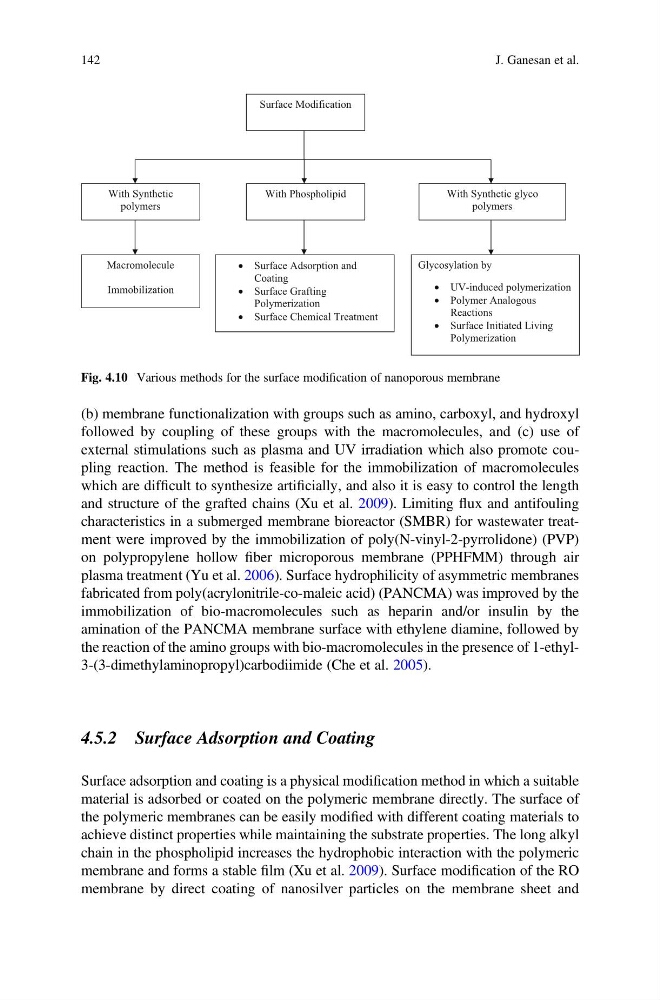
Fig. 4.10 Various methods for the surface modification of nanoporous membrane
142
J. Ganesan et al.
followed by coupling of these groups with the macromolecules, and (c) use of
external stimulations such as plasma and UV irradiation which also promote coupling reaction. The method is feasible for the immobilization of macromolecules
which are difficult to synthesize artificially, and also it is easy to control the length
and structure of the grafted chains (Xu et al. 2009). Limiting flux and antifouling
characteristics in a submerged membrane bioreactor (SMBR) for wastewater treatment were improved by the immobilization of poly(N-vinyl-2-pyrrolidone) (PVP)
on polypropylene hollow fiber microporous membrane (PPHFMM) through air
plasma treatment (Yu et al. 2006). Surface hydrophilicity of asymmetric membranes
fabricated from poly(acrylonitrile-co-maleic acid) (PANCMA) was improved by the
immobilization of bio-macromolecules such as heparin and/or insulin by the
amination of the PANCMA membrane surface with ethylene diamine, followed by
the reaction of the amino groups with bio-macromolecules in the presence of 1-ethyl3-(3-dimethylaminopropyl)carbodiimide (Che et al. 2005).
4.5.2 Surface Adsorption and Coating
Surface adsorption and coating is a physical modification method in which a suitable
material is adsorbed or coated on the polymeric membrane directly. The surface of
the polymeric membranes can be easily modified with different coating materials to
achieve distinct properties while maintaining the substrate properties. The long alkyl
chain in the phospholipid increases the hydrophobic interaction with the polymeric
membrane and forms a stable film (Xu et al. 2009). Surface modification of the RO
membrane by direct coating of nanosilver particles on the membrane sheet and
Surface Modification
Surface Adsorption and
Coating
Surface Grafting
Polymerization
Surface Chemical Treatment
With Phospholipid
Glycosylation by
UV-induced polymerization
Polymer Analogous
Reactions
Surface Initiated Living
Polymerization
With Synthetic
polymers
With Synthetic glyco
polymers
Macromolecule
Immobilization
Fig. 4.10 Various methods for the surface modification of nanoporous membrane
142
J. Ganesan et al.