

3.6.7 Packaging
The use of nanomaterials in food packaging is already a reality. Nanotechnology can
be used in plastic food packaging to make it stronger, lighter, or perform better.
Antimicrobials such as nanoparticles of silver or titanium dioxide can be used in
packaging to prevent spoilage of foods. Another addition is the introduction of
nanoparticles of clay into packaging to block oxygen, carbon dioxide, and moisture
from reaching the food and also aids in preventing spoilage. Chemical giant Bayer
produces a transparent plastic film called Durethan which contains nanoparticles of
clay. Durethan is an engineering plastic based on polyamide 6 and polyamide 66;
these particles offer an excellent combination of properties which include high
strength and toughness, abrasion resistance, chemical resistance, and resistance to
cracking. Durethan is used in various industries and applications, including packaging film for the medical field and food packaging. The nanoparticles are spread
throughout the plastic and are able to block oxygen, carbon dioxide, and moisture
from reaching fresh meats or other foods. The advantage of using nanoclay is it also
makes the plastic lighter, stronger, and more heat-resistant. Durethan film material
with nanoparticles combines the advantages of polyamide 6 and ethylene vinyl
alcohol (EVOH) to produce an inexpensive but still very airtight packaging material.
The embedded nanoparticles prevent gases from penetrating the film and also
keeping moisture from escaping. An example is bottles made with nanocomposites
which minimize the leakage of carbon dioxide out of the bottle; by minimizing the
leakage of CO 2 in the bottle, this will cause an increase in the shelf life of a
carbonated beverage without having to use heavier glass bottles or more expensive
cans. Another example is food service bins made out of silver nanoparticles embedded in the plastics. The silver nanoparticles kill bacteria from any food previously
stored in the bins, which will minimize harmful bacteria.
Generally, nanobiosensors are placed in food packaging to control internal and
external conditions of food (Ramachandraiah et al. 2015). From a microbiological
point of view, the main objective of nanosensors is to reduce pathogen detection time
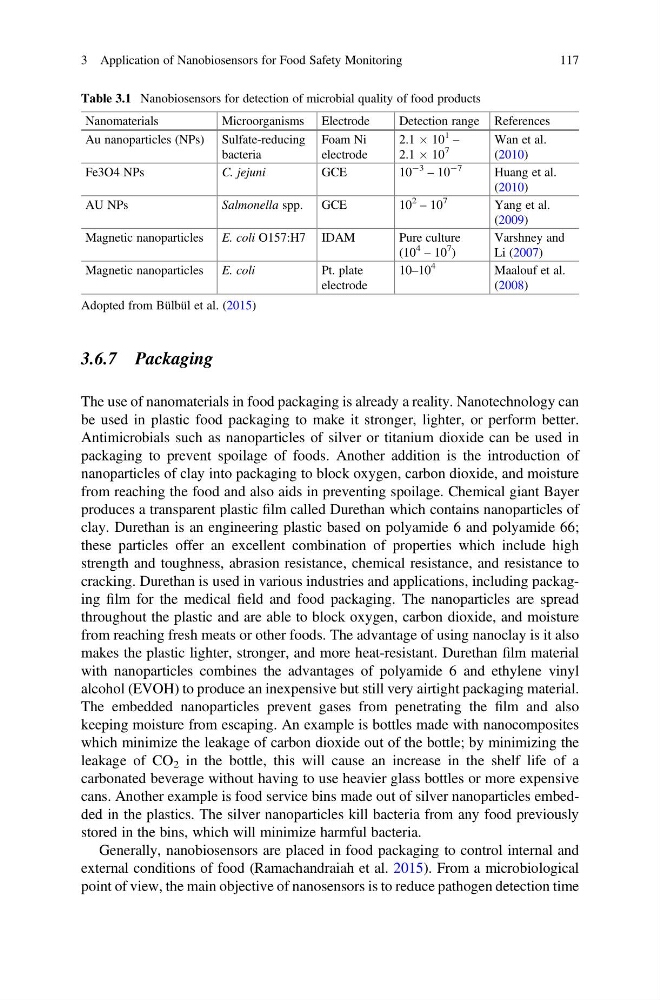
Table 3.1 Nanobiosensors for detection of microbial quality of food products
Nanomaterials
Microorganisms Electrode
Detection range References
Au nanoparticles (NPs) Sulfate-reducing
bacteria
Foam Ni
electrode
2.1 Â 10
1 –
2.1 Â 10
7
Wan et al.
(2010)
Fe3O4 NPs
C. jejuni
GCE
10
À3 – 10
À7
Huang et al.
(2010)
AU NPs
Salmonella spp. GCE
10
2 – 10
7
Yang et al.
(2009)
Magnetic nanoparticles E. coli O157:H7 IDAM
Pure culture
(10
4 – 10
7
)
Varshney and
Li (2007)
Magnetic nanoparticles E. coli
Pt. plate
electrode
10–10
4
Maalouf et al.
(2008)
Adopted from Bülbül et al. (2015)
3 Application of Nanobiosensors for Food Safety Monitoring
117
The use of nanomaterials in food packaging is already a reality. Nanotechnology can
be used in plastic food packaging to make it stronger, lighter, or perform better.
Antimicrobials such as nanoparticles of silver or titanium dioxide can be used in
packaging to prevent spoilage of foods. Another addition is the introduction of
nanoparticles of clay into packaging to block oxygen, carbon dioxide, and moisture
from reaching the food and also aids in preventing spoilage. Chemical giant Bayer
produces a transparent plastic film called Durethan which contains nanoparticles of
clay. Durethan is an engineering plastic based on polyamide 6 and polyamide 66;
these particles offer an excellent combination of properties which include high
strength and toughness, abrasion resistance, chemical resistance, and resistance to
cracking. Durethan is used in various industries and applications, including packaging film for the medical field and food packaging. The nanoparticles are spread
throughout the plastic and are able to block oxygen, carbon dioxide, and moisture
from reaching fresh meats or other foods. The advantage of using nanoclay is it also
makes the plastic lighter, stronger, and more heat-resistant. Durethan film material
with nanoparticles combines the advantages of polyamide 6 and ethylene vinyl
alcohol (EVOH) to produce an inexpensive but still very airtight packaging material.
The embedded nanoparticles prevent gases from penetrating the film and also
keeping moisture from escaping. An example is bottles made with nanocomposites
which minimize the leakage of carbon dioxide out of the bottle; by minimizing the
leakage of CO 2 in the bottle, this will cause an increase in the shelf life of a
carbonated beverage without having to use heavier glass bottles or more expensive
cans. Another example is food service bins made out of silver nanoparticles embedded in the plastics. The silver nanoparticles kill bacteria from any food previously
stored in the bins, which will minimize harmful bacteria.
Generally, nanobiosensors are placed in food packaging to control internal and
external conditions of food (Ramachandraiah et al. 2015). From a microbiological
point of view, the main objective of nanosensors is to reduce pathogen detection time
Table 3.1 Nanobiosensors for detection of microbial quality of food products
Nanomaterials
Microorganisms Electrode
Detection range References
Au nanoparticles (NPs) Sulfate-reducing
bacteria
Foam Ni
electrode
2.1 Â 10
1 –
2.1 Â 10
7
Wan et al.
(2010)
Fe3O4 NPs
C. jejuni
GCE
10
À3 – 10
À7
Huang et al.
(2010)
AU NPs
Salmonella spp. GCE
10
2 – 10
7
Yang et al.
(2009)
Magnetic nanoparticles E. coli O157:H7 IDAM
Pure culture
(10
4 – 10
7
)
Varshney and
Li (2007)
Magnetic nanoparticles E. coli
Pt. plate
electrode
10–10
4
Maalouf et al.
(2008)
Adopted from Bülbül et al. (2015)
3 Application of Nanobiosensors for Food Safety Monitoring
117