

89
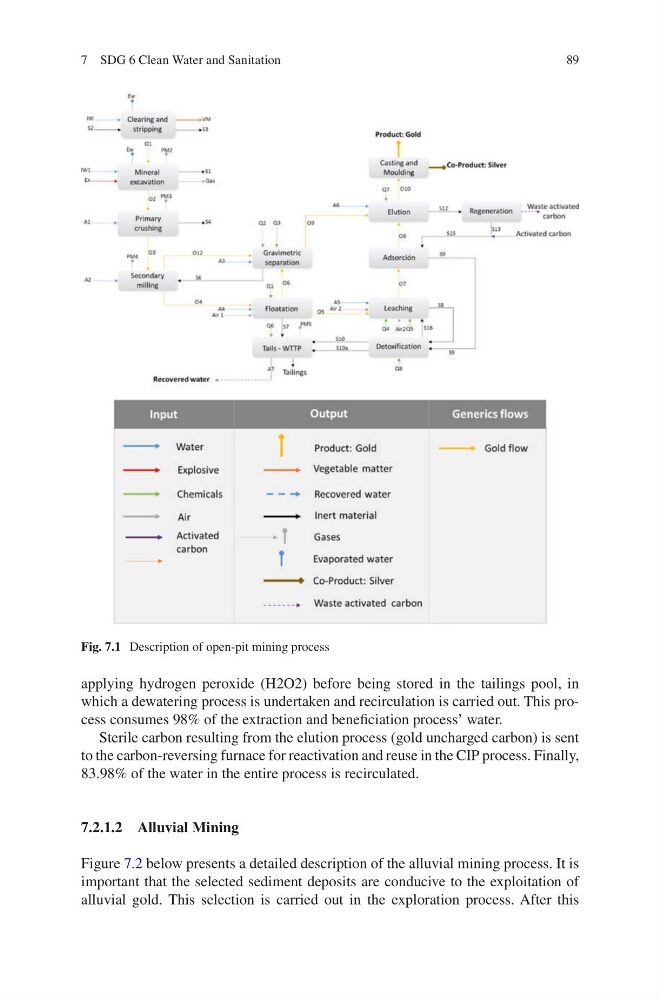
applying hydrogen peroxide (H2O2) before being stored in the tailings pool, in
which a dewatering process is undertaken and recirculation is carried out. This process consumes 98% of the extraction and beneficiation process’ water.
Sterile carbon resulting from the elution process (gold uncharged carbon) is sent
to the carbon-reversing furnace for reactivation and reuse in the CIP process. Finally,
83.98% of the water in the entire process is recirculated.
7.2.1.2 Alluvial Mining
Figure 7.2 below presents a detailed description of the alluvial mining process. It is
important that the selected sediment deposits are conducive to the exploitation of
alluvial gold. This selection is carried out in the exploration process. After this
Fig. 7.1 Description of open-pit mining process
7 SDG 6 Clean Water and Sanitation
applying hydrogen peroxide (H2O2) before being stored in the tailings pool, in
which a dewatering process is undertaken and recirculation is carried out. This process consumes 98% of the extraction and beneficiation process’ water.
Sterile carbon resulting from the elution process (gold uncharged carbon) is sent
to the carbon-reversing furnace for reactivation and reuse in the CIP process. Finally,
83.98% of the water in the entire process is recirculated.
7.2.1.2 Alluvial Mining
Figure 7.2 below presents a detailed description of the alluvial mining process. It is
important that the selected sediment deposits are conducive to the exploitation of
alluvial gold. This selection is carried out in the exploration process. After this
Fig. 7.1 Description of open-pit mining process
7 SDG 6 Clean Water and Sanitation