

27
recycle the wood biomass back into their orchards. Wood shreddings are often
combined with manure, field green waste, food waste, or composted and incorporated into the soil.
A 4-ha block from a 647-ha pecan farm in Roswell, New Mexico, USA, was
selected to evaluate the effects of soil water, soil carbon sequestration, and nutrient
availabilities on soil properties from co-composted tree trimmings and locally
derived manure, along with direct in pecan field soil in situ applications. The farm’s
pecan biomass (a carbon source) and local dairy manure (a nitrogen source) were
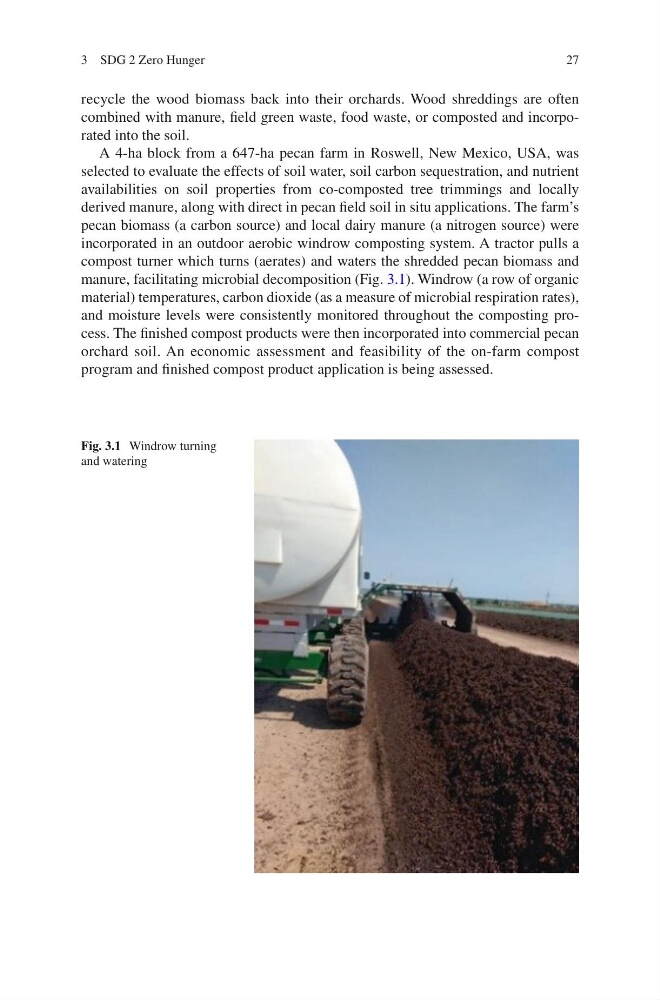
incorporated in an outdoor aerobic windrow composting system. A tractor pulls a
compost turner which turns (aerates) and waters the shredded pecan biomass and
manure, facilitating microbial decomposition (Fig. 3.1). Windrow (a row of organic
material) temperatures, carbon dioxide (as a measure of microbial respiration rates),
and moisture levels were consistently monitored throughout the composting process. The finished compost products were then incorporated into commercial pecan
orchard soil. An economic assessment and feasibility of the on-farm compost
program and finished compost product application is being assessed.
Fig. 3.1 Windrow turning
and watering
3 SDG 2 Zero Hunger
recycle the wood biomass back into their orchards. Wood shreddings are often
combined with manure, field green waste, food waste, or composted and incorporated into the soil.
A 4-ha block from a 647-ha pecan farm in Roswell, New Mexico, USA, was
selected to evaluate the effects of soil water, soil carbon sequestration, and nutrient
availabilities on soil properties from co-composted tree trimmings and locally
derived manure, along with direct in pecan field soil in situ applications. The farm’s
pecan biomass (a carbon source) and local dairy manure (a nitrogen source) were
incorporated in an outdoor aerobic windrow composting system. A tractor pulls a
compost turner which turns (aerates) and waters the shredded pecan biomass and
manure, facilitating microbial decomposition (Fig. 3.1). Windrow (a row of organic
material) temperatures, carbon dioxide (as a measure of microbial respiration rates),
and moisture levels were consistently monitored throughout the composting process. The finished compost products were then incorporated into commercial pecan
orchard soil. An economic assessment and feasibility of the on-farm compost
program and finished compost product application is being assessed.
Fig. 3.1 Windrow turning
and watering
3 SDG 2 Zero Hunger