

277
accountability in the three cases is mainly internal. In addition, in those cases in
which external accountability occurs, it is not fully exercised as companies do not
necessarily comply against the network’s principles nor display accurate accountability mechanisms, such as sustainability reports. The study shows that accountability is a premature practice and further development in this area is needed in the
selected cases.
These and other research findings are reported as follows: the first section in this
manuscript provides an extensive review of the notion accountability, its evolution,
and current debates in the corporate sector. The second section of this manuscript
presents and discusses a comparative analysis of three country cases, namely, the
Republic of Korea, Sri Lanka, and Myanmar. These three countries were selected
according to the corporate engagement and alignment with the network, stages of
their socioeconomic development, and geographical location in the Asia-Pacific
region. This manuscript finishes with conclusions and recommendations for further
research in this field.
18.2 Literature Review
The concept of accountability is not recent, yet it has evolved rapidly as a business
practice. Nevertheless, how accountability is interpreted and operationalized by the
corporate sector is an issue that deserves further investigation. Accountability is a
concept that has multiple interpretations that makes it a complex (Mulgan 2000) and
chameleon-like term (Sinclair 1995). Debates on accountability first took place
around 700 B.C.E in archaic literature and later on played a key role during the
ascendancy of the Athenian democracy, in medieval times before evolving rapidly
as a governance practice both at the private and public spheres.
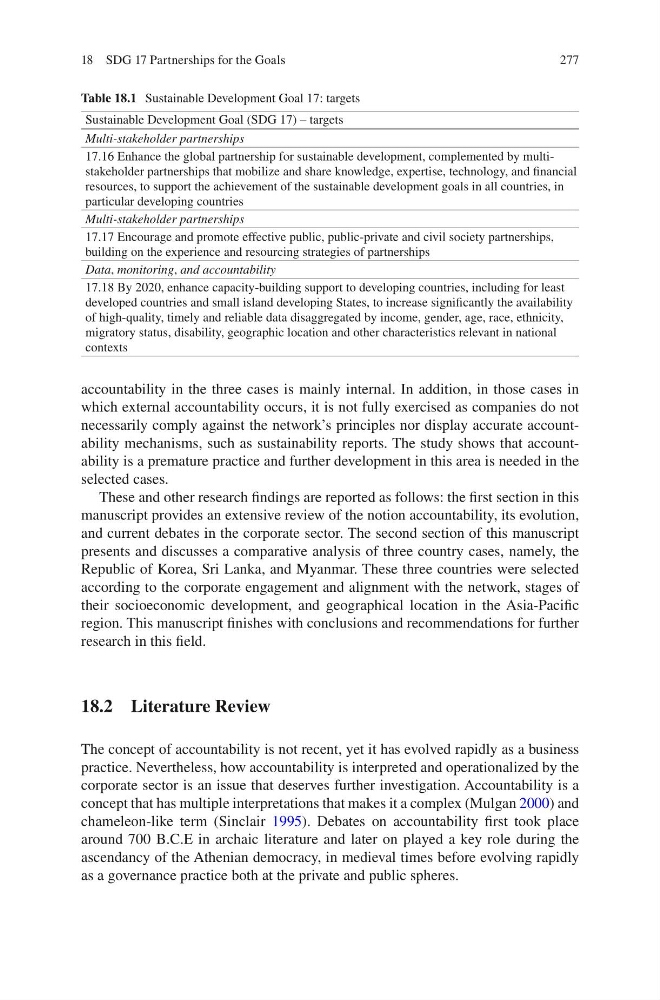
Table 18.1 Sustainable Development Goal 17: targets
Sustainable Development Goal (SDG 17) – targets
Multi-stakeholder partnerships
17.16 Enhance the global partnership for sustainable development, complemented by multistakeholder partnerships that mobilize and share knowledge, expertise, technology, and financial
resources, to support the achievement of the sustainable development goals in all countries, in
particular developing countries
Multi-stakeholder partnerships
17.17 Encourage and promote effective public, public-private and civil society partnerships,
building on the experience and resourcing strategies of partnerships
Data, monitoring, and accountability
17.18 By 2020, enhance capacity-building support to developing countries, including for least
developed countries and small island developing States, to increase significantly the availability
of high-quality, timely and reliable data disaggregated by income, gender, age, race, ethnicity,
migratory status, disability, geographic location and other characteristics relevant in national
contexts
18 SDG 17 Partnerships for the Goals
accountability in the three cases is mainly internal. In addition, in those cases in
which external accountability occurs, it is not fully exercised as companies do not
necessarily comply against the network’s principles nor display accurate accountability mechanisms, such as sustainability reports. The study shows that accountability is a premature practice and further development in this area is needed in the
selected cases.
These and other research findings are reported as follows: the first section in this
manuscript provides an extensive review of the notion accountability, its evolution,
and current debates in the corporate sector. The second section of this manuscript
presents and discusses a comparative analysis of three country cases, namely, the
Republic of Korea, Sri Lanka, and Myanmar. These three countries were selected
according to the corporate engagement and alignment with the network, stages of
their socioeconomic development, and geographical location in the Asia-Pacific
region. This manuscript finishes with conclusions and recommendations for further
research in this field.
18.2 Literature Review
The concept of accountability is not recent, yet it has evolved rapidly as a business
practice. Nevertheless, how accountability is interpreted and operationalized by the
corporate sector is an issue that deserves further investigation. Accountability is a
concept that has multiple interpretations that makes it a complex (Mulgan 2000) and
chameleon-like term (Sinclair 1995). Debates on accountability first took place
around 700 B.C.E in archaic literature and later on played a key role during the
ascendancy of the Athenian democracy, in medieval times before evolving rapidly
as a governance practice both at the private and public spheres.
Table 18.1 Sustainable Development Goal 17: targets
Sustainable Development Goal (SDG 17) – targets
Multi-stakeholder partnerships
17.16 Enhance the global partnership for sustainable development, complemented by multistakeholder partnerships that mobilize and share knowledge, expertise, technology, and financial
resources, to support the achievement of the sustainable development goals in all countries, in
particular developing countries
Multi-stakeholder partnerships
17.17 Encourage and promote effective public, public-private and civil society partnerships,
building on the experience and resourcing strategies of partnerships
Data, monitoring, and accountability
17.18 By 2020, enhance capacity-building support to developing countries, including for least
developed countries and small island developing States, to increase significantly the availability
of high-quality, timely and reliable data disaggregated by income, gender, age, race, ethnicity,
migratory status, disability, geographic location and other characteristics relevant in national
contexts
18 SDG 17 Partnerships for the Goals