

221
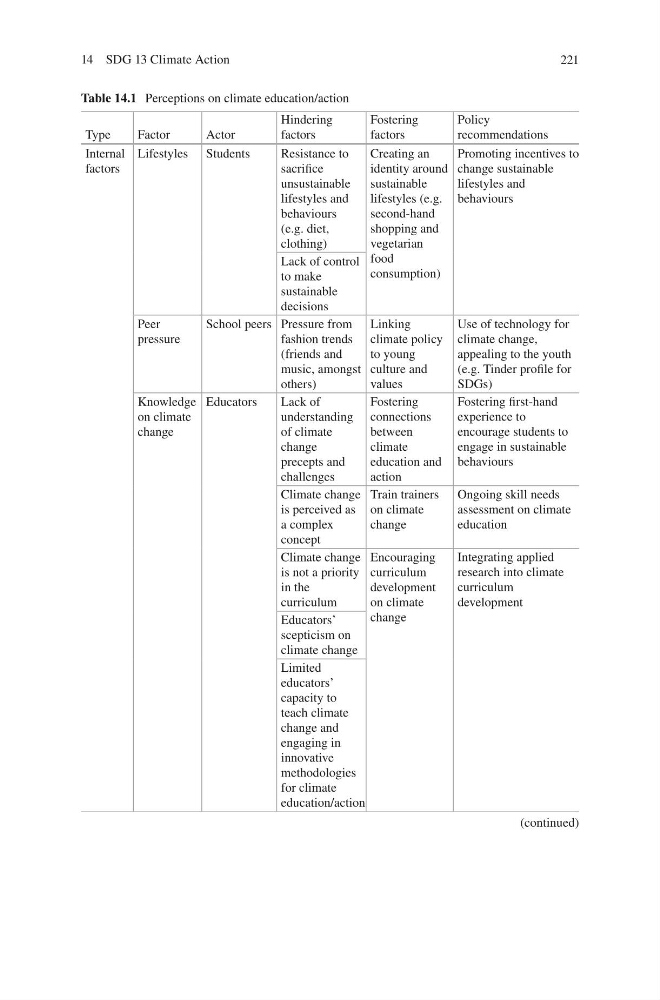
Table 14.1 Perceptions on climate education/action
Type
Factor
Actor
Hindering
factors
Fostering
factors
Policy
recommendations
Internal
factors
Lifestyles Students
Resistance to
sacrifice
unsustainable
lifestyles and
behaviours
(e.g. diet,
clothing)
Creating an
identity around
sustainable
lifestyles (e.g.
second-hand
shopping and
vegetarian
food
consumption)
Promoting incentives to
change sustainable
lifestyles and
behaviours
Lack of control
to make
sustainable
decisions
Peer
pressure
School peers Pressure from
fashion trends
(friends and
music, amongst
others)
Linking
climate policy
to young
culture and
values
Use of technology for
climate change,
appealing to the youth
(e.g. Tinder profile for
SDGs)
Knowledge
on climate
change
Educators
Lack of
understanding
of climate
change
precepts and
challenges
Fostering
connections
between
climate
education and
action
Fostering first-hand
experience to
encourage students to
engage in sustainable
behaviours
Climate change
is perceived as
a complex
concept
Train trainers
on climate
change
Ongoing skill needs
assessment on climate
education
Climate change
is not a priority
in the
curriculum
Encouraging
curriculum
development
on climate
change
Integrating applied
research into climate
curriculum
development
Educators’
scepticism on
climate change
Limited
educators’
capacity to
teach climate
change and
engaging in
innovative
methodologies
for climate
education/action
(continued)
14 SDG 13 Climate Action
Table 14.1 Perceptions on climate education/action
Type
Factor
Actor
Hindering
factors
Fostering
factors
Policy
recommendations
Internal
factors
Lifestyles Students
Resistance to
sacrifice
unsustainable
lifestyles and
behaviours
(e.g. diet,
clothing)
Creating an
identity around
sustainable
lifestyles (e.g.
second-hand
shopping and
vegetarian
food
consumption)
Promoting incentives to
change sustainable
lifestyles and
behaviours
Lack of control
to make
sustainable
decisions
Peer
pressure
School peers Pressure from
fashion trends
(friends and
music, amongst
others)
Linking
climate policy
to young
culture and
values
Use of technology for
climate change,
appealing to the youth
(e.g. Tinder profile for
SDGs)
Knowledge
on climate
change
Educators
Lack of
understanding
of climate
change
precepts and
challenges
Fostering
connections
between
climate
education and
action
Fostering first-hand
experience to
encourage students to
engage in sustainable
behaviours
Climate change
is perceived as
a complex
concept
Train trainers
on climate
change
Ongoing skill needs
assessment on climate
education
Climate change
is not a priority
in the
curriculum
Encouraging
curriculum
development
on climate
change
Integrating applied
research into climate
curriculum
development
Educators’
scepticism on
climate change
Limited
educators’
capacity to
teach climate
change and
engaging in
innovative
methodologies
for climate
education/action
(continued)
14 SDG 13 Climate Action