

240
I. Minea
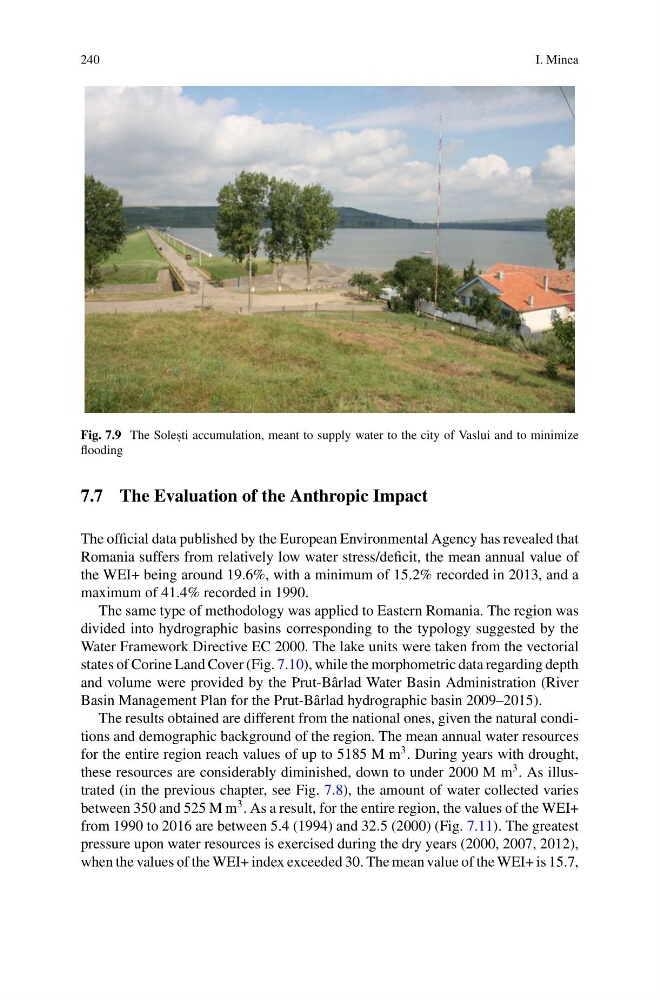
Fig. 7.9 The Soles , ti accumulation, meant to supply water to the city of Vaslui and to minimize
flooding
7.7 The Evaluation of the Anthropic Impact
The official data published by the European Environmental Agency has revealed that
Romania suffers from relatively low water stress/deficit, the mean annual value of
the WEI+ being around 19.6%, with a minimum of 15.2% recorded in 2013, and a
maximum of 41.4% recorded in 1990.
The same type of methodology was applied to Eastern Romania. The region was
divided into hydrographic basins corresponding to the typology suggested by the
Water Framework Directive EC 2000. The lake units were taken from the vectorial
states of Corine Land Cover (Fig. 7.10), while the morphometric data regarding depth
and volume were provided by the Prut-Bârlad Water Basin Administration (River
Basin Management Plan for the Prut-Bârlad hydrographic basin 2009–2015).
The results obtained are different from the national ones, given the natural conditions and demographic background of the region. The mean annual water resources
for the entire region reach values of up to 5185 M m
3 . During years with drought,
these resources are considerably diminished, down to under 2000 M m
3 . As illustrated (in the previous chapter, see Fig. 7.8), the amount of water collected varies
between 350 and 525 M m
3 . As a result, for the entire region, the values of the WEI+
from 1990 to 2016 are between 5.4 (1994) and 32.5 (2000) (Fig. 7.11). The greatest
pressure upon water resources is exercised during the dry years (2000, 2007, 2012),
when the values of the WEI+ index exceeded 30. The mean value of the WEI+ is 15.7,
I. Minea
Fig. 7.9 The Soles , ti accumulation, meant to supply water to the city of Vaslui and to minimize
flooding
7.7 The Evaluation of the Anthropic Impact
The official data published by the European Environmental Agency has revealed that
Romania suffers from relatively low water stress/deficit, the mean annual value of
the WEI+ being around 19.6%, with a minimum of 15.2% recorded in 2013, and a
maximum of 41.4% recorded in 1990.
The same type of methodology was applied to Eastern Romania. The region was
divided into hydrographic basins corresponding to the typology suggested by the
Water Framework Directive EC 2000. The lake units were taken from the vectorial
states of Corine Land Cover (Fig. 7.10), while the morphometric data regarding depth
and volume were provided by the Prut-Bârlad Water Basin Administration (River
Basin Management Plan for the Prut-Bârlad hydrographic basin 2009–2015).
The results obtained are different from the national ones, given the natural conditions and demographic background of the region. The mean annual water resources
for the entire region reach values of up to 5185 M m
3 . During years with drought,
these resources are considerably diminished, down to under 2000 M m
3 . As illustrated (in the previous chapter, see Fig. 7.8), the amount of water collected varies
between 350 and 525 M m
3 . As a result, for the entire region, the values of the WEI+
from 1990 to 2016 are between 5.4 (1994) and 32.5 (2000) (Fig. 7.11). The greatest
pressure upon water resources is exercised during the dry years (2000, 2007, 2012),
when the values of the WEI+ index exceeded 30. The mean value of the WEI+ is 15.7,