

236
I. Minea
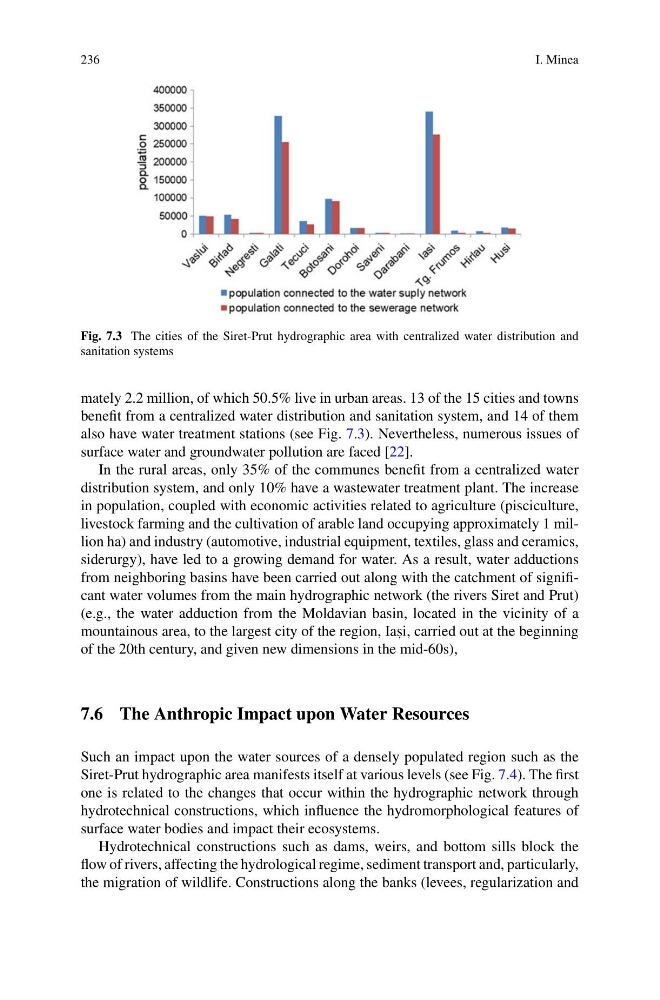
Fig. 7.3 The cities of the Siret-Prut hydrographic area with centralized water distribution and
sanitation systems
mately 2.2 million, of which 50.5% live in urban areas. 13 of the 15 cities and towns
benefit from a centralized water distribution and sanitation system, and 14 of them
also have water treatment stations (see Fig. 7.3). Nevertheless, numerous issues of
surface water and groundwater pollution are faced [22].
In the rural areas, only 35% of the communes benefit from a centralized water
distribution system, and only 10% have a wastewater treatment plant. The increase
in population, coupled with economic activities related to agriculture (pisciculture,
livestock farming and the cultivation of arable land occupying approximately 1 million ha) and industry (automotive, industrial equipment, textiles, glass and ceramics,
siderurgy), have led to a growing demand for water. As a result, water adductions
from neighboring basins have been carried out along with the catchment of significant water volumes from the main hydrographic network (the rivers Siret and Prut)
(e.g., the water adduction from the Moldavian basin, located in the vicinity of a
mountainous area, to the largest city of the region, Ias , i, carried out at the beginning
of the 20th century, and given new dimensions in the mid-60s),
7.6 The Anthropic Impact upon Water Resources
Such an impact upon the water sources of a densely populated region such as the
Siret-Prut hydrographic area manifests itself at various levels (see Fig. 7.4). The first
one is related to the changes that occur within the hydrographic network through
hydrotechnical constructions, which influence the hydromorphological features of
surface water bodies and impact their ecosystems.
Hydrotechnical constructions such as dams, weirs, and bottom sills block the
flow of rivers, affecting the hydrological regime, sediment transport and, particularly,
the migration of wildlife. Constructions along the banks (levees, regularization and
I. Minea
Fig. 7.3 The cities of the Siret-Prut hydrographic area with centralized water distribution and
sanitation systems
mately 2.2 million, of which 50.5% live in urban areas. 13 of the 15 cities and towns
benefit from a centralized water distribution and sanitation system, and 14 of them
also have water treatment stations (see Fig. 7.3). Nevertheless, numerous issues of
surface water and groundwater pollution are faced [22].
In the rural areas, only 35% of the communes benefit from a centralized water
distribution system, and only 10% have a wastewater treatment plant. The increase
in population, coupled with economic activities related to agriculture (pisciculture,
livestock farming and the cultivation of arable land occupying approximately 1 million ha) and industry (automotive, industrial equipment, textiles, glass and ceramics,
siderurgy), have led to a growing demand for water. As a result, water adductions
from neighboring basins have been carried out along with the catchment of significant water volumes from the main hydrographic network (the rivers Siret and Prut)
(e.g., the water adduction from the Moldavian basin, located in the vicinity of a
mountainous area, to the largest city of the region, Ias , i, carried out at the beginning
of the 20th century, and given new dimensions in the mid-60s),
7.6 The Anthropic Impact upon Water Resources
Such an impact upon the water sources of a densely populated region such as the
Siret-Prut hydrographic area manifests itself at various levels (see Fig. 7.4). The first
one is related to the changes that occur within the hydrographic network through
hydrotechnical constructions, which influence the hydromorphological features of
surface water bodies and impact their ecosystems.
Hydrotechnical constructions such as dams, weirs, and bottom sills block the
flow of rivers, affecting the hydrological regime, sediment transport and, particularly,
the migration of wildlife. Constructions along the banks (levees, regularization and