

12
Part I: Drylands and Socio-Ecological Systems
Places, territories, landscapes, and/or ecosystems where people live and depend on
natural resources and regulating forces have been described as social–ecological
systems (SES). For this reason, the central study units for RISZA are SES, as people
associate important values to these services, many represented by the 17 sustainable
development goals (SDGs). When land conditions change caused by external or
internal drivers, the quality and quantity of these services change as well.
For example, dryland degradation is advancing rapidly (Safriel et al. 2005;
Safriel 2017) affecting the productivity and the functioning of inland and coastal
ecosystems. Loss of biotic and cultural diversity, and climate change and socioeconomic changes related to globalization enhance the effect of land degradation,
thereby eliminating the inherent buffer characteristics that allow SES to resist, mitigate, or adapt to these adverse effects. Biodiversity and cultural diversity are directly
related; cultural diversity includes genetic, linguistic, and cognitive diversity and
thus has tangible and intangible assets. Cultural diversity often originates from the
biotic diversity regularly in places inhabited by indigenous or rural communities
(Toledo and Barrera-Bassols 2008). Furthermore, beyond a direct relationship the
concept of biocultural eliminates the dichotomy and describes objects like animals,
plants, rivers, or mountains as having a corresponding linguistic expression, charged
with identity and individual or collective memory, sacred meaning, or ritual importance (Boege 2008).
Therefore, the interactions between humans and the environment are highly
complex resulting from various interrelated factors. Research has demonstrated a
broad transcultural variability in the environmental consequences of human behavior (Oviedo et al. 2000). In addition to the employment of SES as a study object and
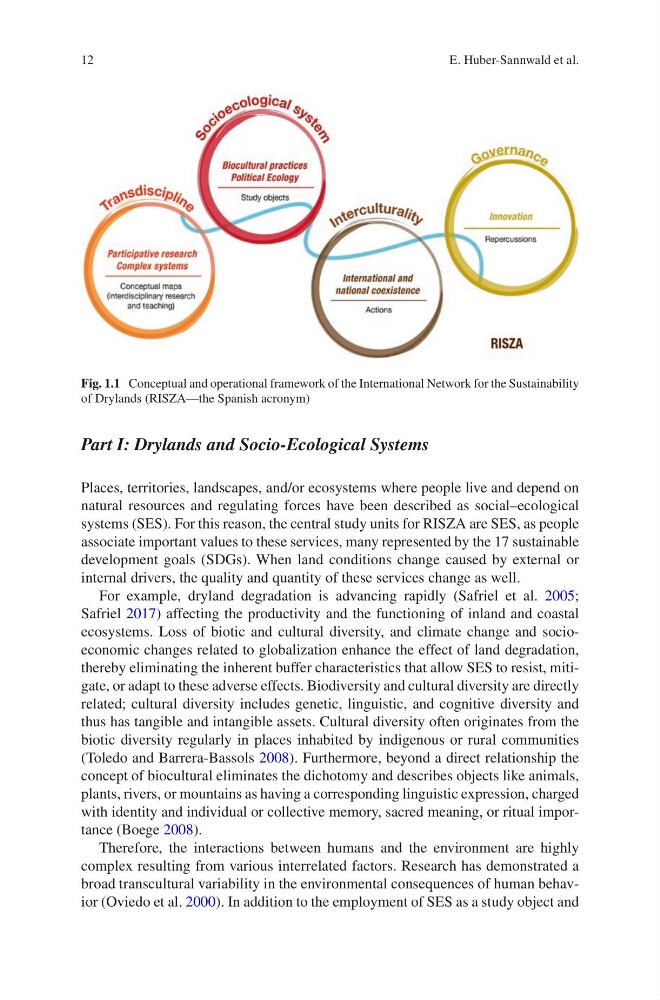
Fig. 1.1 Conceptual and operational framework of the International Network for the Sustainability
of Drylands (RISZA—the Spanish acronym)
E. Huber-Sannwald et al.
Part I: Drylands and Socio-Ecological Systems
Places, territories, landscapes, and/or ecosystems where people live and depend on
natural resources and regulating forces have been described as social–ecological
systems (SES). For this reason, the central study units for RISZA are SES, as people
associate important values to these services, many represented by the 17 sustainable
development goals (SDGs). When land conditions change caused by external or
internal drivers, the quality and quantity of these services change as well.
For example, dryland degradation is advancing rapidly (Safriel et al. 2005;
Safriel 2017) affecting the productivity and the functioning of inland and coastal
ecosystems. Loss of biotic and cultural diversity, and climate change and socioeconomic changes related to globalization enhance the effect of land degradation,
thereby eliminating the inherent buffer characteristics that allow SES to resist, mitigate, or adapt to these adverse effects. Biodiversity and cultural diversity are directly
related; cultural diversity includes genetic, linguistic, and cognitive diversity and
thus has tangible and intangible assets. Cultural diversity often originates from the
biotic diversity regularly in places inhabited by indigenous or rural communities
(Toledo and Barrera-Bassols 2008). Furthermore, beyond a direct relationship the
concept of biocultural eliminates the dichotomy and describes objects like animals,
plants, rivers, or mountains as having a corresponding linguistic expression, charged
with identity and individual or collective memory, sacred meaning, or ritual importance (Boege 2008).
Therefore, the interactions between humans and the environment are highly
complex resulting from various interrelated factors. Research has demonstrated a
broad transcultural variability in the environmental consequences of human behavior (Oviedo et al. 2000). In addition to the employment of SES as a study object and
Fig. 1.1 Conceptual and operational framework of the International Network for the Sustainability
of Drylands (RISZA—the Spanish acronym)
E. Huber-Sannwald et al.