

200
theoretical approaches that, beyond their divergences, are all focused in quality of
life, welfare, and challenges faced by people living in rural areas: The Community
Model of Sustainable Development (CMSD) (Toledo 1996; Barkin 1998); the Buen
Vivir (BV) (Gudynas and Acosta 2011), and the Sustainable Livelihoods Model
(SLM) (Chambers and Conway 1992). After developing a conceptual synthesis of
the three chosen approaches, their differences and similarities were analyzed for
appraising the importance of each component of the selected models to be integrated in a definition of indigenous community sustainability. Afterwards, retaking
the information pyramid (Hammond 1995; SCOPE 1995), the MEICS index of
community sustainability was defined integrating five sub-indexes and 20 ecological, social, economic, political, and cultural indicators.
The Future Use of Community Sustainability Indicators
and Models
Developing an adequate set of indicators and a more consistent methodology to
assess sustainability in a community, a country, or the world is a difficult task that
requires understanding the level of viability of the systems involved and their contribution to sustainable development (Liu et al. 2017). Independently of these
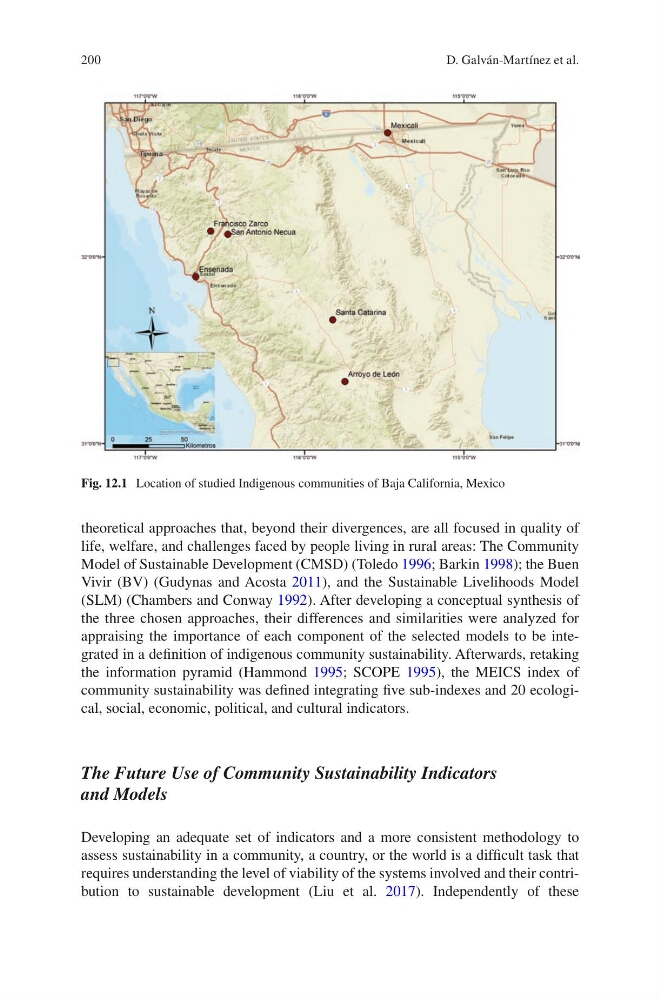
Fig. 12.1 Location of studied Indigenous communities of Baja California, Mexico
D. Galván-Martínez et al.
theoretical approaches that, beyond their divergences, are all focused in quality of
life, welfare, and challenges faced by people living in rural areas: The Community
Model of Sustainable Development (CMSD) (Toledo 1996; Barkin 1998); the Buen
Vivir (BV) (Gudynas and Acosta 2011), and the Sustainable Livelihoods Model
(SLM) (Chambers and Conway 1992). After developing a conceptual synthesis of
the three chosen approaches, their differences and similarities were analyzed for
appraising the importance of each component of the selected models to be integrated in a definition of indigenous community sustainability. Afterwards, retaking
the information pyramid (Hammond 1995; SCOPE 1995), the MEICS index of
community sustainability was defined integrating five sub-indexes and 20 ecological, social, economic, political, and cultural indicators.
The Future Use of Community Sustainability Indicators
and Models
Developing an adequate set of indicators and a more consistent methodology to
assess sustainability in a community, a country, or the world is a difficult task that
requires understanding the level of viability of the systems involved and their contribution to sustainable development (Liu et al. 2017). Independently of these
Fig. 12.1 Location of studied Indigenous communities of Baja California, Mexico
D. Galván-Martínez et al.