

85
inside and outside the valley. Currently, there are more than 300 water users registered in the Technical Groundwater Committee of Maneadero aquifer (COTAS, in
its Spanish acronym) from different water uses: agricultural, multiple, public-urban,
services, domestic, livestock and industrial. The largest water consumptive group in
Maneadero Valley is agriculture (commercial export agriculture, greenhouse operations and ranchos), which utilizes 71% of the groundwater resources, through a
water-well concession. The multiple consumptive uses represent mostly small-scale
agriculture, livestock and domestic uses and are a large proportion (33%) of the
total concession volume. The water allocation of the water utility company in the
municipality of Ensenada (CESPE, in its Spanish acronym) is the largest water consumer in the public-urban use, which constitutes 17% of the category’s total
(Medellin-Azuara et al. 2013).
The Public Registry of Water Deeds database (REPDA) from the National Water
Commission (CONAGUA, in its Spanish acronym) exhibits 360 wells located in the
geographical limits of the Maneadero aquifer: 180 for agricultural use, 114 for multiple use, 20 for public-urban use, 18 for use in services, 17 for domestic use, 7 for
livestock use and 4 for industrial use. Nevertheless, the groundwater assigned by
concession or allocation of rights according to the REPDA is not what is really
being extracted.
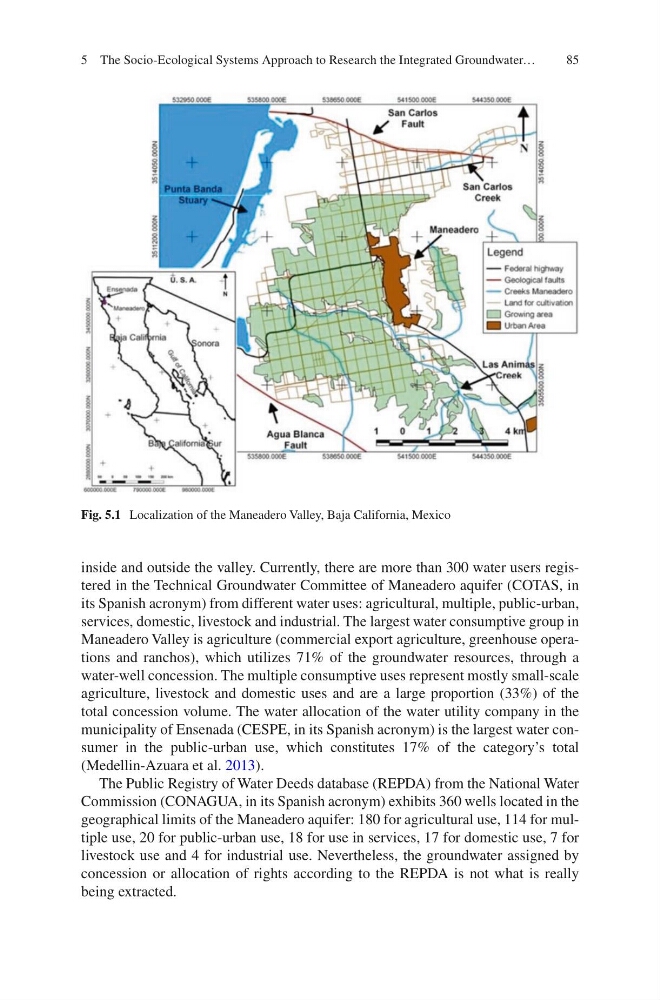
Fig. 5.1 Localization of the Maneadero Valley, Baja California, Mexico
5 The Socio-Ecological Systems Approach to Research the Integrated Groundwater…
inside and outside the valley. Currently, there are more than 300 water users registered in the Technical Groundwater Committee of Maneadero aquifer (COTAS, in
its Spanish acronym) from different water uses: agricultural, multiple, public-urban,
services, domestic, livestock and industrial. The largest water consumptive group in
Maneadero Valley is agriculture (commercial export agriculture, greenhouse operations and ranchos), which utilizes 71% of the groundwater resources, through a
water-well concession. The multiple consumptive uses represent mostly small-scale
agriculture, livestock and domestic uses and are a large proportion (33%) of the
total concession volume. The water allocation of the water utility company in the
municipality of Ensenada (CESPE, in its Spanish acronym) is the largest water consumer in the public-urban use, which constitutes 17% of the category’s total
(Medellin-Azuara et al. 2013).
The Public Registry of Water Deeds database (REPDA) from the National Water
Commission (CONAGUA, in its Spanish acronym) exhibits 360 wells located in the
geographical limits of the Maneadero aquifer: 180 for agricultural use, 114 for multiple use, 20 for public-urban use, 18 for use in services, 17 for domestic use, 7 for
livestock use and 4 for industrial use. Nevertheless, the groundwater assigned by
concession or allocation of rights according to the REPDA is not what is really
being extracted.
Fig. 5.1 Localization of the Maneadero Valley, Baja California, Mexico
5 The Socio-Ecological Systems Approach to Research the Integrated Groundwater…