

83
(Lopez-Porras et al. 2018) and how to enhance trust among different stakeholders
(De Vente et al. 2016). Second, implementing a participatory process for assessing
dryland agricultural sustainability requires inventorying farmers’ (land or water
users) perceptions. It has the potential to contribute to sustainable development by
generating an understanding of agro-ecosystem dynamics, priority constraints and
opportunities, and in developing interventions based on farmers’ perceptions and
knowledge, and formal science linkages (Onduru and Du Preez 2008).
Third, common aspects in researching the integrated resources management and
governance in drylands, based on a SES approach and considering users’ participation and perception, must include the analysis of stakeholders’ involvement, legitimate representation, non-state actor influence, communication to non-state actors,
information exchange through face-to-face contact, facilitated knowledge exchange,
structured information aggregation, process moderation/facilitation, among others
(De Vente et al. 2016).
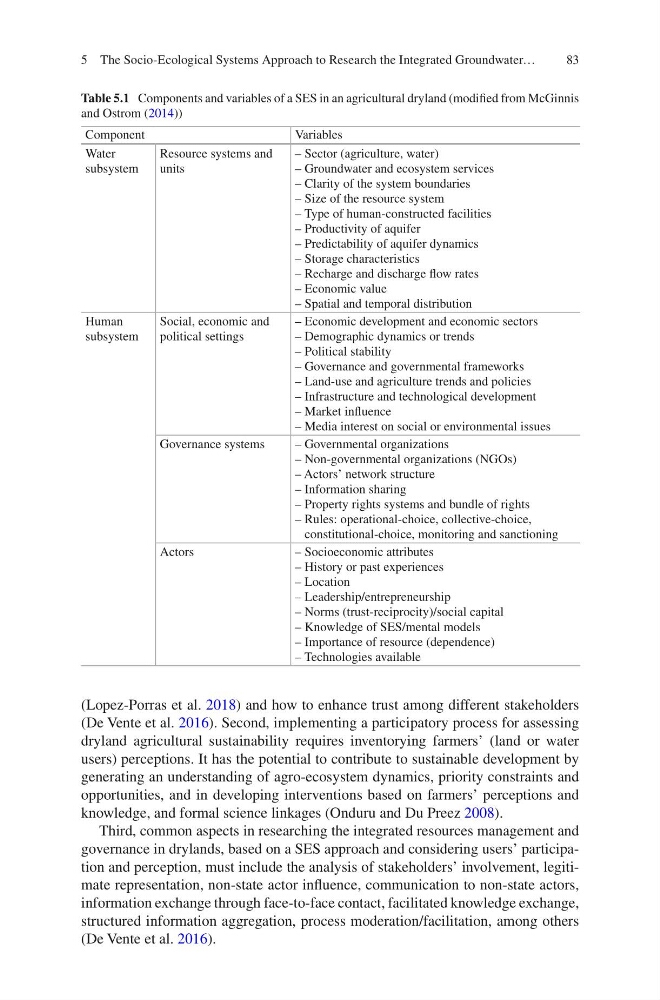
Table 5.1 Components and variables of a SES in an agricultural dryland (modified from McGinnis
and Ostrom (2014))
Component
Variables
Water
subsystem
Resource systems and
units
– Sector (agriculture, water)
– Groundwater and ecosystem services
– Clarity of the system boundaries
– Size of the resource system
– Type of human-constructed facilities
– Productivity of aquifer
– Predictability of aquifer dynamics
– Storage characteristics
– Recharge and discharge flow rates
– Economic value
– Spatial and temporal distribution
Human
subsystem
Social, economic and
political settings
– Economic development and economic sectors
– Demographic dynamics or trends
– Political stability
– Governance and governmental frameworks
– Land-use and agriculture trends and policies
– Infrastructure and technological development
– Market influence
– Media interest on social or environmental issues
Governance systems
– Governmental organizations
– Non-governmental organizations (NGOs)
– Actors’ network structure
– Information sharing
– Property rights systems and bundle of rights
– Rules: operational-choice, collective-choice,
constitutional-choice, monitoring and sanctioning
Actors
– Socioeconomic attributes
– History or past experiences
– Location
– Leadership/entrepreneurship
– Norms (trust-reciprocity)/social capital
– Knowledge of SES/mental models
– Importance of resource (dependence)
– Technologies available
5 The Socio-Ecological Systems Approach to Research the Integrated Groundwater…
(Lopez-Porras et al. 2018) and how to enhance trust among different stakeholders
(De Vente et al. 2016). Second, implementing a participatory process for assessing
dryland agricultural sustainability requires inventorying farmers’ (land or water
users) perceptions. It has the potential to contribute to sustainable development by
generating an understanding of agro-ecosystem dynamics, priority constraints and
opportunities, and in developing interventions based on farmers’ perceptions and
knowledge, and formal science linkages (Onduru and Du Preez 2008).
Third, common aspects in researching the integrated resources management and
governance in drylands, based on a SES approach and considering users’ participation and perception, must include the analysis of stakeholders’ involvement, legitimate representation, non-state actor influence, communication to non-state actors,
information exchange through face-to-face contact, facilitated knowledge exchange,
structured information aggregation, process moderation/facilitation, among others
(De Vente et al. 2016).
Table 5.1 Components and variables of a SES in an agricultural dryland (modified from McGinnis
and Ostrom (2014))
Component
Variables
Water
subsystem
Resource systems and
units
– Sector (agriculture, water)
– Groundwater and ecosystem services
– Clarity of the system boundaries
– Size of the resource system
– Type of human-constructed facilities
– Productivity of aquifer
– Predictability of aquifer dynamics
– Storage characteristics
– Recharge and discharge flow rates
– Economic value
– Spatial and temporal distribution
Human
subsystem
Social, economic and
political settings
– Economic development and economic sectors
– Demographic dynamics or trends
– Political stability
– Governance and governmental frameworks
– Land-use and agriculture trends and policies
– Infrastructure and technological development
– Market influence
– Media interest on social or environmental issues
Governance systems
– Governmental organizations
– Non-governmental organizations (NGOs)
– Actors’ network structure
– Information sharing
– Property rights systems and bundle of rights
– Rules: operational-choice, collective-choice,
constitutional-choice, monitoring and sanctioning
Actors
– Socioeconomic attributes
– History or past experiences
– Location
– Leadership/entrepreneurship
– Norms (trust-reciprocity)/social capital
– Knowledge of SES/mental models
– Importance of resource (dependence)
– Technologies available
5 The Socio-Ecological Systems Approach to Research the Integrated Groundwater…