

to surrounding areas, and the emissions and VCDs could be gradually reduced in
mega cities. The results suggest that the challenges of mitigating China’s air
pollution have been expanding from urban to regional scale. In recent years, the
fast progress of urbanization and development policies targeting relatively small
towns have spread economic growth to less-developed regions, leading to elevated
industrial production and energy consumption. Meanwhile, relocation of important
emission sources from urban to rural regions could also result from the tightened
controls of air pollutant emissions in the developed and polluted urban areas. In
addition, implementation of staged emission standards was expected to effectively
control the emissions of on-road transportation, an important source of urban
pollution. In contrast, small industrial kilns and residential stoves dominated the
emissions of rural areas, but they were insufficiently controlled. In 2005, the
fractions of the most developed regions (BTH, YRD, and Guangdong) to national
total SO 2 and NO X emissions are calculated at 30% and 38%, respectively (Zhao
et al. 2013), and the fractions declined to 24% and 32% in 2014 (STD cases in Xia
et al. (2016)), implying that China’s economic activities, energy consumption, and
emissions have been shifting proportionately to less-developed areas. From a
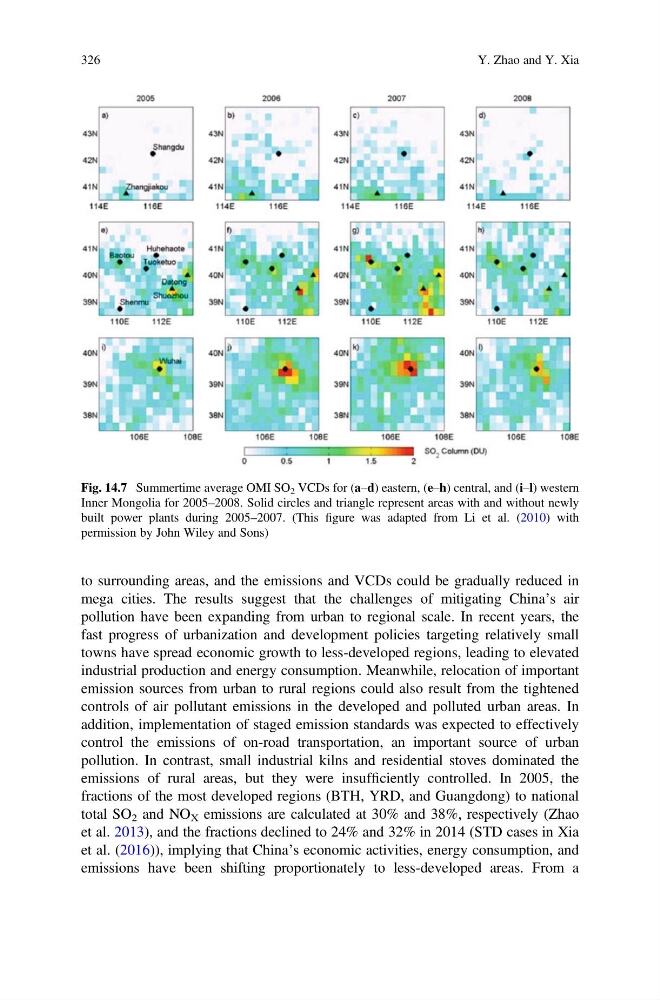
Fig. 14.7 Summertime average OMI SO 2 VCDs for (a–d) eastern, (e–h) central, and (i–l) western
Inner Mongolia for 2005–2008. Solid circles and triangle represent areas with and without newly
built power plants during 2005–2007. (This figure was adapted from Li et al. (2010) with
permission by John Wiley and Sons)
326
Y. Zhao and Y. Xia
mega cities. The results suggest that the challenges of mitigating China’s air
pollution have been expanding from urban to regional scale. In recent years, the
fast progress of urbanization and development policies targeting relatively small
towns have spread economic growth to less-developed regions, leading to elevated
industrial production and energy consumption. Meanwhile, relocation of important
emission sources from urban to rural regions could also result from the tightened
controls of air pollutant emissions in the developed and polluted urban areas. In
addition, implementation of staged emission standards was expected to effectively
control the emissions of on-road transportation, an important source of urban
pollution. In contrast, small industrial kilns and residential stoves dominated the
emissions of rural areas, but they were insufficiently controlled. In 2005, the
fractions of the most developed regions (BTH, YRD, and Guangdong) to national
total SO 2 and NO X emissions are calculated at 30% and 38%, respectively (Zhao
et al. 2013), and the fractions declined to 24% and 32% in 2014 (STD cases in Xia
et al. (2016)), implying that China’s economic activities, energy consumption, and
emissions have been shifting proportionately to less-developed areas. From a
Fig. 14.7 Summertime average OMI SO 2 VCDs for (a–d) eastern, (e–h) central, and (i–l) western
Inner Mongolia for 2005–2008. Solid circles and triangle represent areas with and without newly
built power plants during 2005–2007. (This figure was adapted from Li et al. (2010) with
permission by John Wiley and Sons)
326
Y. Zhao and Y. Xia