

2010). Forest NPP thus decreases in old-growth stage both due to progressive P
limitation and age-related increase in autotrophic respiration (Wardle et al. 2004; Du
and Fang 2014). Unlike P, biological N fixation and N deposition continuously
contribute to external N inputs during the forest development. Moreover, internalrecycled N availability from mineralization is relatively high in old-growth forests
(Trap et al. 2009). Overall, total N supply can sufficiently balance the decreased N
demands of NPP, resulting in progressive N saturation in old-growth forests. In that
case, negative effects, such as soil acidification and nutrient imbalance, may further
diminish forest growth and primary production in the long term.
A non-linear effect of N deposition on NPP or forest growth has been increasingly
evidenced by field observations and experiments (De Vries et al. 2014). In N-limited
forest ecosystems, low-level N deposition (e.g. <10 kg N ha
À1 year
À1
) only leads to a
minor stimulating effect on forest growth, likely due to intensive plant-microbial
competition for N (Kaye and Hart 1997) and a reduction of biological N fixation
(Niu et al. 2016). The stimulating effect becomes stronger with further increase in N
deposition because higher N supply can weaken competition between microbes and
plants. When N deposition exceeds a certain load, the negative effects might occur due
to N-induced soil acidification, depletion of base cations, mobilization of toxic metal
(e.g. Al
3+ and Fe
3+
) and nutrient imbalances (Aber et al. 1998). In line with this
non-linear hypothesis, experimental N additions in a boreal forest in Northeast China
resulted in a largest increase in above- and belowground NPP at low N levels (25 kg N
ha
À1 year
À1
), while the positive effects declined at medium N treatment (50 kg N ha
À1
year
À1
) and diminished at high-level N addition (75 kg N ha
À1 year
À1
) (Yan et al.
2018).
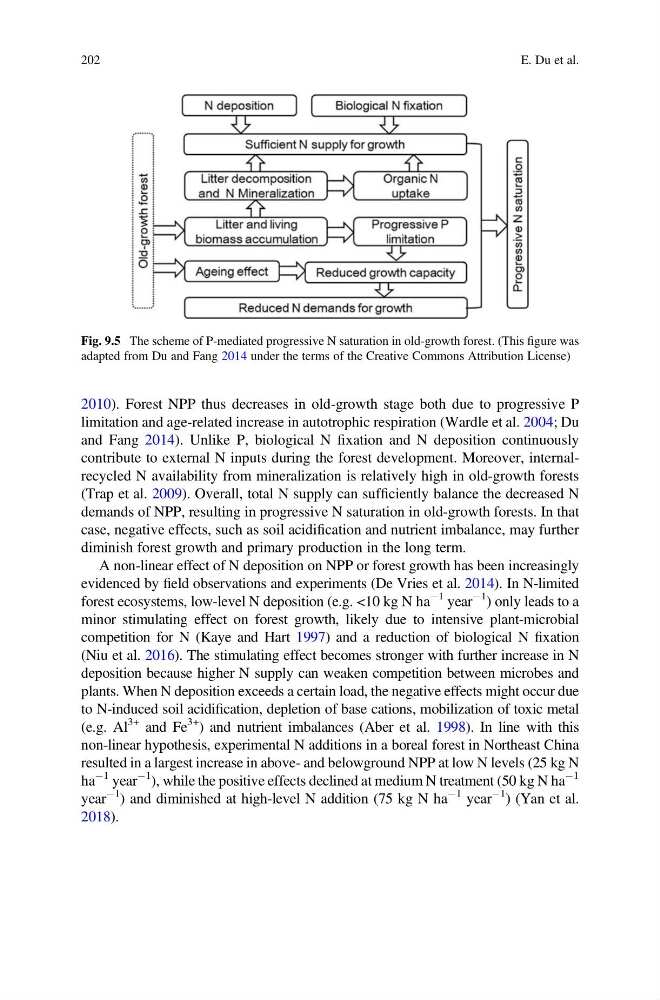
Fig. 9.5 The scheme of P-mediated progressive N saturation in old-growth forest. (This figure was
adapted from Du and Fang 2014 under the terms of the Creative Commons Attribution License)
202
E. Du et al.
limitation and age-related increase in autotrophic respiration (Wardle et al. 2004; Du
and Fang 2014). Unlike P, biological N fixation and N deposition continuously
contribute to external N inputs during the forest development. Moreover, internalrecycled N availability from mineralization is relatively high in old-growth forests
(Trap et al. 2009). Overall, total N supply can sufficiently balance the decreased N
demands of NPP, resulting in progressive N saturation in old-growth forests. In that
case, negative effects, such as soil acidification and nutrient imbalance, may further
diminish forest growth and primary production in the long term.
A non-linear effect of N deposition on NPP or forest growth has been increasingly
evidenced by field observations and experiments (De Vries et al. 2014). In N-limited
forest ecosystems, low-level N deposition (e.g. <10 kg N ha
À1 year
À1
) only leads to a
minor stimulating effect on forest growth, likely due to intensive plant-microbial
competition for N (Kaye and Hart 1997) and a reduction of biological N fixation
(Niu et al. 2016). The stimulating effect becomes stronger with further increase in N
deposition because higher N supply can weaken competition between microbes and
plants. When N deposition exceeds a certain load, the negative effects might occur due
to N-induced soil acidification, depletion of base cations, mobilization of toxic metal
(e.g. Al
3+ and Fe
3+
) and nutrient imbalances (Aber et al. 1998). In line with this
non-linear hypothesis, experimental N additions in a boreal forest in Northeast China
resulted in a largest increase in above- and belowground NPP at low N levels (25 kg N
ha
À1 year
À1
), while the positive effects declined at medium N treatment (50 kg N ha
À1
year
À1
) and diminished at high-level N addition (75 kg N ha
À1 year
À1
) (Yan et al.
2018).
Fig. 9.5 The scheme of P-mediated progressive N saturation in old-growth forest. (This figure was
adapted from Du and Fang 2014 under the terms of the Creative Commons Attribution License)
202
E. Du et al.