

tropical/subtropical forest, Lu et al. (2010) found that 5-year high levels of N
addition (>100 kg N ha
À1 year
À1 ) significantly decreased understory species diversity (e.g. richness and density), because of soil acidification-associated mechanisms
rather than competition-associated mechanisms. Wu et al. (2013) also found that
8-year N additions (>120 kg N ha
À1 year
À1 ) declined understory species richness in
a subtropical forest, which was associated with decreases of arbuscular mycorrhizal
fungi abundance and soil pH. By comparing NH 4 NO 3 treatment and NaNO 3 treatment in a subtropical pine forest, Huang et al. (2015) found that the loss in
abundance of major ground species was the combined effect of N saturation and
ammonium-N-induced acidification. In line with experimental results, Huang et al.
(2012b) found that understory herb-layer diversity of a mature forest was negatively
correlated to N deposition and positively correlated to soil calcium (Ca) and potassium (K) concentrations and pH, along an urban-rural transect (N deposition ranging
from 30.1 to 43.3 kg N ha
À1 year
À1 ) in metropolitan Guangzhou, southern China.
Moreover, the effects of N deposition also vary with previous land-use practices.
Compared with the negative effect on understory biodiversity in a mature forest,
plant diversity showed no responses to high N inputs in a secondary forest and a
plantation of southern China (Lu et al. 2011a). In temperate regions, a 3-year N
addition experiment showed that N additions did not affect herbaceous diversity in a
plantation forest, but significantly decreased the herbaceous diversity in a natural
forest (Li et al. 2015).
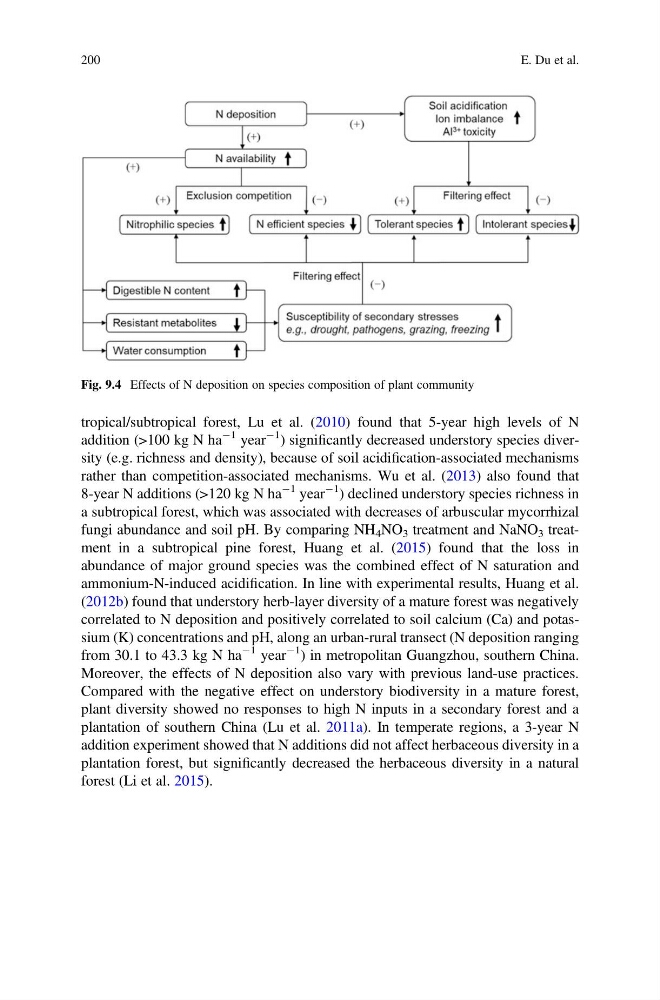
Fig. 9.4 Effects of N deposition on species composition of plant community
200
E. Du et al.
addition (>100 kg N ha
À1 year
À1 ) significantly decreased understory species diversity (e.g. richness and density), because of soil acidification-associated mechanisms
rather than competition-associated mechanisms. Wu et al. (2013) also found that
8-year N additions (>120 kg N ha
À1 year
À1 ) declined understory species richness in
a subtropical forest, which was associated with decreases of arbuscular mycorrhizal
fungi abundance and soil pH. By comparing NH 4 NO 3 treatment and NaNO 3 treatment in a subtropical pine forest, Huang et al. (2015) found that the loss in
abundance of major ground species was the combined effect of N saturation and
ammonium-N-induced acidification. In line with experimental results, Huang et al.
(2012b) found that understory herb-layer diversity of a mature forest was negatively
correlated to N deposition and positively correlated to soil calcium (Ca) and potassium (K) concentrations and pH, along an urban-rural transect (N deposition ranging
from 30.1 to 43.3 kg N ha
À1 year
À1 ) in metropolitan Guangzhou, southern China.
Moreover, the effects of N deposition also vary with previous land-use practices.
Compared with the negative effect on understory biodiversity in a mature forest,
plant diversity showed no responses to high N inputs in a secondary forest and a
plantation of southern China (Lu et al. 2011a). In temperate regions, a 3-year N
addition experiment showed that N additions did not affect herbaceous diversity in a
plantation forest, but significantly decreased the herbaceous diversity in a natural
forest (Li et al. 2015).
Fig. 9.4 Effects of N deposition on species composition of plant community
200
E. Du et al.